The Bird Feeder With a Camera That Puts a Name to Every Visitor
A solar powered feeder that snaps portraits of every bird and tells you who just landed.
It heats fast, smooths hanging clothes in minutes, and slips into a carry on.
8:05 am. The only clean shirt looks like it spent the night balled up in a gym bag. The ironing board screeches open like a haunted door, the iron wants five minutes to heat, and you have nine minutes before you need to be visibly competent on camera.
This is the exact morning the HiLIFE steamer was built for, and about 129,000 rated buyers suggest it delivers.
The HiLIFE is a handheld garment steamer, around $25 on Amazon and light at 1.7 pounds. Fill the 240 milliliter tank, plug in the generous 9 foot cord, and it pushes 700 watts of steady steam through whatever is hanging in front of you. It carries an Amazon’s Choice badge, and more than 20,000 people bought one in the past month.
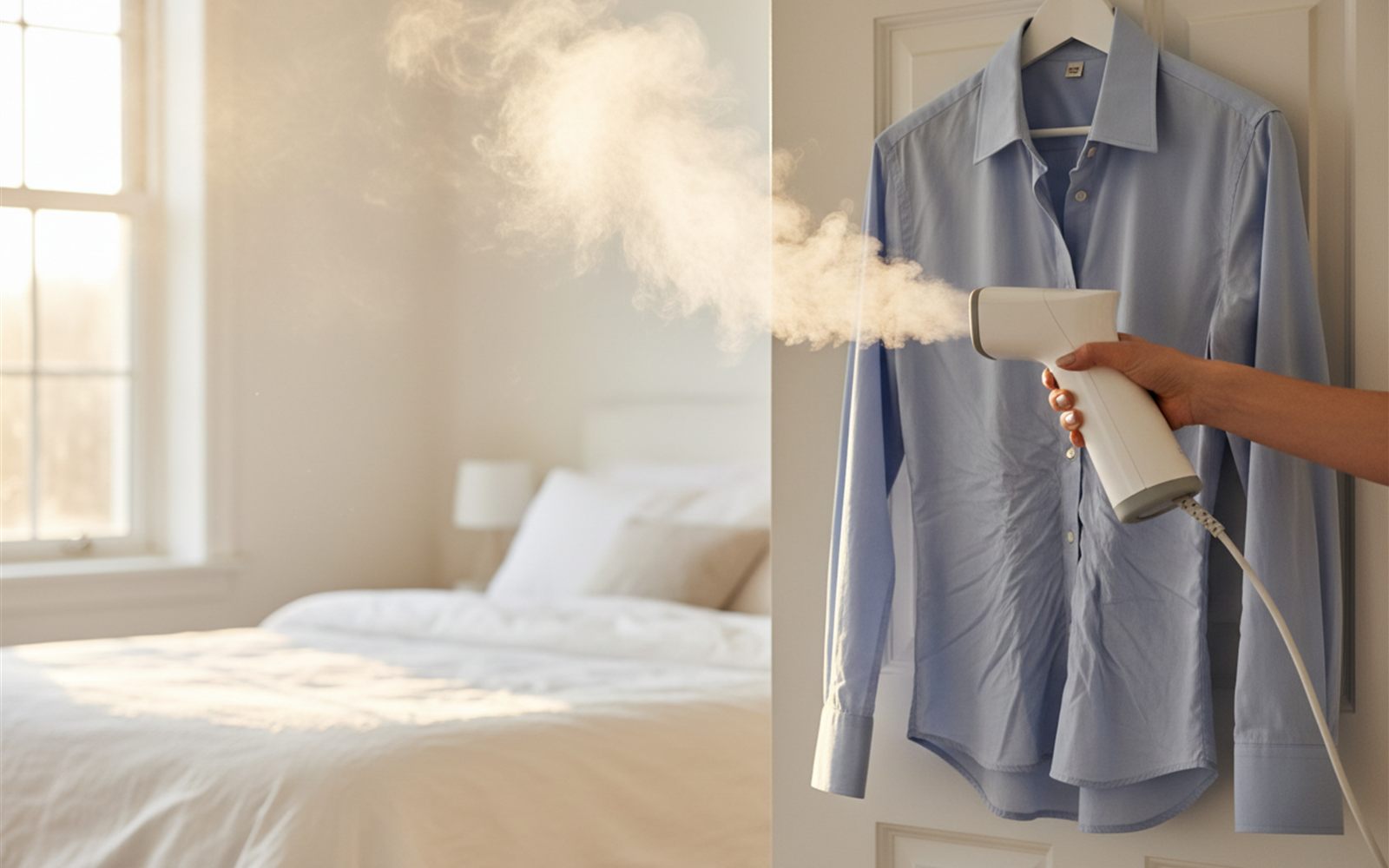
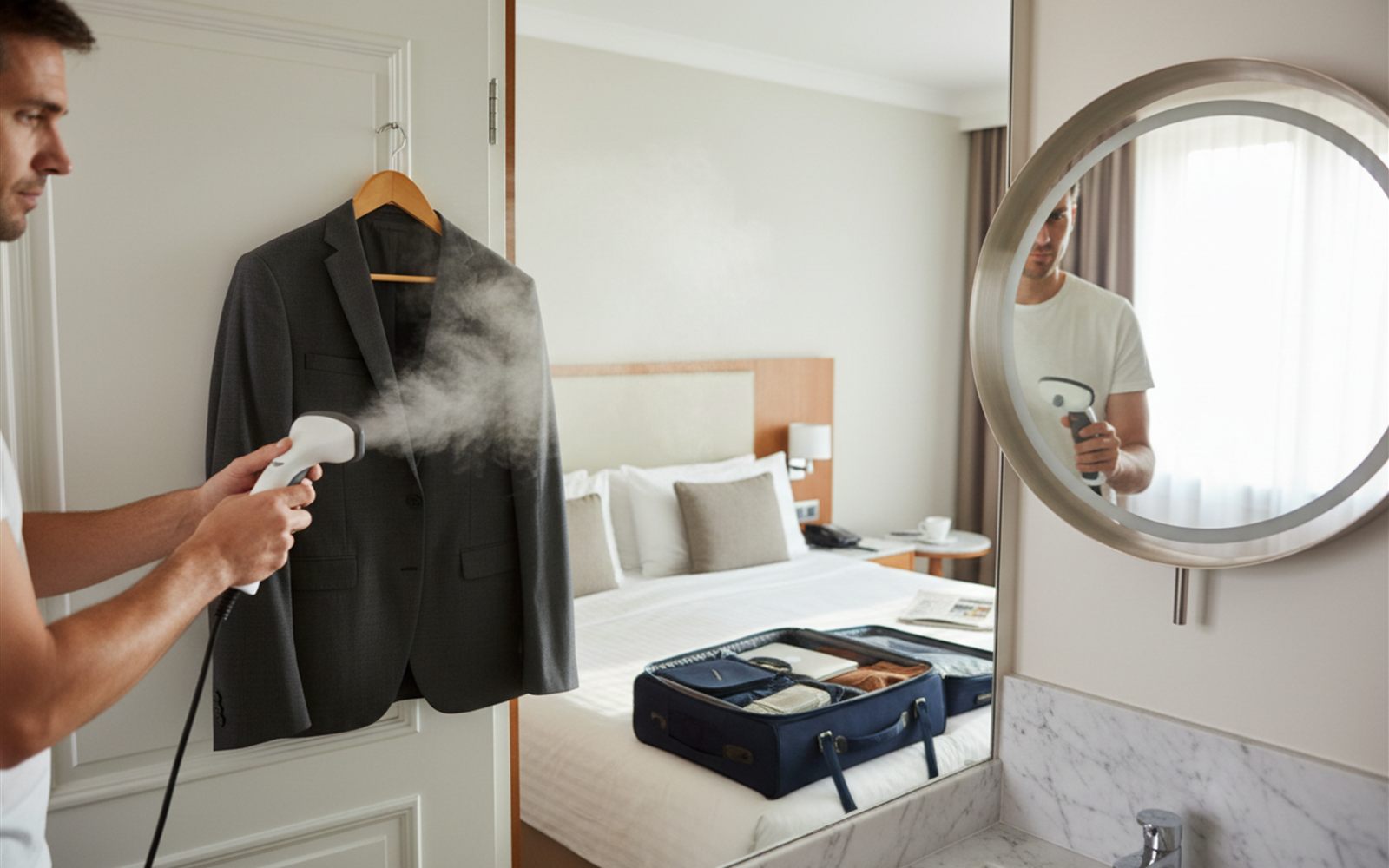
Wrinkles leave while the shirt hangs. No board, no flipping sleeves, no pressing. Hang the garment on a door, sweep the steamer down the fabric, and gravity plus steam do the smoothing. Buyers repeatedly call it easier and faster than ironing.
It handles the clothes an iron ruins. Steam relaxes fibers without a hot metal plate touching them, so chiffon, silk, wool, cotton, and linen are all fair game. That flowy dress you never iron out of fear finally has a maintenance plan.
It travels. The whole unit fits in a carry on, which is why it keeps showing up in reviews about weddings, cheer competitions, and business trips. One tank delivers up to 15 minutes of continuous steam, enough for several outfits before a refill. At about $25, it costs less than one hotel pressing service.
It also comes with a fabric brush attachment for thicker materials, so a wool blazer gets the same two minute treatment as a cotton shirt. Once the routine clicks, most people stop saving the steamer for emergencies and start using it as the default way clothes get ready.
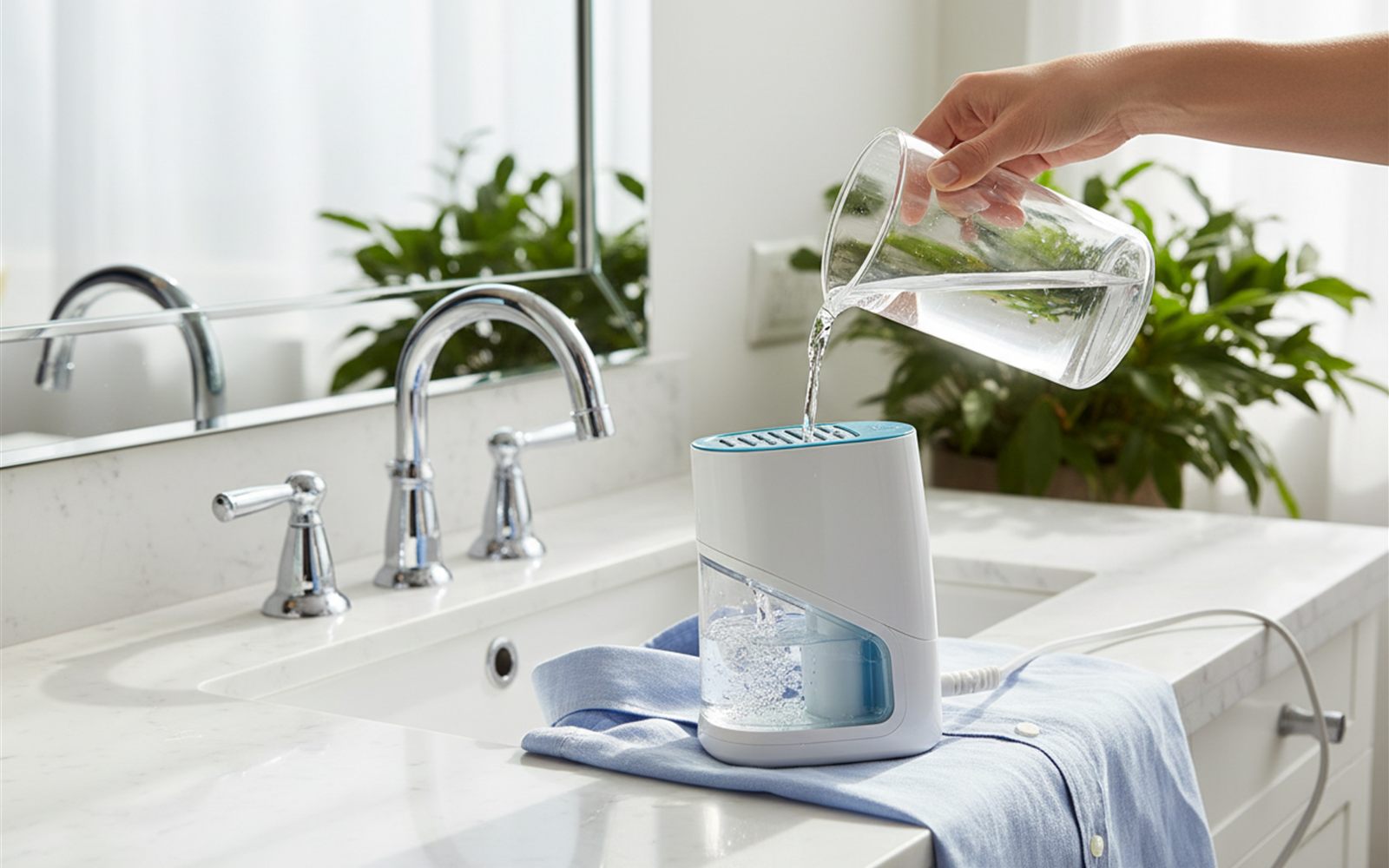
Hang the shirt on the bathroom door. Fill the tank below the max line, click it on, and give it a moment to build steam. Then sweep slowly down the front, across the sleeves, and finish with a light tug on the hem.
Before: a shirt with the texture of crumpled paper and a collar folded in three wrong places.
After: the wrinkles have visibly dropped out, the collar sits flat, and the shirt looks pressed to anyone who is not holding a magnifying glass.
The gap between one star and five star owners of this steamer is almost entirely technique, and the winning technique takes one paragraph to learn.
Feed it distilled water. A gallon costs about a dollar at any grocery store and prevents the mineral crust that slowly chokes any steamer. Reviewers who report years of service mention this habit constantly.
Respect the fill line and the angle. Underfill slightly and keep the unit mostly upright. Those two moves prevent nearly all of the spitting the complaints describe, because the spitting is physics, not defect: tip the tank too far and water reaches the steam exit before it becomes steam.
Pull the fabric taut with your free hand. Tension is the secret ingredient. A gentle downward tug on the hem while you sweep turns a decent result into a pressed looking one.
Let the collar have the last pass. Sweep the body first while the collar softens in the rising steam, then finish with a slow pass along the fold and flatten it with your palm.
Empty the tank when you finish. Ten seconds over the sink keeps standing water from staling the tank between uses and travels drier in a suitcase.
Point it at more than clothes. The same two minutes freshens whatever hangs: curtains straight off the rod, a garment bag suit before an event, a wrinkled tablecloth on its clips.
If steam works this well, why did we all grow up ironing? Because for decades pressed was the standard and steam machines were salon sized. Here is what the modern lineup actually looks like.
| Tool | Price | The difference |
|---|---|---|
| HiLIFE handheld steamer | About $25 | 4.2 stars from 129,000 plus buyers, the lightest and cheapest path to smooth |
| BLACK+DECKER steam iron | About $19 | 4.3 stars from 44,000 plus buyers, crisp creases, but board and patience required |
| Conair Turbo ExtremeSteam | About $50 to $70 | 1,875 watts of muscle, 4.2 stars from 25,000 plus buyers, heavier in hand |
| Rowenta Pure Force 2 in 1 | About $80 | Steams vertically and irons flat, one machine for both standards |
The honest sort: the iron still wins for pleats, dress trousers, and anyone whose office notices creases, and at $19 for the best selling BLACK+DECKER it is not a money question, it is a time and effort question. The Conair is the pick for heavy fabrics and daily volume, since its 1,875 watts push hotter steam than the HiLIFE’s 700, at double to triple the price and weight. The Rowenta suits the one gadget only closet. The HiLIFE wins the case most closets actually are: everyday shirts, dresses, and knits that need to look smooth in two minutes.
Then there is the old way. Dry cleaners in 2026 charge roughly $4 to $7 per dress shirt according to The Laundry Bag’s national price guide, so a two shirt a week habit runs $40 or more a month. The steamer costs less than three weeks of that, forever.
For most of a century, smooth clothes meant a hot metal plate and a board, because the iron was the only tool a home could own. Steam belonged to tailors and dry cleaners, whose standing boilers could soften a rack of suits at a time. The first handheld steamers that trickled into homes were honestly bad: weak elements that dribbled, tanks that emptied in minutes, and prices that made the iron look sensible.
Two things changed. Heating elements got small, hot, and cheap, and dress codes relaxed, so smooth replaced pressed as the everyday standard. Once a $25 handheld could produce steady steam for 15 minutes, the iron’s remaining advantage, the crease, became something most people need twice a year. The 129,000 ratings on this one are what a quiet changing of the guard looks like.
The HiLIFE holds 4.2 stars across more than 129,000 ratings, making it one of the most reviewed garment gadgets on Amazon. The recurring praise: it is far easier than dragging out an iron, it heats quickly, and it earns its keep on trips. One reviewer put it simply: “This little steamer really gets the wrinkles out!”
Three buyers say it better than we could.
“I rarely write Amazon reviews but this thing actually works. Gets wrinkles out and is good quality. Also cleans. Great.”
(verified Amazon review)
“This steamer is perfect and works great! I purchased mostly for our daughters cheer uniforms when traveling for competitions and this was a great buy.”
(verified Amazon review)
“This product is portable, lightweight and holds just enough water to be truly helpful. And it removes wrinkles too. On garments I mean. Buy it.”
(verified Amazon review)
The recurring gripe is real and worth knowing: overfill the tank or tip the unit too far and it can spit water droplets instead of pure steam. Reviewers who love theirs share the same three habits: stay below the fill line, keep it mostly upright, and use distilled water. Follow those and the spitting mostly disappears, and stray droplets dry from fabric in minutes anyway.
Commuters who iron two shirts a week under protest, travelers, and anyone whose closet leans dresses, knits, and delicates. It shares a suitcase beautifully with our self cleaning water bottle pick, another gadget that deletes a small daily chore. Skip it if your look depends on knife sharp creases and heavy starch, which still belong to the iron, and note it runs on 120 volt power only, so it stays home during European travel.
For about $25 it turns the worst part of getting dressed into a two minute job. Check the current price on Amazon with the button above.
A solar powered feeder that snaps portraits of every bird and tells you who just landed.
A cordless spinning brush on a long handle strips away soap scum while your knees stay dry.
A wire free probe tells your phone exactly when the chicken is done, no guessing, no cutting it open.