
Why Everyone Is Suddenly Wearing AI Smart Glasses
Meta's new $299 frames and its display glasses turned a nerdy experiment into the gadget of the year.
Glucose sensors you can buy off a pharmacy shelf now sync with rings and apps, no prescription and no lancets.
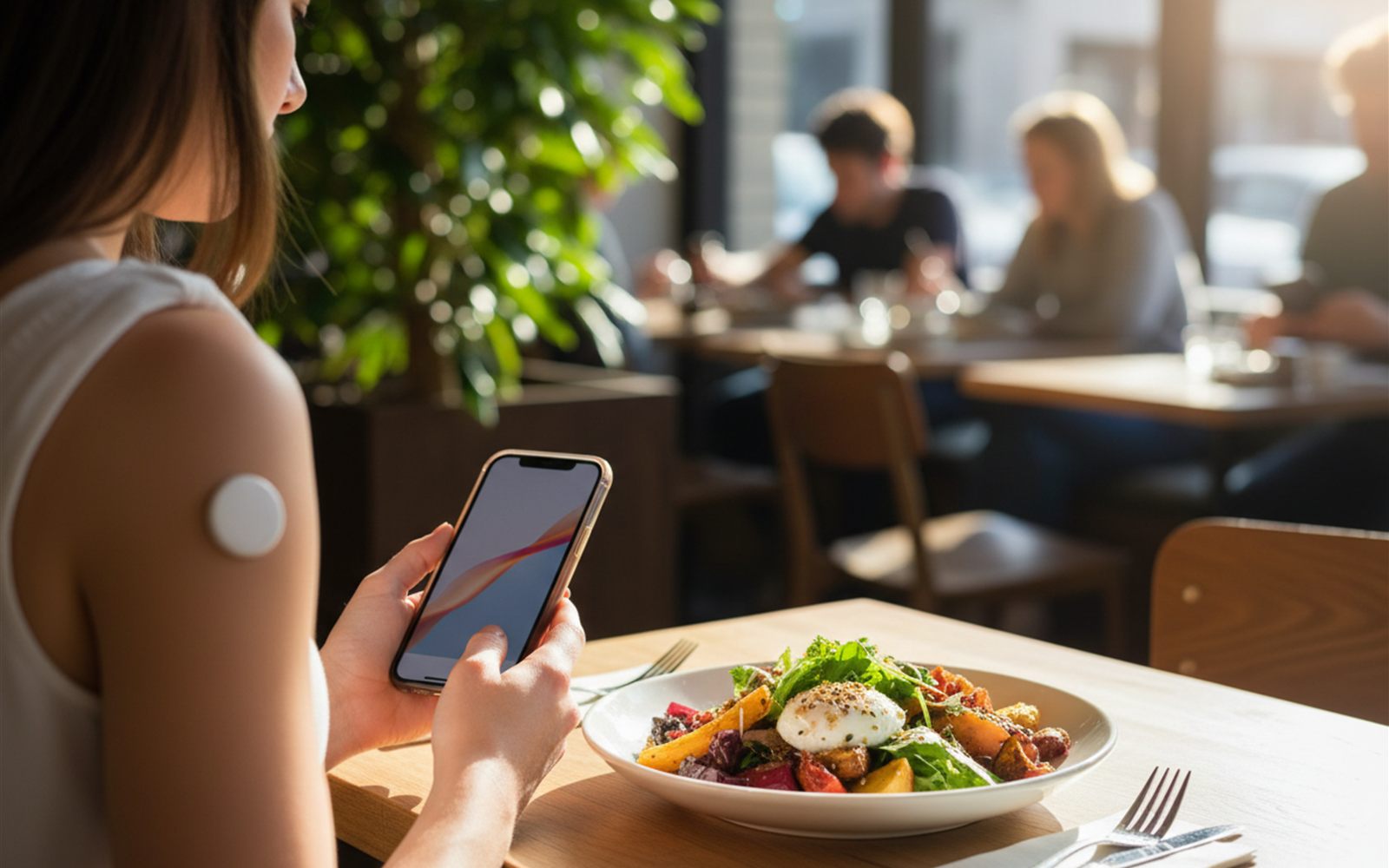
You eat the same breakfast every weekday. Oatmeal, banana, coffee. On your phone, a line climbs sharply for an hour afterward, then sags below where it started, right about the time you always get foggy at your desk. Nobody drew blood to figure that out.
That readout used to require a prescription and a diagnosis. Now it requires a trip to Walgreens.
In 2024 the Food and Drug Administration cleared the first continuous glucose monitors sold over the counter to people without diabetes: Dexcom’s Stelo and Abbott’s Lingo. Two years later, they are ordinary retail products.
Stelo runs about $99 for a month’s supply, which is two sensors worn 15 days each. Lingo sells a starter sensor for around $49 and a six pack for $249, roughly $41.50 per sensor.
The bigger shift is that the data stopped living in its own app. Oura ring owners in the United States can pair a Stelo sensor and see glucose sitting alongside their sleep, stress and activity in one place, which is the first time most people can watch a bad night and a bad glucose day line up on the same screen.
The category grew up fast. Global Market Insights valued the over the counter continuous glucose monitor market at about $528 million in 2025 and projects roughly 17 percent annual growth over the following decade. Mordor Intelligence puts the entire glucose monitoring market, prescription and retail together, near $15.8 billion in 2026.
Everyone expects the first spike to be the revelation. It usually is not. Here is the honest arc of a two week sensor, based on what reviewers who have worn them consistently report.
Day one is a warmup and a small letdown. A spring loaded applicator presses the sensor onto the back of your upper arm and it is over in about a second. Then nothing happens for a while. Stelo needs roughly 30 minutes before it starts reporting. Lingo takes about an hour. You will check your phone repeatedly during that window, and there will be nothing to see.
Days two and three are the food circus. This is when people test everything. White rice against brown. Pizza at 8 pm. The office birthday cake. It is genuinely fun and almost entirely useless, because a single meal on a single day tells you very little.
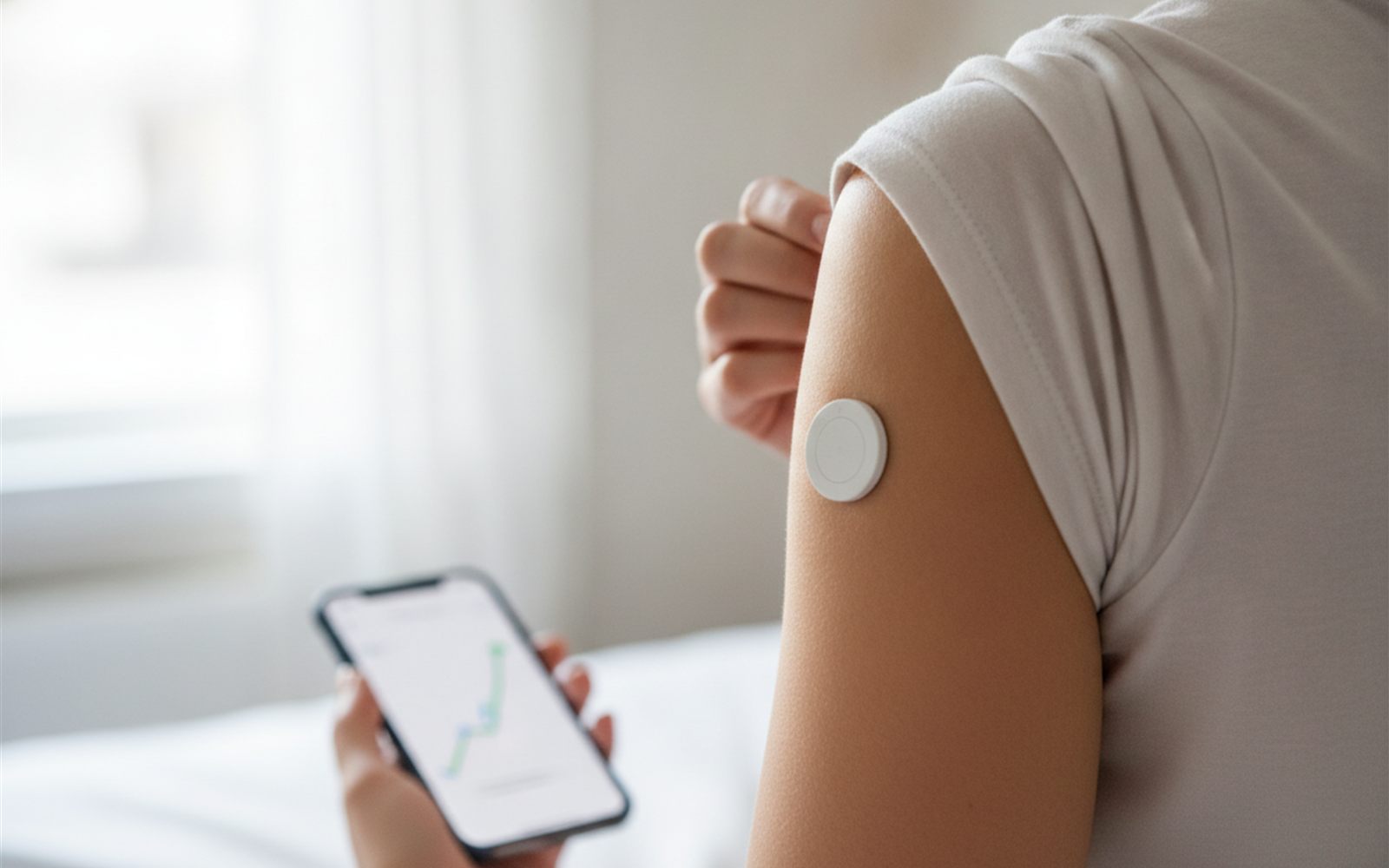
Days four through seven are where the pattern shows up. Not the spikes. The repeats. The same lunch producing the same shape three days running is information. A CNN Underscored team put four editors on Stelo and Lingo for at least two weeks each specifically to get past the novelty phase, and getting past it is the whole point.
The second week is where you change one thing. Eat the same lunch, then walk for ten minutes. Eat the protein before the bread instead of after. Sleep seven hours instead of five. The line responds within a day, which is a much faster feedback loop than an annual blood panel.
The physical experience fades quickly. Most people say they stop noticing the sensor within an hour, it survives showers and workouts, and the most common complaint is sleeping on that arm for the first night or two. Some people get redness under the adhesive, which is the most frequent reason a sensor gets pulled early.
A sensor about the size of two stacked quarters goes on the back of your upper arm using a spring loaded applicator. A filament thinner than a hair sits just under the skin and reads the fluid between your cells, not your blood, sending a value to your phone every few minutes.
Think of it as a fuel gauge for the sugar circulating through you, updated all day and all night.
That “not your blood” detail is the mechanism worth remembering, because it explains almost every limitation further down this page.
You find out what your food actually does to you, not what a chart says it should do. Two people can eat identical rice and get different curves, and the only way to know which one you are is to look.
You catch the afternoon crash. Plenty of users discover the 3 pm slump is not a willpower problem, it is a lunch problem, and moving the order of what they eat changes the line.
And you get a nudge on the boring stuff. A walk after dinner, protein before carbohydrates, sleeping seven hours instead of five. All of it shows up on the graph within a day, which is a lot more motivating than a number you see once a year.
Two products own this shelf, and they are built for different people.
| Sensor | Price | Wear time | How often it reads |
|---|---|---|---|
| Dexcom Stelo | About $99 a month for two sensors | 15 days | Every 5 minutes |
| Abbott Lingo | About $49 for a starter sensor, $249 for six | 14 days | Every minute |
Published accuracy figures land close together. Both companies report their sensors using MARD, an industry measure of how far a sensor typically drifts from a lab blood test, where lower is better. Stelo publishes about 8.3 percent and Lingo about 9.3 percent. In plain terms, both are good enough to trust the shape of the line and not good enough to treat any single reading as gospel.
The real split is what you want out of it. Lingo is the cheaper way to run one experiment, with a friendlier beginner app and minute by minute readings that make the food connection feel immediate. Stelo is the better long run option, with longer sensor life, no subscription requirement, and the integrations that let the data sit next to everything else you already track, including the sleep and readiness data from a smart ring.
If you have never worn one, start with the cheap two week experiment. Almost nobody needs a year of this data.
These are wellness tools, not diagnoses. If your numbers look strange, that is a conversation with a doctor, not a reason to self treat.
The needle claim needs an asterisk too. There are no finger pricks and no lancets, but the sensor does put a tiny flexible filament under the skin.
Two more honest limits. Sensor readings trail your actual blood by several minutes, so they are better at showing patterns than snapshots. And researchers still debate how much glucose swings matter in people without diabetes, so treat a spike as information rather than an alarm.
The concerns here are not coming from skeptics on the internet. They are coming from the clinicians who read this data for a living.
Nobody agrees on what normal looks like. Every interpretation guideline in existence was written for people with diabetes. Research published in the last two years found that expert clinicians shown challenging glucose reports from people without diabetes often disagreed with each other about what those reports meant. There is no settled normal range for a healthy person wearing one of these, which is a strange thing to discover after you have already bought the sensor.
The app may call something abnormal that is not. In people without diabetes, glucose can rise above 140 mg/dL after a meal without indicating anything wrong, yet consumer apps commonly flag readings like that as out of range. That single design choice is behind a lot of unnecessary alarm.
Watching too closely can make people anxious. This is the most documented downside in the literature: over monitoring ordinary fluctuations, then cutting out foods based on a misread graph. Johns Hopkins Bloomberg School of Public Health has publicly examined whether glucose monitoring is useful for people without diabetes at all, and the fair summary of the expert position is cautious optimism. Useful for learning and personalization, easy to overinterpret.
Then the practical ones. Adhesive irritation. The ongoing cost, which insurance generally does not cover for people without diabetes, though health savings account dollars often apply. And the fact that you are handing a company a continuous record of your metabolism, which is worth reading the privacy policy over.
None of that makes these bad products. It makes them information tools that reward a light touch.
Both are on shelves and online today with no prescription: Stelo at around $99 a month, Lingo starting near $49 for a two week sensor and cheaper in multipacks.
If you only want to run an experiment, buy one sensor, eat normally for the first week, then change one thing in the second.
The direction of travel is obvious from what has already shipped: fewer separate apps, more of your body in one place.
Glucose next to sleep is the first version of that, and it is here now. The pattern that follows is the one every other health category has taken, and it is the same one that turned a $3,000 prescription device into a $249 pair of earbuds. Prescription only, then over the counter, then a feature inside something you already own.
Expect longer wear times, lower prices as the two big players fight for the same shelf, and better guidance for people who are not diabetic once the research catches up with the retail.
What will not change is the part that already works. Two weeks of watching your own curve will teach you more about your breakfast than a decade of nutrition headlines.
Meta's new $299 frames and its display glasses turned a nerdy experiment into the gadget of the year.
After a decade of promises, solid state cells are shipping in a real vehicle, with earbuds and cars next in line.
EarFun's Clip 2 puts live translation in 100 languages on your ears without a triple digit price.