
Why Everyone Is Suddenly Wearing AI Smart Glasses
Meta's new $299 frames and its display glasses turned a nerdy experiment into the gadget of the year.
After a decade of promises, solid state cells are shipping in a real vehicle, with earbuds and cars next in line.
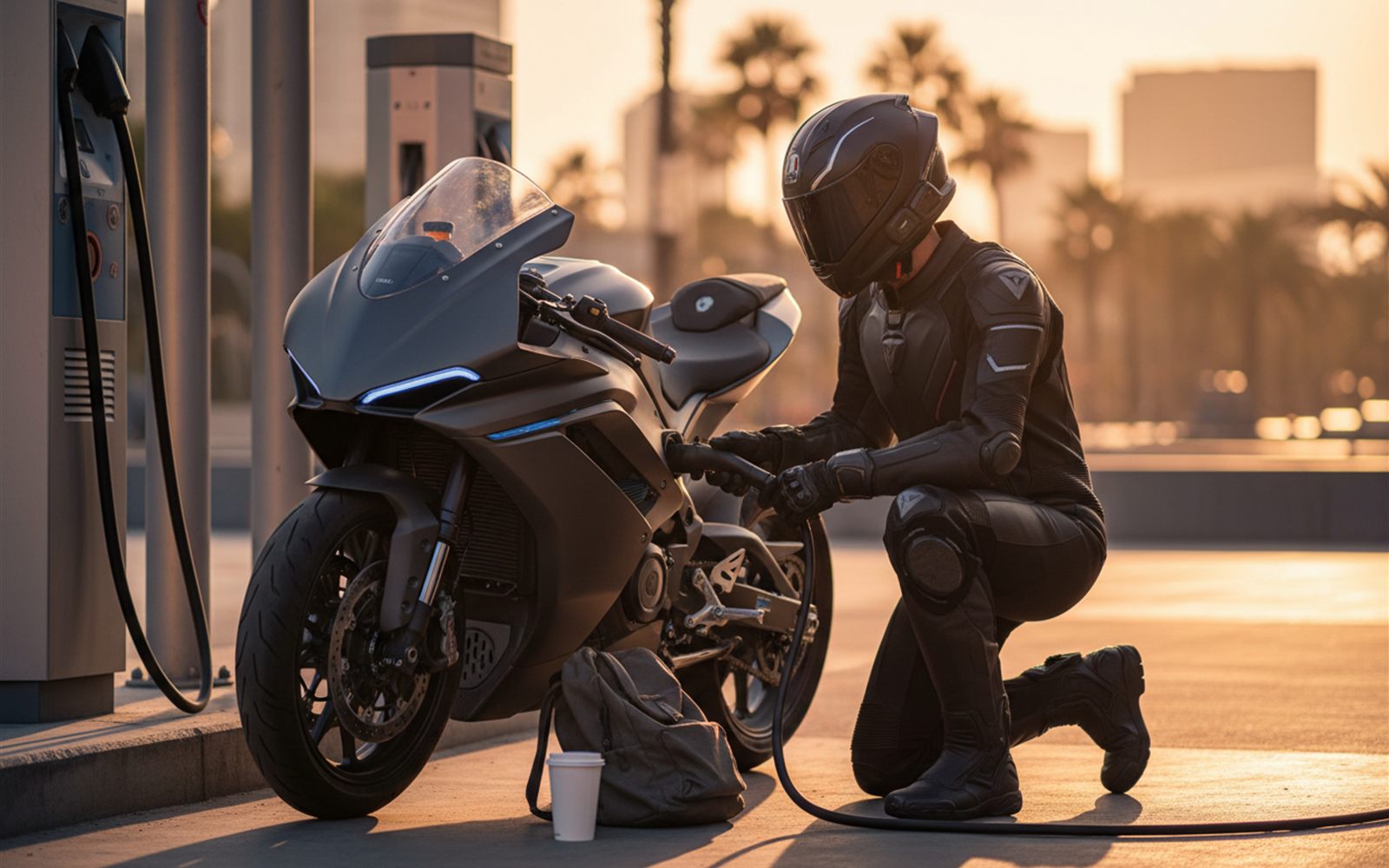
For ten years, solid state batteries have been the thing that was always two years away. Longer range, faster charging, no fire risk, coming soon. Then in January, at CES in Las Vegas, a Finnish motorcycle company rolled one onto a stage that you could actually buy.
Verge Motorcycles announced on January 4 that its TS Pro would ship with a solid state pack, and production bikes have since come off the line. Early reservation holders have started taking delivery.
The numbers are the interesting part. The pack holds 33.3 kWh. The bike offers up to 370 miles of range on the larger battery, and ten minutes of charging adds about 186 miles. Pricing starts at $29,900, with the big battery version at $34,900.
So this is a showcase rather than a mass market moment. Verge is building roughly 350 of these this year, and RideApart reported that new orders are already landing in 2027. But it is a real vehicle, sold to real people, with a real solid state battery inside it.
Cars are close behind. Mercedes has been road testing an EQS fitted with a lithium metal solid state pack from Massachusetts based Factorial, and last year drove it from Stuttgart to Malmö, covering 749 miles on a single charge. The company says the chemistry buys up to 25 percent more range in the same space and weight.
Small gadgets are coming first for most people. Samsung Electro Mechanics has developed an ultra small solid state cell aimed at the Galaxy Watch and Galaxy Buds, and TDK has been sampling a ceramic solid state cell sized for hearing aids and earbuds.
Here is the part the spec sheet does not tell you.
Journalists who have ridden the TS Pro keep describing the same strange sensation, and it has nothing to do with chemistry. There is no clutch lever. There are no gears. There is no engine noise and no vibration through the pegs, because the motor is built into the rear wheel itself, a hubless ring Verge calls the Donut. Twist the throttle and the bike simply goes, with 737 pound feet of torque arriving instantly. Forbes reviewer Bill Roberson described the throttle as delivering a “hand of God” feeling even in the mildest riding mode.
Zero to 60 takes 3.5 seconds. Top speed is 124 mph. None of that is the daily difference, though.
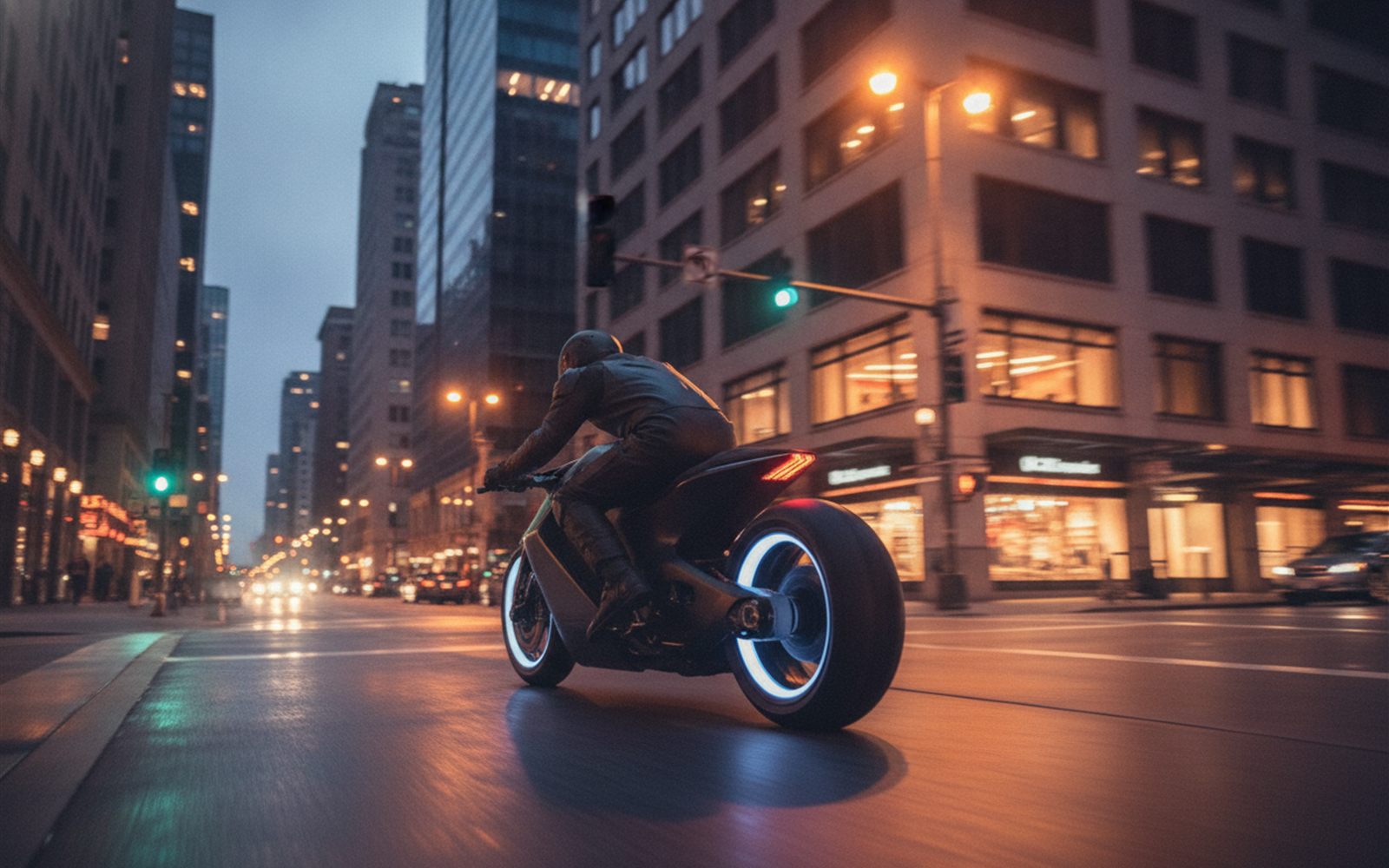
The daily difference is the charging stop. On a normal electric bike, a long ride means planning your day around a charger and then sitting next to it. Ten minutes for 186 miles turns that into a coffee. You park, you order, you drink it, you leave with more range than most riders use in a whole weekend.
The honest counterweight came from Robb Report, whose first ride verdict was that the bike is heavy on performance and light on premium touches. A $29,900 motorcycle is still an early adopter object. You are paying for the battery, not the stitching.
A normal lithium battery has a liquid soaked separator between its two ends, and that liquid is flammable. A solid state battery swaps it for a solid, usually a ceramic or a glassy material.
Think of replacing the gasoline in a can with a firm gel. The energy is still there, but it will not slosh, leak, or flash.
That single swap is the whole mechanism. Every other benefit follows from it.
Charging gets faster because a solid electrolyte handles heavy current better without the runaway heat that forces a charger to slow down near the end.
Devices get smaller or last longer, because more of the energy fits in less space. That is why earbuds and hearing aids get the technology before cars do. A few extra hours per charge in something that small is a big deal.
And the fire question mostly goes away. Take the flammable liquid out and a punctured or overheated cell has far less to burn.
If solid state is so much better, why is it not in everything already? Price. That is the entire answer, and the gap is wider than most coverage admits.
BloombergNEF’s annual battery price survey, published in December, put the average lithium ion pack price at a record low of $108 per kWh, with lithium iron phosphate packs down at $81 and nickel manganese cobalt packs at $128. Ordinary batteries got dramatically cheaper while solid state was still in the lab.
Published estimates for solid state cells today land several times higher, in the range of a few hundred dollars per kWh, which is why the technology debuts on a $29,900 motorcycle instead of a $29,900 car. Most analyst forecasts expect that figure to fall under $200 per kWh once real factories run at scale, somewhere around 2028.
The market itself is still tiny and growing fast. Mordor Intelligence sizes the electric vehicle solid state battery market at roughly $372 million in 2026 and expects it to compound at about 43 percent a year through 2031, with the Asia Pacific region holding the largest share.
Two numbers, one story. Solid state is expensive now, and it will not be expensive forever.
| Product | Price today | Where it stands |
|---|---|---|
| Verge TS Pro motorcycle | From $29,900 | Shipping now, roughly 350 units this year |
| Mercedes EQS with Factorial cells | Not for sale | Road test car, 749 miles on one charge |
| Samsung Electro Mechanics cell | Inside future devices | Aimed at Galaxy Watch and Galaxy Buds |
| TDK next generation CeraCharge | Inside future devices | Sized for earbuds and hearing aids |
| Samsung SDI vehicle cells | Inside future cars | BMW, Stellantis and GM between now and 2028 |
| BYD | Inside future cars | Targeting 2027 |
| Volkswagen with QuantumScape | Inside future cars | Targeting 2027 or 2028 |
The pattern is easy to read. Small and expensive first, big and affordable later. Your ears get this before your driveway does.

Two honest caveats.
The first is the label. Solid state has become a marketing word, and it does not always survive a teardown. When analysts at TechInsights opened up a portable power station sold as solid state, they reported finding a significant amount of liquid inside. Read the fine print, especially on cheap gear.
The second is your phone. There is no solid state phone in 2026 and the realistic window is 2027 or 2028. What phones got instead is silicon carbon, a cheaper upgrade that packs more capacity into the same slab. Average smartphone battery capacity hit 5,291 mAh in January, up about 400 mAh in a year, and Honor squeezed a 10,001 mAh cell into a body 8.3 mm thick.
The loudest worry is that this turns into another decade of press releases. It is a fair worry. Solid state has been announced, delayed, reannounced and delayed again by nearly every carmaker that touched it, and a road test car driving to Sweden is not the same as a factory shipping cells by the million.
The second worry is that the safety promise gets oversold. Removing the flammable liquid removes the biggest fuel source in a cell, and that genuinely matters. It does not make a battery incapable of failing. Anything storing 33 kWh deserves respect regardless of what is inside it.
The third is cost, and it is the one that will actually shape your life. If solid state settles in as a premium option, it shows up in flagship phones, luxury cars and expensive earbuds while the rest of the market stays on lithium iron phosphate, which is cheap, safe enough, and improving on its own. Several of the most interesting battery stories right now are not solid state at all, including the sodium cells turning up in power banks and the home storage batteries that now pay some owners back.
What is being done about it is mostly boring and mostly good. Standards. China published a national solid state battery standard in July, which historically is the signal that regulators expect volume manufacturing rather than demonstrations.
Earbuds with solid state cells are expected late this year, with watches and rings following in 2027.
For cars, Samsung SDI has cells slated for vehicles from BMW, Stellantis and General Motors between now and 2028, BYD is targeting 2027, and Volkswagen is aiming at 2027 or 2028 with QuantumScape.
Start with the small stuff, because that is where it lands first. Earbuds that go a full workday in hearing assist mode instead of half of one. A smartwatch you charge twice a week instead of every night. A hearing aid that stops eating disposable batteries, which matters more than it sounds if you have ever changed one at a restaurant table.
Then the driveway, on the roadmaps the carmakers have actually published. A midrange electric car with 25 percent more range in the same body, charging in the time it takes to use a rest stop, is a 2028 conversation rather than a 2026 one.
And then the quiet one nobody markets. Fewer things in your house that can catch fire. Not zero. Fewer.
Solid state finally stopped being a press release. It is just going to reach your earbuds before it reaches your driveway.
Meta's new $299 frames and its display glasses turned a nerdy experiment into the gadget of the year.
EarFun's Clip 2 puts live translation in 100 languages on your ears without a triple digit price.
See through screens jumped from trade show stunt to store shelves, and the price curve is finally bending.