Why Everyone Is Suddenly Wearing AI Smart Glasses
Meta's new $299 frames and its display glasses turned a nerdy experiment into the gadget of the year.
The first paying air taxi rides begin this year in Dubai, booked from the same Uber app you already use.
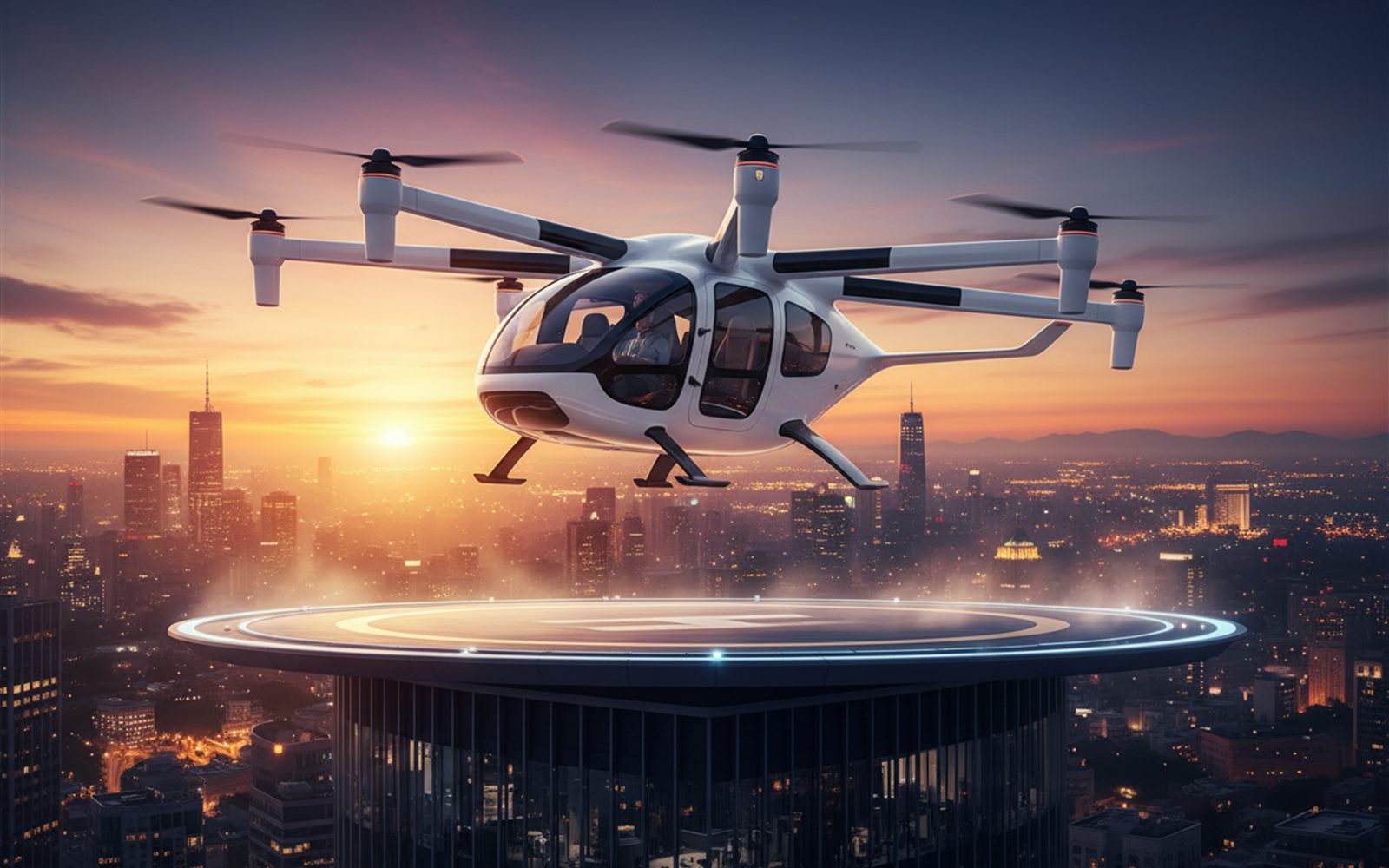
The first thing passengers notice is what they do not hear. An electric aircraft with six rotors rises off a rooftop pad with a hum instead of a helicopter’s hammering roar, and ten minutes later the airport traffic is a story happening to other people. In 2026, this stopped being a demo.
In July 2026, Dubai unveiled the world’s first certified commercial vertiport, purpose built for electric air taxis, as trade outlet Aviation A2Z reported. Joby Aviation, the California company whose aircraft will fly from it, plans to carry its first paying passengers in Dubai before the end of 2026, pending final signoff from the UAE’s aviation regulator. The launch network, built with infrastructure firm Skyports, connects four stops: Dubai International Airport, Dubai Mall, Atlantis The Royal, and the American University of Dubai. The marquee route, from the airport to the Palm Jumeirah area, takes about 10 minutes by air versus roughly 45 minutes by car, and rides will be booked directly inside the Uber app.
The US is next in line. Joby has reached stage four of the FAA’s five stage certification process, among the furthest along of any electric air taxi maker, and rival Archer Aviation cleared its own milestone in January 2026 when the FAA accepted the Means of Compliance for its Midnight aircraft.
These aircraft are eVTOLs, short for electric vertical takeoff and landing. Picture an oversized drone with seats. A set of electric rotors lifts it straight up, then tilts forward so it cruises like a small plane. Batteries replace jet fuel, which is why it is dramatically quieter than a helicopter and produces no exhaust in flight. Those batteries are also the pacing item for range and payload, which is why aviation engineers watch the same chemistry race that is reshaping the humble power bank.
No paying customer had buckled in when this article was updated, but reporters have now stood close enough to describe the experience in detail. When Joby flew a demonstration over New York, a TechRadar writer watched the aircraft rise from the downtown Manhattan heliport and summed up the pitch as trips of “5 minutes instead of an hour” across a city that crawls at street level.
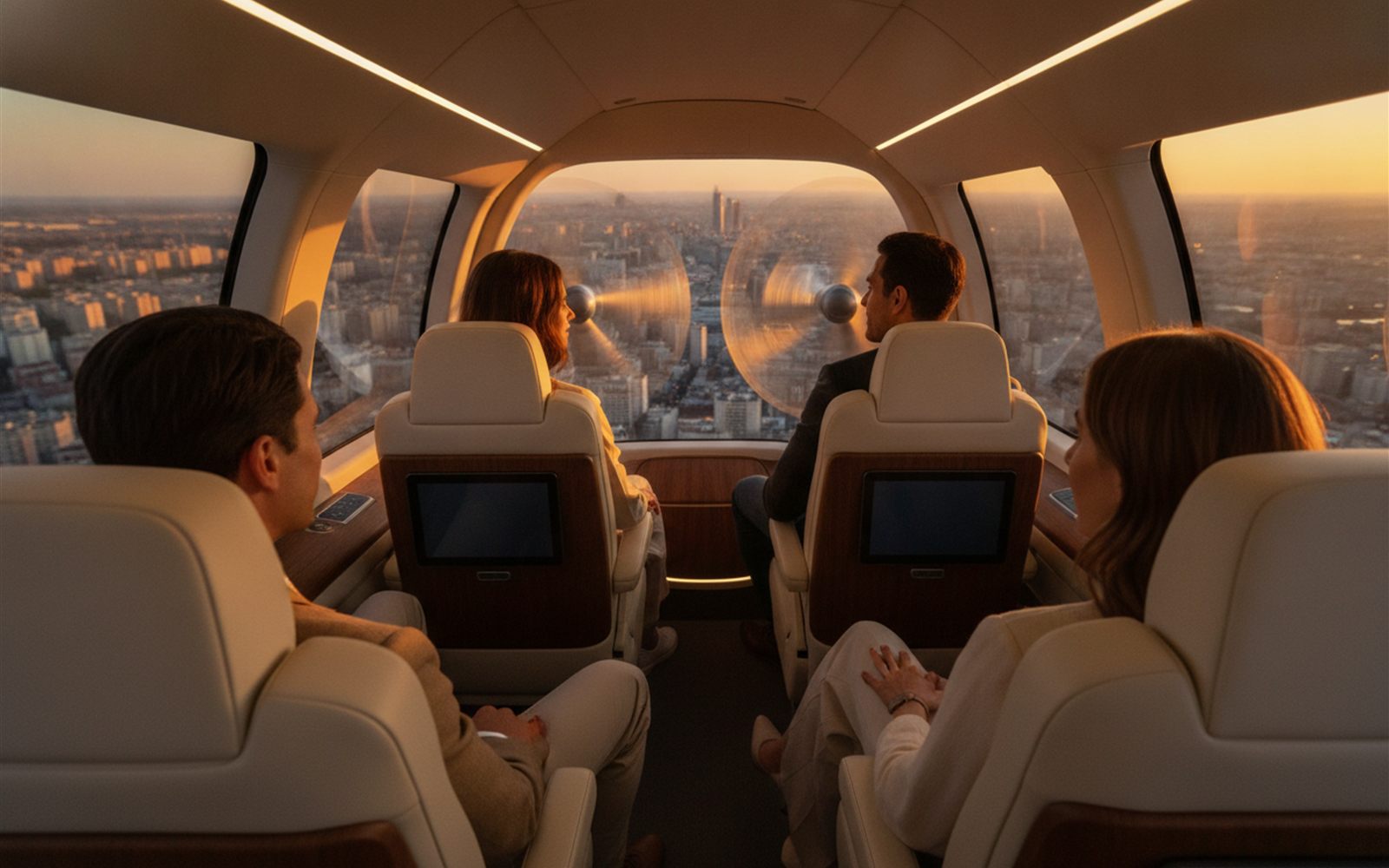
Here is the ride, according to Joby’s published cabin details and that independent coverage. Four passengers sit on leather seats, and every seat is a window seat. The aircraft cruises at up to 200 miles per hour, fast enough that the marquee Dubai route wraps up in about ten minutes. There are no headsets and no shouting, because the cabin stays near conversation volume. Joby says the aircraft is roughly 100 times quieter than a helicopter of similar weight, and a technical analysis reported by Aerospace America found that at cruising height it would not even be audible over routine city sounds like traffic and construction.
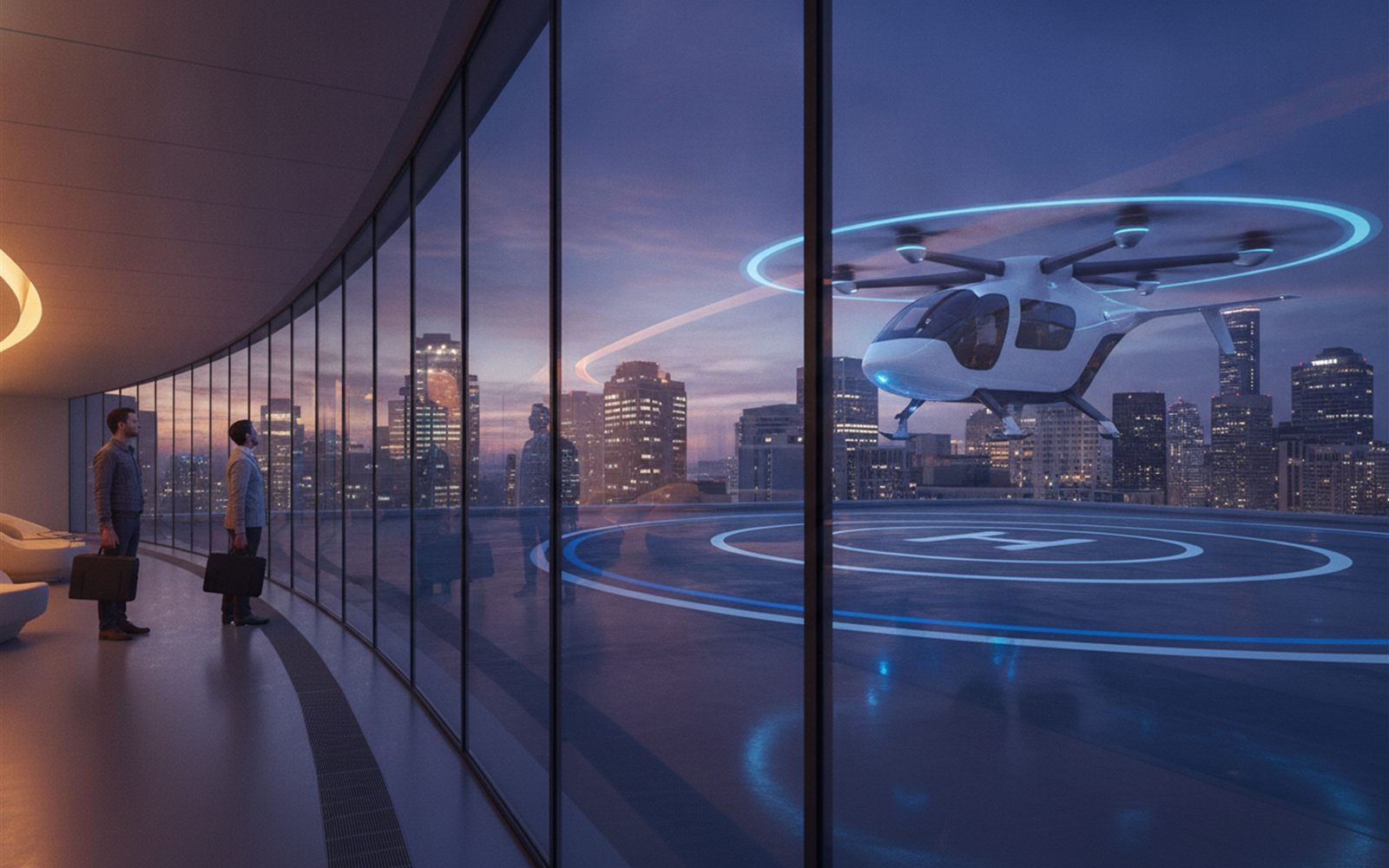
Boarding is built to feel nothing like an airport. Vertiports are rooftop pads with small lounges, not terminals, because a ten minute flight stops making sense if check in takes forty. Joby’s Dubai launch site sits on airport property, so the handoff from arrivals hall to rotor spin is designed to be measured in minutes. The strangest part, reporters keep noting, is the takeoff itself: straight up, a gentle lean forward, and the oversized drone you are sitting in quietly becomes a small plane.
The airport run shrinks from an hour of traffic to minutes in the air, and airport connections are exactly the routes these networks launch with.
It is priced like a ride, not a charter. Seats sell individually through a ride hailing app, so you book one seat the way you book a car today.
The quiet is the unlock. Rooftop pads only work in cities if neighbors tolerate the noise, and these aircraft are built around that constraint.
Early fares are expected to land near Uber Black territory. Industry estimates put pricing at roughly $3 to $6 per mile, which works out to about $50 to $100 a seat for the short hops these services start with. Final Dubai launch fares were still unannounced as this update went out, and Joby and Uber have said the goal is to bring prices down toward regular UberX levels as the network grows.
The launch map tells you what those first seats buy. Dubai’s four stop network connects the airport with the mall, the Palm, and the university district, and Joby has already announced the next wave of vertiport locations, including Dubai Marina and the DIFC financial district. Local outlet Time Out Dubai has tracked the plans closely, and the constant across all the coverage is the time math that justifies the fare: minutes in the air replacing most of an hour in traffic.
A market this young should be crowded with hopefuls. Instead the field has already thinned to a few serious names, because building a certified electric aircraft turned out to be a cash bonfire that only the best funded survived.
| Player | The aircraft | Riders | Where it stands |
|---|---|---|---|
| Joby, US | S4, piloted | 4 | First paying Dubai flights targeted for late 2026 |
| Archer, US | Midnight, piloted | 4 | Abu Dhabi launch partner, key FAA milestone cleared in January |
| EHang, China | EH216 S, no pilot aboard | 2 | Already flying paid sightseeing passengers in China |
The money explains the thinning. When UAE operator Air Chateau announced plans to buy up to 100 of Archer’s Midnight aircraft for up to $500 million, the math put each aircraft around $5 million. Europe’s two early stars, Volocopter and Lilium, both slid into insolvency proceedings before reaching paying passengers. EHang took the opposite path from everyone else: its two seat EH216 S flies with no pilot aboard at all, which is why China has confined it to controlled sightseeing hops rather than city routes so far.
Joby also made a quieter chess move at home. In August 2025 it completed its acquisition of Blade’s passenger business, the company that already flies helicopter shuttles between Manhattan and the New York airports. The logic is plain once you see it: the routes, lounges, and customers exist today, and the helicopters get swapped for electric aircraft the day certification lands.
Here is the paradox of the quiet aircraft: the loudest question is still noise, and the deepest one is safety.
The European Union Aviation Safety Agency surveyed residents of six cities and found 83 percent open to air taxis in principle, with enthusiasm cooling once people imagined the flights over their own neighborhoods and safety emerging as the dominant concern. The industry’s answer is the slow, unglamorous one: certifying these aircraft through the same style of process commercial airliners face, launching with pilots aboard, and flying conservative routes first. Business outlet Quartz has reported the industry’s own private fear, that a single early crash could set the sector back years, which is exactly why the first networks are carefully staged corridors rather than swarms.
Noise gets the technical answer above, aircraft engineered to fade into the city’s background hum. Airspace is thornier. United Airlines CEO Scott Kirby said in March 2026 that he opposes operating air taxis near crowded hub airports, arguing they cannot mix safely with existing traffic there. Where these things may fly, and whose windows they fly past, will be argued city by city.
Weather can ground flights, ranges are short by design, and American riders must wait for the FAA to finish its process, with US service expected only after certification wraps. The first routes are showcase corridors aimed at travelers paying to skip traffic, not daily commuters.
Every roadmap that has actually been announced points the same direction. Dubai grows from one certified vertiport toward a network of six locations and counting. Archer launches in Abu Dhabi and has announced plans to fly passengers in Los Angeles around the 2028 Olympics. Joby’s Blade deal keeps New York’s airport shuttle routes warm for the handover. And because Joby rides will sell inside the Uber app, the booking habit arrives before the aircraft does.
So the honest 2030 sketch, built from those announcements rather than hype, looks like this. Your flight lands in a launch city. Your ride app offers a rooftop seat at Uber Black prices next to the usual sedan. You take it the first time because a tight connection makes the time math irresistible, and the sky lane stays a premium option while prices work their way down, the same arc airfare itself once followed.
The flying taxi finally exists. You will hail it from the same app as the regular kind.
Meta's new $299 frames and its display glasses turned a nerdy experiment into the gadget of the year.
After a decade of promises, solid state cells are shipping in a real vehicle, with earbuds and cars next in line.
EarFun's Clip 2 puts live translation in 100 languages on your ears without a triple digit price.