
Why Everyone Is Suddenly Wearing AI Smart Glasses
Meta's new $299 frames and its display glasses turned a nerdy experiment into the gadget of the year.
A $20,000 robot butler is shipping to American houses, and the fine print about who is really driving it matters.
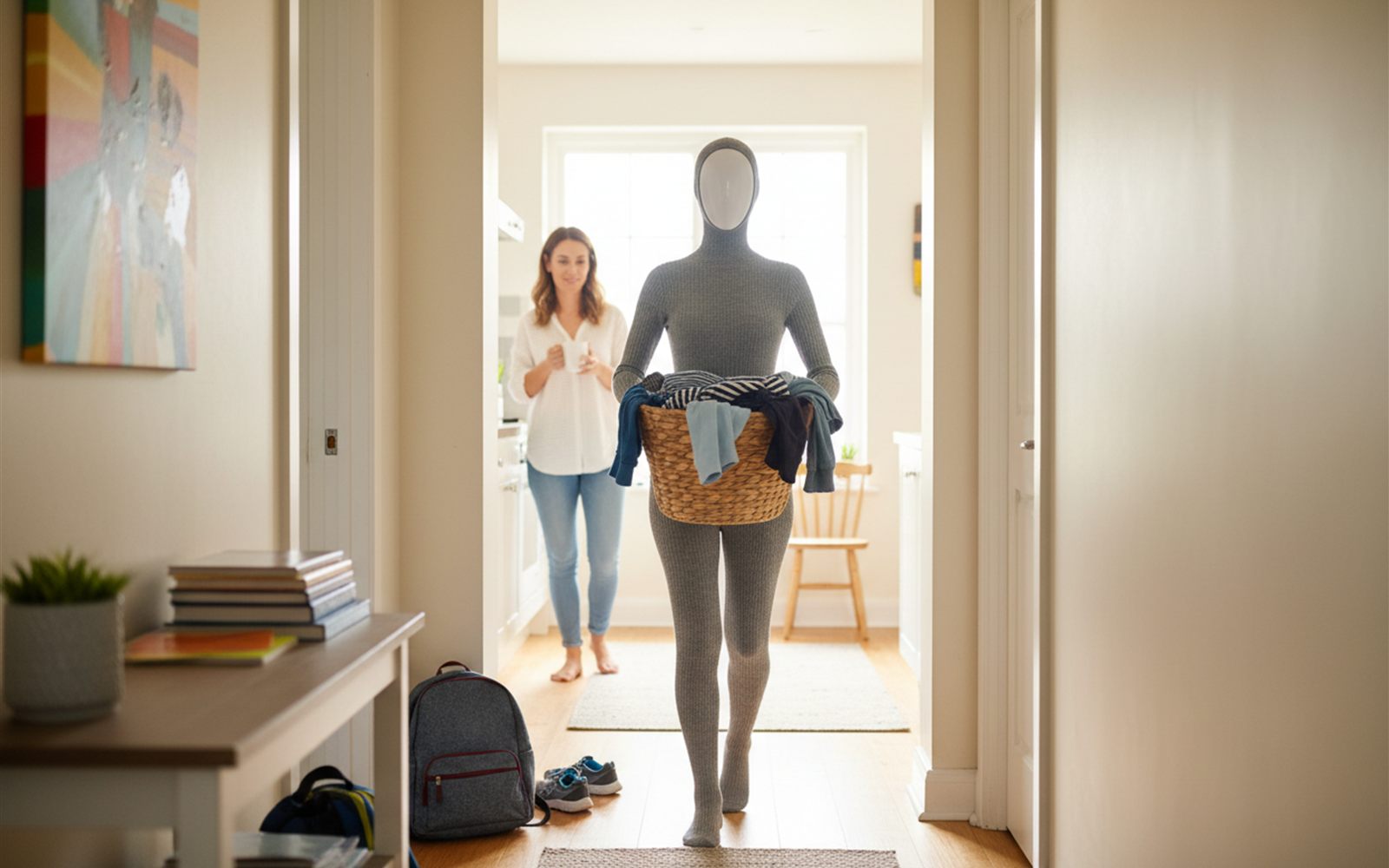
Picture a five foot something machine in a knit cover walking to your front door, opening it for a guest, then heading back to the kitchen to put a mug in the dishwasher. Not a concept video. A product with a price, a factory, and a delivery window.
The company is 1X, and the robot is Neo. Preorders opened last fall at $20,000 for early access or $499 a month on subscription. In May the company opened a Neo factory in Hayward, California, and it says deliveries to homes in the United States and Canada begin in the second half of this year, with other markets following in 2027.
Neo is deliberately small for a humanoid. It stands about five feet five, weighs just under 66 pounds, and is rated to lift up to 154 pounds and carry around 55. The knit cover is not decoration. A soft, light robot that bumps into you is a very different object than a 300 pound steel one.
Neo is pitched as a household helper. It opens doors, fetches things, tidies up, handles laundry, and turns off the lights before bed.
Tesla is on a different track. Speaking at the World Economic Forum in January, Elon Musk said the company might sell Optimus to the public by the end of 2027, once reliability and safety are where he wants them. There is no consumer preorder and no confirmed home version.
Figure sits in between. Its Figure 03 was designed for the house and has been in home alpha testing since late 2025, but the company is deploying commercially with business partners while home use stays internal.
This is where the marketing video and the reporting part ways, and it is the most useful thing anyone can tell you before spending $20,000.
The Wall Street Journal’s Joanna Stern spent time living alongside Neo at the company’s own headquarters and timed what it did. Fetching a water bottle from the refrigerator took more than a minute. Loading three glasses and some dishes into a dishwasher took about five minutes. Folding one sweater took two.
Read those numbers again, because they contain the whole story. Neo is not slow at chores in the way a tired person is slow. It is deliberate. It moves like someone doing a task carefully in the dark.
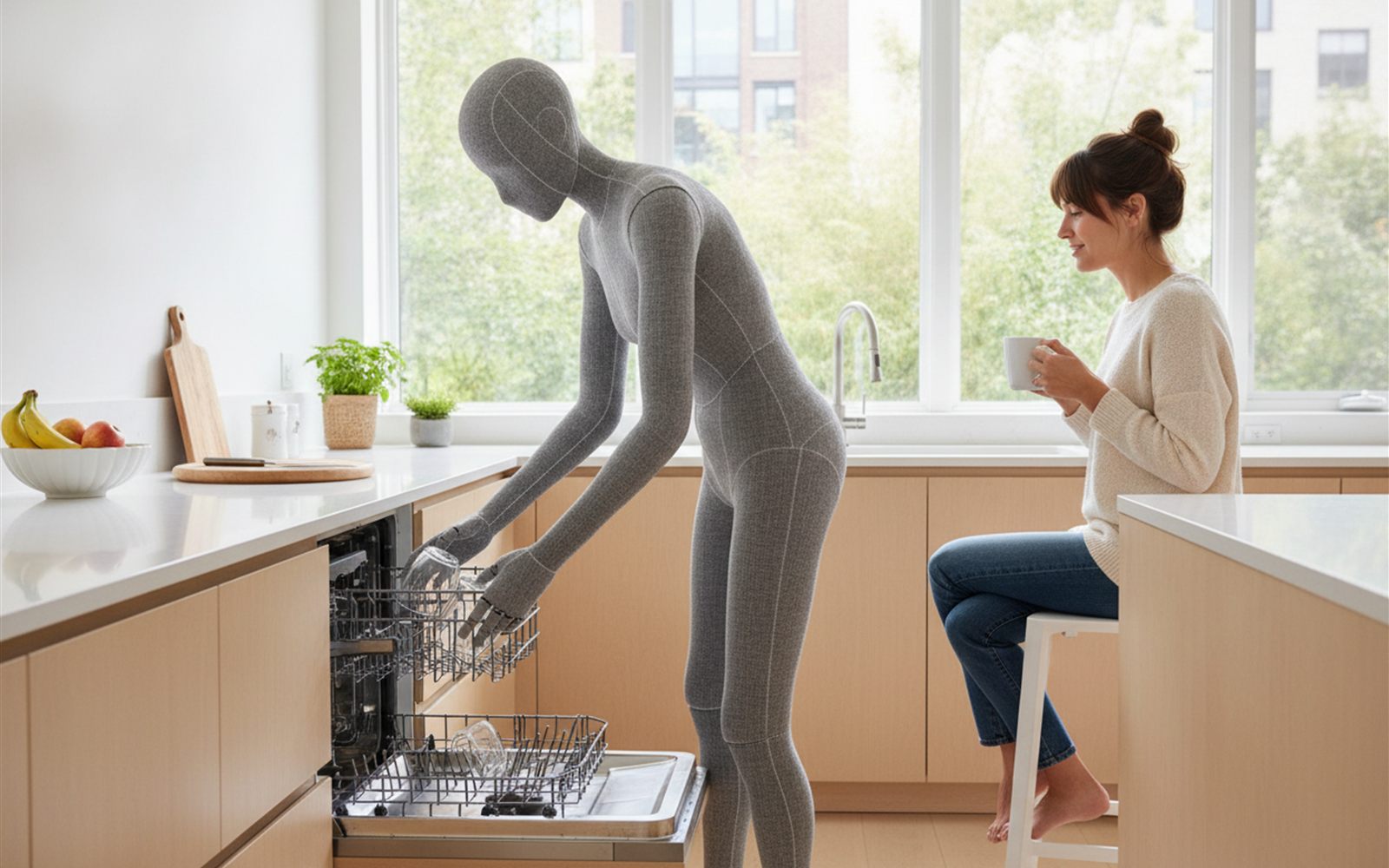
The second thing you notice is who is doing the work. During those sessions, a trained human operator wearing a virtual reality headset was driving the robot remotely. Not a bug in the demo. That is the product right now.
Fortune reported the same thing in February. The robot that promises to fold your laundry can do a growing share of it on its own, and calls a person for the rest.
So the honest picture of week one is this: a polite, quiet machine that takes five minutes to do your ninety second dishwasher job, does it without being asked twice, and occasionally pauses while a stranger takes the controls to get it unstuck.
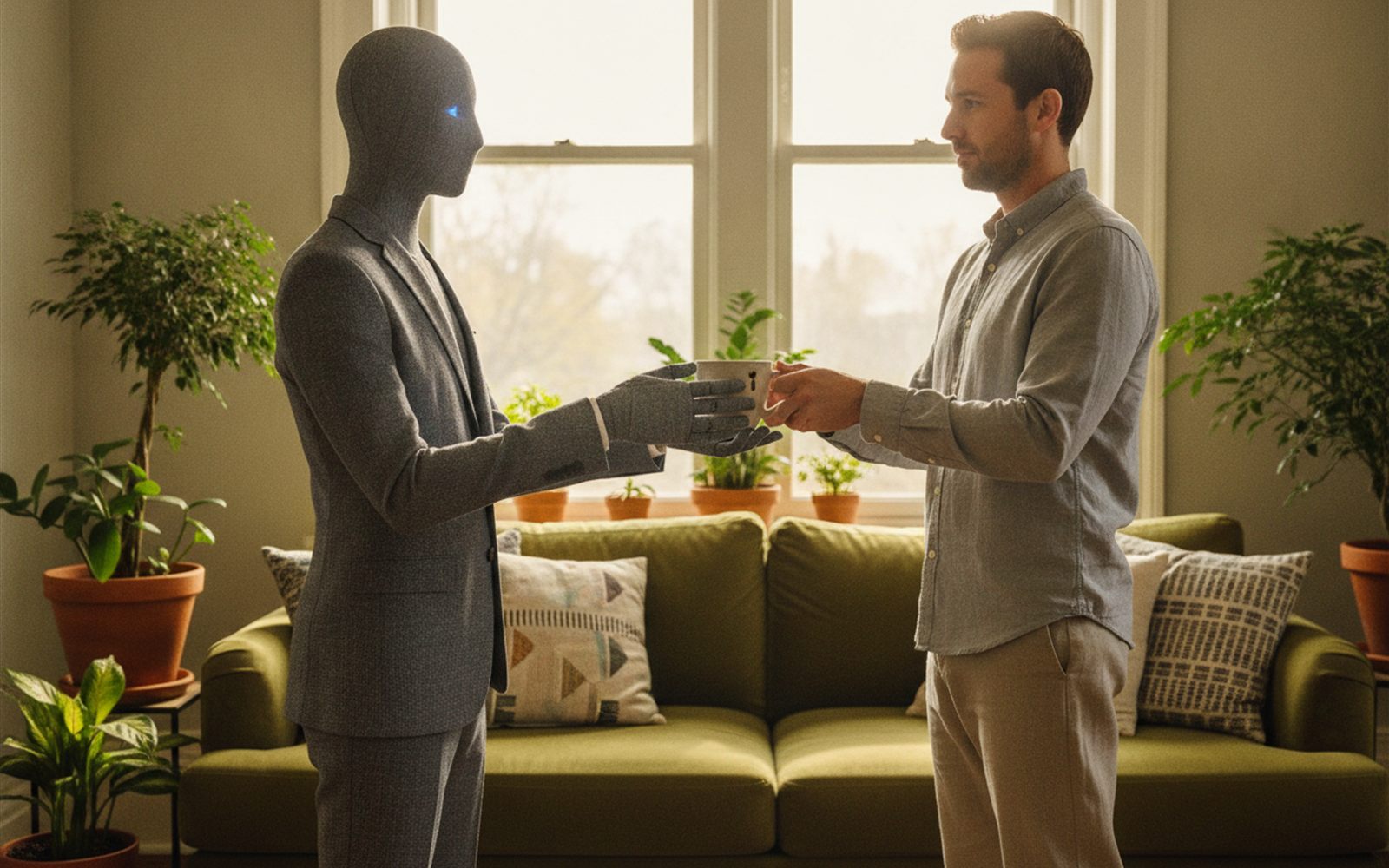
Neo runs an onboard AI system for the tasks it already knows, and when it hits something it cannot handle, a trained human operator at 1X takes over remotely and drives it through the job. Every one of those sessions becomes training data, so the machine needs the human less over time.
Think of a student driver with an instructor who has a second steering wheel, except the instructor is in another state.
That is the mechanism worth repeating at dinner. You are not buying a finished robot. You are buying a robot that is being taught, in your kitchen, partly at your expense.
The chores are the pitch, and they are the chores nobody argues about: laundry, tidying, carrying, fetching. Anything repetitive that eats a Saturday.
The bigger one is independence. A machine that can bring a person their medication, pick something up off the floor, and open the door for a visitor is worth a great deal to someone who is aging in place.
And the price ceiling has been set. At $20,000, or a monthly fee close to a car payment, a home robot is no longer hypothetical spending. It is a decision.
Neo is the only one aimed squarely at your living room, but it is not the only humanoid you can buy. The market has quietly split into house robots, research robots and factory robots, at wildly different prices.
| Robot | Price | What it is really for |
|---|---|---|
| 1X Neo | $20,000 or $499 a month | Home chores, shipping to homes this year |
| Unitree R1 | About $5,900 | Small research and hobby platform |
| Unitree G1 | About $13,500 from Unitree | Developers, labs, demos |
| Unitree H1 and H2 | Roughly $29,900 to $90,000 | Serious research and commercial work |
| Figure 03 | No public price | Business deployments, home testing internal |
| Tesla Optimus | Not sold to the public | Target price around $20,000, no consumer date |
Figure is the clearest example of how differently these companies think about money. It does not sell you a robot at all. Its fleet at a BMW plant is billed at roughly $25 per robot operating hour, which is a staffing model wearing a robot costume.
The volume numbers explain why prices are moving. TrendForce forecasts that global humanoid robot shipments will pass 50,000 units in 2026, roughly a sevenfold jump over last year. China accounted for more than 80 percent of global installations in 2025, led by Unitree at about 5,500 units and AgiBot at 5,168.
Fifty thousand robots is nothing next to, say, cars. It is also about fifty thousand more than existed in the wild a few years ago.
Here is the caveat that should shape your whole opinion of this category. Neo is not autonomous. Industry estimates put its launch autonomy around 60 to 70 percent, which means roughly a third of what it runs into needs a person.
That person is a remote operator who, during a scheduled session, is effectively looking through your robot’s eyes inside your house. Privacy threads about exactly this dominate the discussion online, and outlets from CNET to TechRadar ran the same warning. 1X says the sessions are scheduled by the owner rather than open ended, but as of the middle of July no independent reviewer had a production unit in a real home to check.
Everything else is a company claim until the first units land and someone outside the company tests them.
Three real fears, and each one has a real answer, even if the answer is not finished yet.
Someone is watching my house. This is the correct thing to worry about first, and 1X does not deny the basic mechanic. Its published controls are room restrictions, time restrictions, audio masking and visual blurring, so an owner can wall off bedrooms and offices and limit when a session can happen at all. The part that has not been proven yet is enforcement. Nobody outside the company has audited it, which is exactly why the first independent home reviews matter more than the launch video.
It could hurt someone. Robot safety used to mean a cage on a factory floor. Home robots do not get a cage, so the standards are being rewritten in public. Industrial work is covered by ISO 10218 and the American ANSI and A3 standard, UL certifies consumer and commercial robots under UL 3300, and a dedicated humanoid standard, ISO 25785 part 1, is in development. IEEE Spectrum has reported on the parallel effort to update the personal care robot rules, which are more than a decade old. Neo’s design answer is the blunt one: keep it light and cover it in fabric.
It takes somebody’s job. This one is genuine and unresolved. The World Economic Forum’s widely cited estimate is that automation could displace about 85 million jobs by 2030 while creating roughly 97 million new ones, which is comforting in aggregate and useless to the specific person on the specific shift. Notably, the IEEE Humanoids conference in December has made labor displacement its headline theme rather than an ethics footnote, which tells you the engineers consider the capability question mostly settled and the consequence question wide open.
Household robots sit slightly outside that fight. Nobody was employing a person to fold your sweaters. The factory versions are a different conversation entirely.
1X is taking orders now at 1x.tech, with early access units prioritized for delivery this year and the rest rolling into 2027. Tesla’s consumer window is late 2027 at the earliest. Figure has no public consumer date.
If you are curious rather than committed, wait for the first independent home reviews this fall. That is when we find out whether a robot that folds your laundry is worth a stranger with a scheduled key to your living room.
On the current roadmaps, not by replacing a person. By absorbing the ten minute jobs that never get done.
The realistic 2028 version looks like this. The robot handles the standing chores you would never hire out: unloading the dishwasher, carrying the laundry basket up the stairs, taking the bins to the curb, picking the floor clean before company arrives. It is slower than you and it does not care, because it works while you are asleep or at the office.
Around it, the rest of the house has already quietly automated. Kitchen robots are showing up in restaurants and home appliances, and the wearables people already use for hands free help, like the AI glasses that are suddenly everywhere, are becoming the way you tell any of it what to do.
The honest forecast is that autonomy climbs from that 60 to 70 percent figure toward something that rarely needs a human on the line, and that the day the operator disappears is the day this category actually arrives. Watch that number, not the price.
Because the machine walking into American living rooms this year is not a butler yet. It is an apprentice, and somebody else is still holding its hand.
Meta's new $299 frames and its display glasses turned a nerdy experiment into the gadget of the year.
After a decade of promises, solid state cells are shipping in a real vehicle, with earbuds and cars next in line.
EarFun's Clip 2 puts live translation in 100 languages on your ears without a triple digit price.