
Why Everyone Is Suddenly Wearing AI Smart Glasses
Meta's new $299 frames and its display glasses turned a nerdy experiment into the gadget of the year.
Atmospheric water generators now make daily drinking water at home, from countertop dispensers to whole house systems.
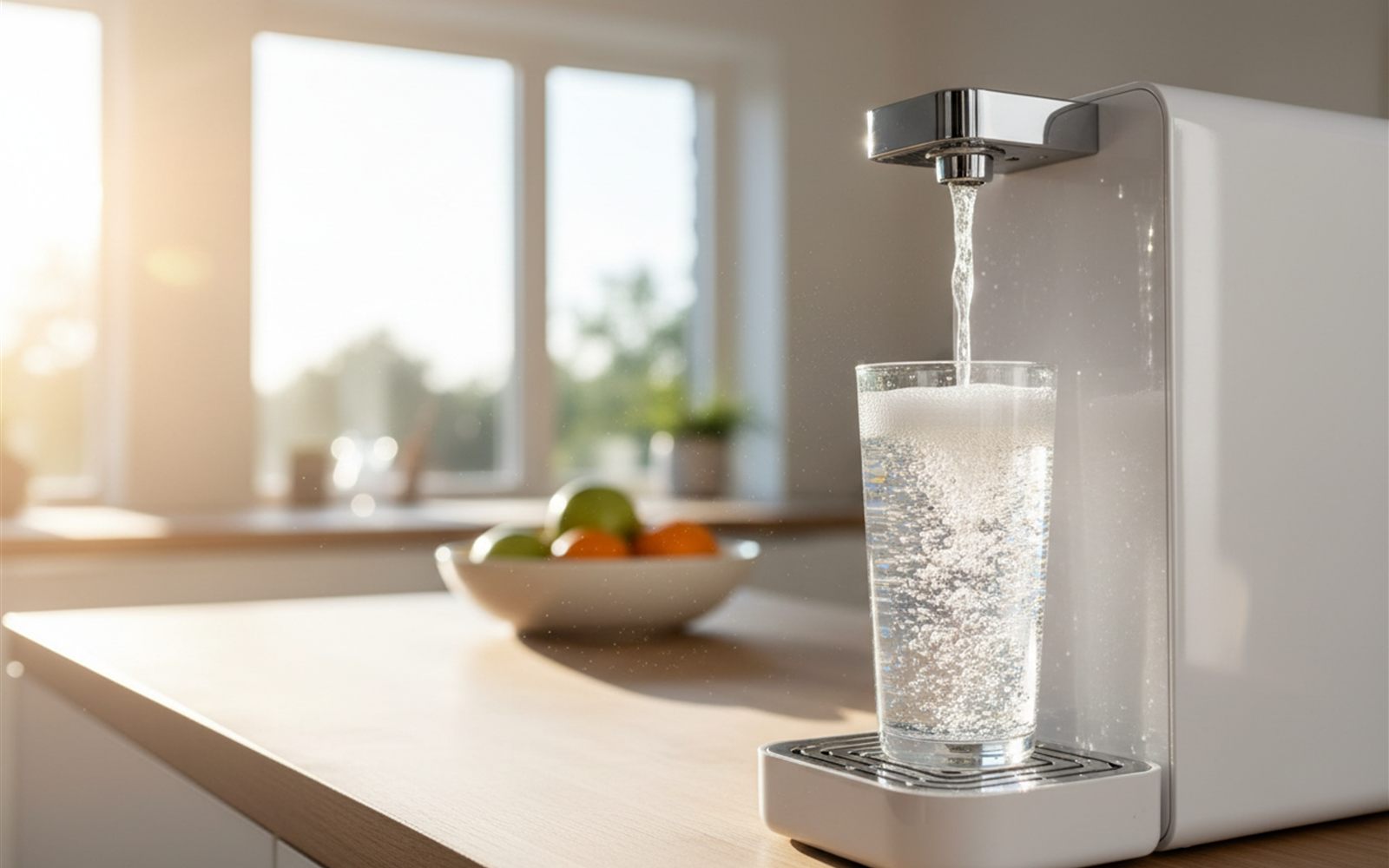
The notice on the door says do not drink the tap water until further notice. The machine humming in the corner does not care, because its water never touched a pipe. It was pulled out of the air in your kitchen an hour ago.
Atmospheric water generators, machines that condense drinking water from humidity, have grown into a real home appliance category in 2026. Countertop dispensers start around $770 and make roughly 1 to 8 gallons a day. Watergen’s GENNY produces up to about 8 gallons daily, while the Kara Pure makes about 2.6 gallons of mineral enriched water. At the serious end, whole home systems plumb straight into your house. Aquaria’s Hydropack sells for $22,499 with financing around $207 a month, and Genesis Systems’ WaterCube 100 targets more than 100 gallons a day in favorable conditions. Industry cost guides put a typical whole home installation between $10,000 and $25,000.
Picture a dehumidifier that went to culinary school. A fan pulls room air across cold coils, the water vapor condenses into droplets, and the machine runs that water through filters and sterilizing light before adding minerals back for taste. Air goes in. A cold glass of water comes out.
The output starts out close to distilled water, which is why the better machines remineralize it at the end. Condensation itself is an old trick, familiar to anyone who has watched an iced tea glass sweat in July. The new part is doing it cleanly enough, and efficiently enough, to drink every single day.
Gadget site Gadgetify ran a full test of the Kara Pure 2, and its diary shows what ownership actually feels like. Setup was a plug and a sensor reset. Then the machine simply got to work, condensing quietly through the day and filling its tank in 23 hours, roughly twice as fast as the manual predicted. The result pours out mineral enriched at a 9.2 pH, with a taste the testers found noticeably smoother than plain neutral water.
The real adjustment is rhythm. A faucet is instant and infinite. This is a harvest, a tank that refills on the weather’s schedule, so owners learn to treat it like a small reservoir: draw the coffee water in the morning, let it rebuild through the afternoon. On humid days the tank races. In an air conditioned winter room it dawdles.
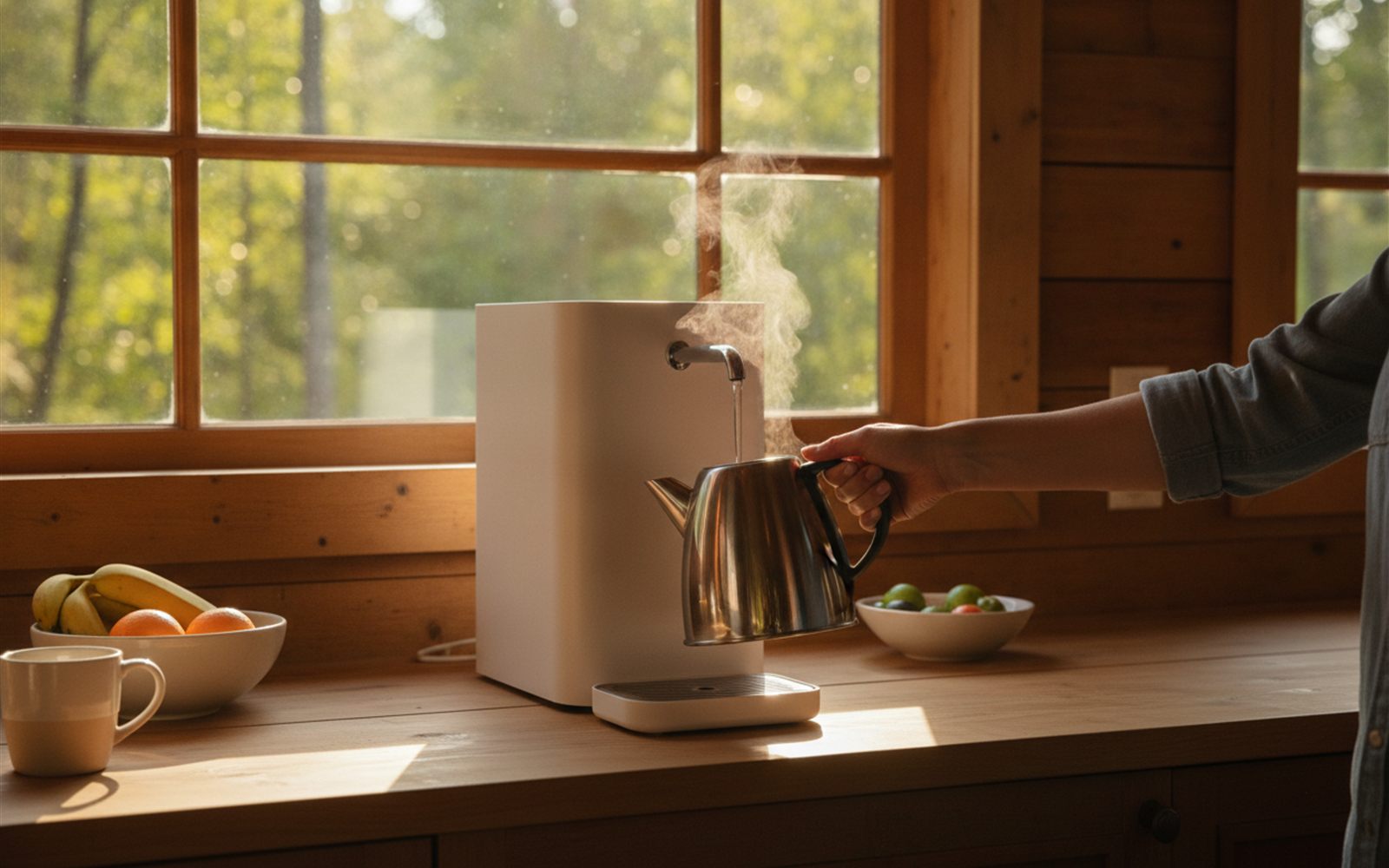
The off grid crowd has pushed these machines harder than any lab. One expert review ran the same unit on wall power, a battery inverter, a 400 watt solar panel, and a gas generator without a hiccup, which explains why the category keeps spreading through RVs, cabins, and hurricane country.
It is a backup water supply that lives in your kitchen. Boil notices, storm outages, and contamination scares stop being drinking water emergencies, because your supply condenses fresh every day.
It ends the bottled water haul. A midsize unit can quietly replace case after case of plastic bottles, and for a family that drinks a couple of gallons a day, even a countertop model can cover the drinking side of the ledger.
It works where pipes and wells disappoint, which is why these machines are showing up in RVs, cabins, and houses with questionable well water.
Water from thin air sounds free, so here is the honest ledger before anyone falls in love.
| The tier | Real machines | Price | Daily output |
|---|---|---|---|
| Countertop | Watergen GENNY, Kara Pure | From about $770 | Roughly 1 to 8 gallons |
| Whole home | Aquaria Hydropack | $22,499, financing near $207 a month | Household drinking supply |
| Heavy duty | Genesis WaterCube 100 | Professional install, quoted per project | More than 100 gallons in good conditions |
Then come the running costs. In Gadgetify’s testing of the Kara Pure 2, the water filter needs replacing about every four months at around $120, the air filter yearly at about $89, and total upkeep lands near $450 a year before electricity. Add the power draw and machine made water costs several times what city tap does per gallon.
So the math never beats the faucet, but it regularly beats the alternatives people actually use. Families hauling bottled cases for taste or safety reasons trade a recurring grocery expense and a plastic mountain for a filter schedule. And for a cabin or an RV, the comparison is not tap water at all, it is water you would otherwise carry in.
Two honest catches. Output depends on humidity, so a muggy Houston kitchen wildly outproduces a dry Phoenix one, and manufacturer numbers assume favorable conditions. Electricity is the other price of admission. Per gallon, machine made water costs several times what city tap water does, which is why most owners use these for drinking and cooking rather than showers and laundry. Filters need changing on schedule, too.
Countertop units from brands like Watergen and Kara Water ship today from their own sites and major retailers. Most are about the size of an office water cooler and plug into a normal outlet, so no plumbing project stands between you and the first glass. The whole home systems from Aquaria and Genesis Systems are sold with professional installation, and Aquaria publishes 2026 cost guides aimed squarely at drought weary states like Texas. Prices have drifted down as the category matures, though the big systems remain early adopter territory.
The category itself has stopped being fringe. Persistence Market Research sizes the atmospheric water generator market at about $2.9 billion in 2026, growing near ten percent a year through 2033, which is the kind of curve that pulls prices downhill. The kitchen counter keeps turning into a tiny utility plant anyway, already growing salad beside the toaster, and now pouring the water too.
Tap water comes from a reservoir somewhere far away. This glass came from the weather in your kitchen.
Meta's new $299 frames and its display glasses turned a nerdy experiment into the gadget of the year.
After a decade of promises, solid state cells are shipping in a real vehicle, with earbuds and cars next in line.
EarFun's Clip 2 puts live translation in 100 languages on your ears without a triple digit price.