
Why Everyone Is Suddenly Wearing AI Smart Glasses
Meta's new $299 frames and its display glasses turned a nerdy experiment into the gadget of the year.
After the big vertical farm shakeout, the technology found its real home on kitchen counters and in grocery aisles.
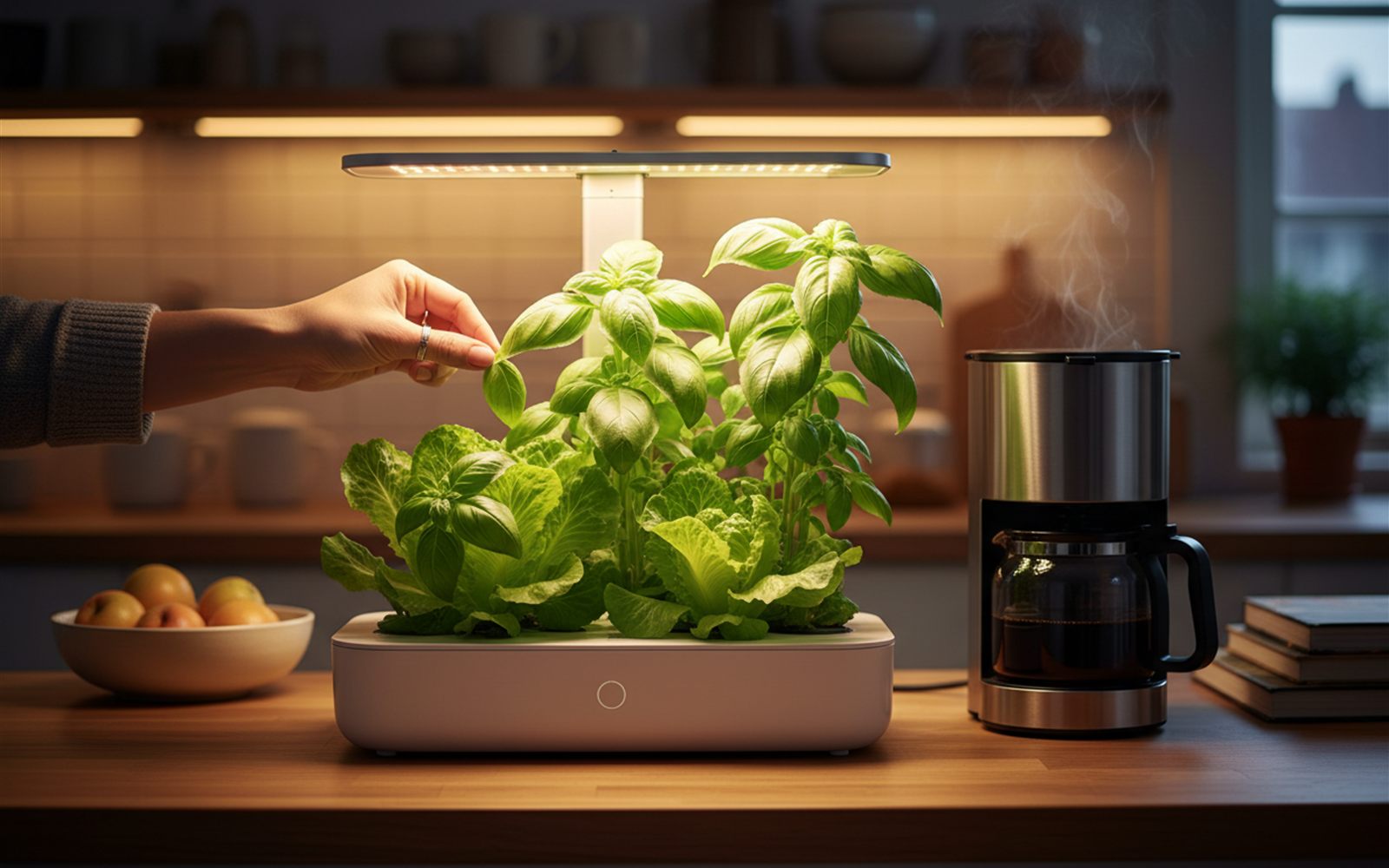
The 30 story lettuce skyscraper never quite arrived. The farm that actually did shows up between the coffee maker and the knife block, and it grows your basil while you sleep.
The warehouse scale version of vertical farming went through a brutal shakeout, with high profile operators like Plenty filing for bankruptcy protection in 2025 after burning through investor fortunes. The technology itself did not die. It shrank.
AeroGarden, the brand that defined countertop growing, was wound down by lawn care giant Scotts Miracle Gro at the end of 2024, then relaunched in spring 2025 under new ownership, and its classic Harvest model sells for about $100 to $130. The revival under new owners suggests the demand never went anywhere, even when the company briefly did. A crowd of rivals now fights for the same counter space, including Click & Grow, Gardyn, LetPot, Rise Gardens, and Plantaform.
The same idea is scaling into stores instead of skyscrapers. Babylon Micro Farms, a Virginia company, installs fridge sized hydroponic farms in grocery stores, hotel kitchens, and cafeterias, growing a menu of more than 45 greens, herbs, and edible flowers steps from where they get eaten. In February 2025 it launched the Galleri Lite, a simplified version with a much lower price tag, all managed remotely by its BabylonIQ software.
All of these are hydroponics in a nicer outfit. Roots sit in nutrient rich water instead of soil, LED lights feed plants the exact light recipe they crave, and software makes the judgment calls about water, food, and timing. No weather, no weeds, no guesswork, which is why the same technology works equally well on a kitchen counter or in a produce aisle. Most leafy crops go from seed pod to first harvest in a matter of weeks, and the light schedule runs itself.
Owner reviews trace the same arc, so here is the honest calendar. Days one through five are sprouts and disbelief. A Taste of Home reviewer who calls herself a black thumb still watched food appear on schedule, because the machine makes every decision except when to eat. The first real harvest lands around week four or five, and from there the garden asks for exactly one small ritual a week: top up the tank with a couple of gallons of water and a couple of teaspoons of plant food, trim, and cut dinner. Once a month you owe it a fuller tank cleanout.
The yields are honest kitchen scale. After three months with a 16 plant Gardyn Studio, the reviewer at Sustainably Kind Living settled into reliable fresh herbs plus a steady salad or two each week. Gardyn itself claims its 30 plant tower can produce up to 10 pounds of produce a month, a maker number, but one that explains why the big towers get pitched at families.
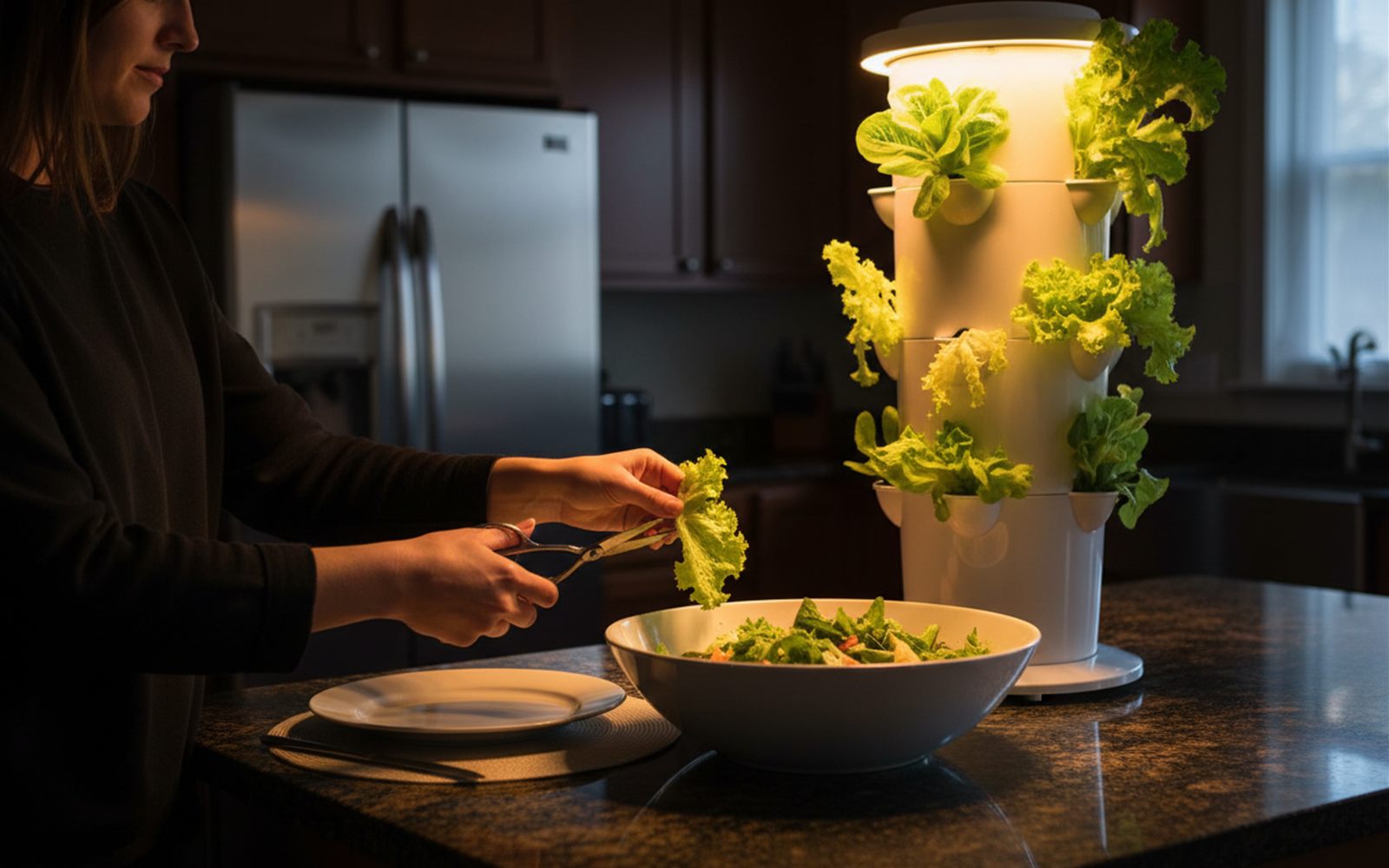
The recurring gripes repeat just as reliably. The grow lights are bright enough that nobody keeps one in a bedroom. Aphids occasionally discover indoor paradise and must be evicted. And the consumables, pods, plant food, and optional memberships, add up fastest on the premium systems.
Fresh herbs stop being a $3 clamshell that wilts in four days. A pod garden keeps a basil or mint plant producing for months, and you cut only what you need.
Salad gets local in the most literal sense, grown steps from the plate, whether that is your countertop or the grocery display it was harvested from that morning.
Brown thumbs are welcome. The machine handles watering, lighting, and reminders. Your only job is harvesting.
The shakeout left buyers with the best price ladder this category has ever had.
| The system | Capacity | Price |
|---|---|---|
| AeroGarden Harvest | 6 pods | About $100 to $130 |
| Click & Grow Smart Garden 9 | 9 pods | About $150 |
| LetPot lineup | 5 to 21 plants | Roughly $100 to $400 by size |
| Gardyn tower | 30 plants | Up to $899 at list, plus optional membership |
Buyer guides in 2026, including the testing site Indoor Food Grower, keep crowning LetPot’s larger LPH Max the closest replacement for AeroGarden’s discontinued big models, while Click & Grow earns its keep on polish and Gardyn on sheer density. The payback math is friendlier than it looks: an herb heavy cook replacing two $3 clamshells a week is spending about $300 a year at the store, which a $150 machine and its pods can undercut inside the first year, with fresher results.
The seed pods and electricity are the quiet subscription, and a countertop unit yields garnish and salad quantities, not a family’s produce supply. The larger indoor units that could genuinely dent a grocery bill cost well over a thousand dollars. Treat it as a freshness upgrade and a hobby that pays you back, not a farm replacement.
Expect more grow towers in produce sections as grocers test food theater that doubles as supply. Babylon’s software runs its store farms remotely, so staff mostly just harvest, which is exactly what makes the model work at scale. And expect the countertop category to keep consolidating after AeroGarden’s near death and revival proved both how fragile and how loved these gadgets are. The kitchen counter, meanwhile, keeps annexing new jobs, with machines that can even pour your drinking water out of the air.
Vertical farming did not fail. It just kept shrinking until it fit next to the toaster.
Meta's new $299 frames and its display glasses turned a nerdy experiment into the gadget of the year.
After a decade of promises, solid state cells are shipping in a real vehicle, with earbuds and cars next in line.
EarFun's Clip 2 puts live translation in 100 languages on your ears without a triple digit price.