
Why Everyone Is Suddenly Wearing AI Smart Glasses
Meta's new $299 frames and its display glasses turned a nerdy experiment into the gadget of the year.
Ten dollar sensors and smart shutoff valves now catch drips early and can shave real money off insurance.
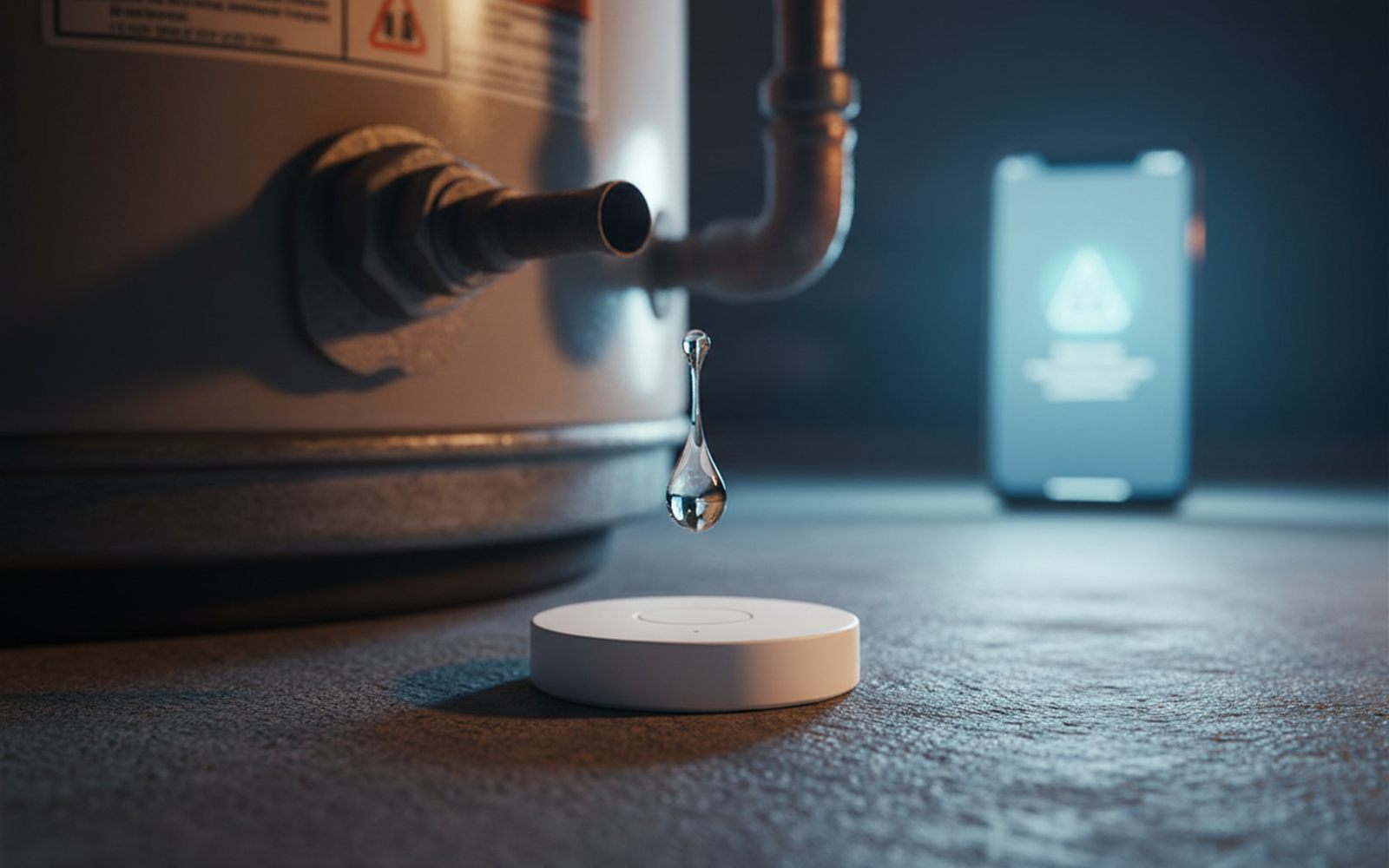
The most expensive water damage rarely starts with a dramatic burst. It starts with a $12 fitting sweating quietly under a sink for a month, and by the time the stain shows, the bill has four or five digits. The Insurance Information Institute puts the average water damage claim around $12,500, water damage and freezing drive roughly a quarter of all homeowners claims, and about 1 in 50 insured homes files one every year.
Leak protection got absurdly cheap. Govee’s WiFi leak sensors run about $10 per puck in value packs, sound a 105 decibel siren, ping your phone, and last about five years on a battery. YoLink sells sensors in the $25 to $35 range that use long range radio, so they keep reporting from basements and crawl spaces where WiFi gives up.
The bigger leap is the whole home monitor. Flo by Moen installs on your main water line, watches pressure and flow around the clock, learns your normal patterns, and shuts the water off automatically when something looks like a burst pipe. Moen’s FloProtect plan even adds up to $5,000 toward your insurance deductible if damage happens anyway.
The little pucks are simple: two metal probes, and when water bridges them, the alarm fires. The inline monitors are more like a nurse taking your plumbing’s pulse, sensing tiny pressure changes and running quiet overnight tests that can flag a drip the size of a pinhole. Flo tracks water temperature too, so it can warn you when a cold snap puts your pipes at risk of freezing.
Here is the clever part, and it happens while you sleep. Every night, around 2 am, the Flo valve quietly closes your main water line and holds the whole house at pressure, like a blood pressure cuff for your plumbing. For about two minutes it watches the gauge. If the pressure drops even slightly, water is escaping somewhere, and the app flags what Moen calls a MicroLeak before a human would ever spot it. Plumbing reviewers report the system can register losses down to about a drop per minute, which is how a running toilet or a sweating fitting gets caught in week one instead of month three.
The daytime trick is pattern learning. After a week or two, the valve knows what a shower, a dishwasher cycle, and a sprinkler run look like. When it suddenly sees water flowing in a shape it has never seen, long, fast, and unending, it concludes burst pipe and closes the valve on its own, whether you are at work or on a beach.
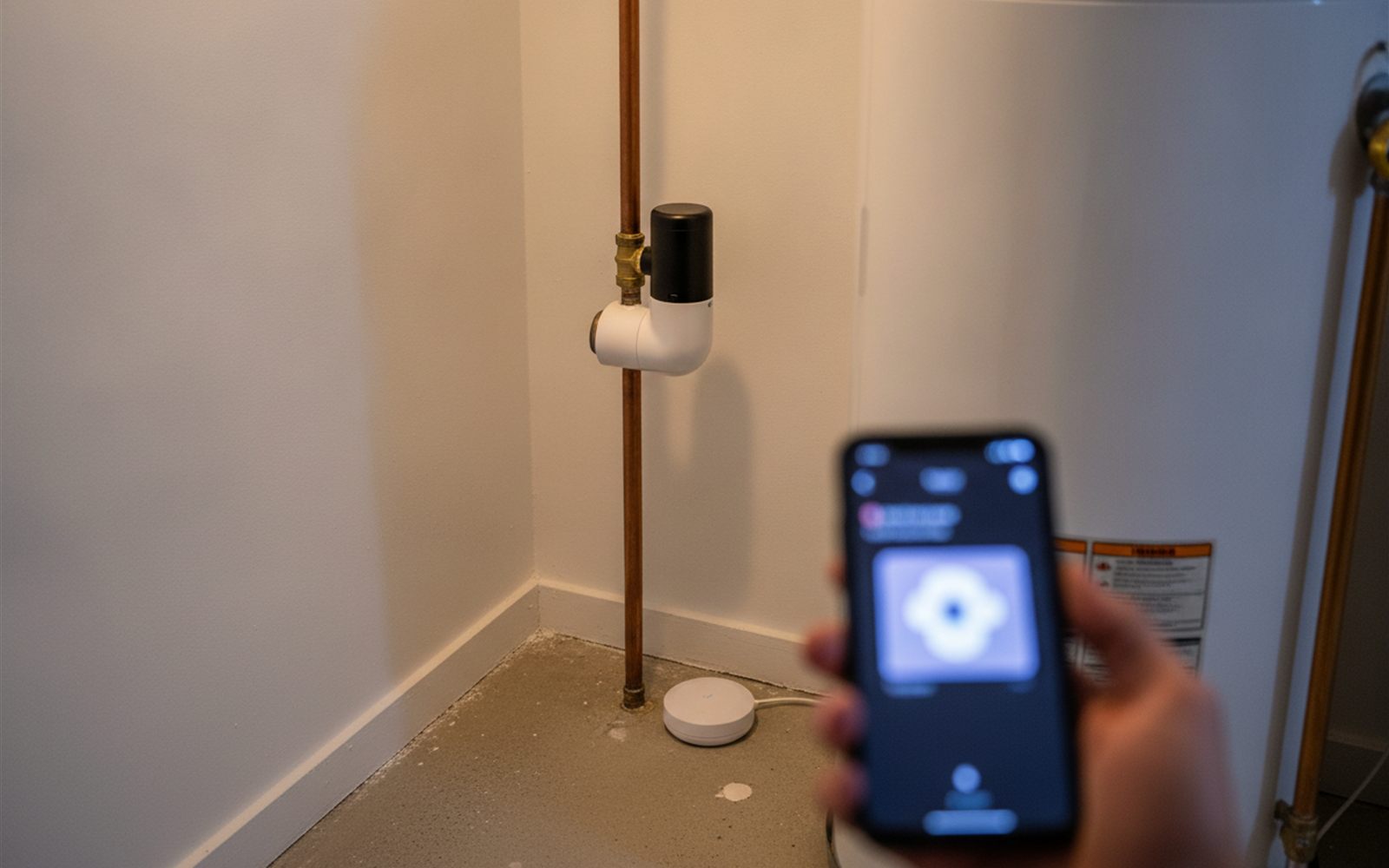
You find the leak in week one instead of month three, while the fix is a cheap part instead of a torn out floor and a mold remediation crew.
You can kill the water from anywhere. A phone alert at work, one tap, and the main valve is closed before lunch.
And your insurer may pay you back. Industry guides for 2026 put typical credits at 3 to 10 percent off premiums, with some carriers going to 15 percent or more for professionally monitored systems with automatic shutoff. Farmers actively promotes leak detection devices, insurer Amica lists a formal discount for water damage mitigation devices, and high end insurer PURE partners with Flo by Moen to subsidize them. Some carriers now require a shutoff valve before they will even cover larger or secondary homes.
Renters are not left out either. A few pucks near the water heater and washer cost less than a single month of renters insurance, and they move with you to the next apartment.
Stack the numbers side by side and the decision mostly makes itself. Full puck coverage for a typical house, six to eight sensors under sinks and beside the water heater, washer, and dishwasher, runs $60 to $100. A whole home shutoff valve is a few hundred dollars plus a plumber’s visit, call it $600 to $800 all in for most homes.
Against that: an average claim around $12,500 per the Insurance Information Institute, a deductible that is often $1,000 or more out of your own pocket, and the weeks of fans, torn drywall, and hotel nights that the average does not capture. Even the discount alone can carry the cost, since 5 percent off a $2,000 annual premium pays for a sensor kit every single year. Few gadgets in your house have odds this lopsided.
One warning before you buy anything: carriers pay for prevention, not for noise. The 2026 insurer guides agree that a beeping puck usually earns nothing on its own, because the discounts are built around devices that can actually stop the water, meaning a shutoff valve with app alerts, and some carriers ask for the event log that proves it works. So call your insurer first and ask three questions. Which specific devices qualify. What proof of installation they want, since some ask for a plumber’s receipt. And whether they subsidize the hardware, because some will hand you a discount, a cheaper device, or both just for asking.
A $10 puck only guards the spot where it sits, so plan on several: water heater, washing machine, dishwasher, under every sink. Whole home monitors cost a few hundred dollars plus a plumber to install, and owner reviews note the honest limits: the valve knows water is escaping, not exactly where, so a MicroLeak alert starts a scavenger hunt, and you should test sensors once a year the way you test smoke alarms. And discounts vary widely by state and carrier, so call yours and ask exactly which devices qualify before you buy anything.
All of it is on shelves now at Amazon and Home Depot, and sensor kits regularly dip under $30 on sale. Check with your insurance company first, though. Some will hand you a discount, a subsidized device, or both just for asking. If you only get around to it once, do it before winter, because burst pipe season is when adjusters stay busiest. It is the same quiet sensor logic that made screenless rings the sleep tracker people actually wear: the best guardian is the one you forget is there.
A sensor that costs less than a pizza is the cheapest protection your house can buy against its most common disaster.
Meta's new $299 frames and its display glasses turned a nerdy experiment into the gadget of the year.
After a decade of promises, solid state cells are shipping in a real vehicle, with earbuds and cars next in line.
EarFun's Clip 2 puts live translation in 100 languages on your ears without a triple digit price.