Why Everyone Is Suddenly Wearing AI Smart Glasses
Meta's new $299 frames and its display glasses turned a nerdy experiment into the gadget of the year.
T Mobile's Starlink service and Apple's satellite tools mean dead zones no longer cut you off.
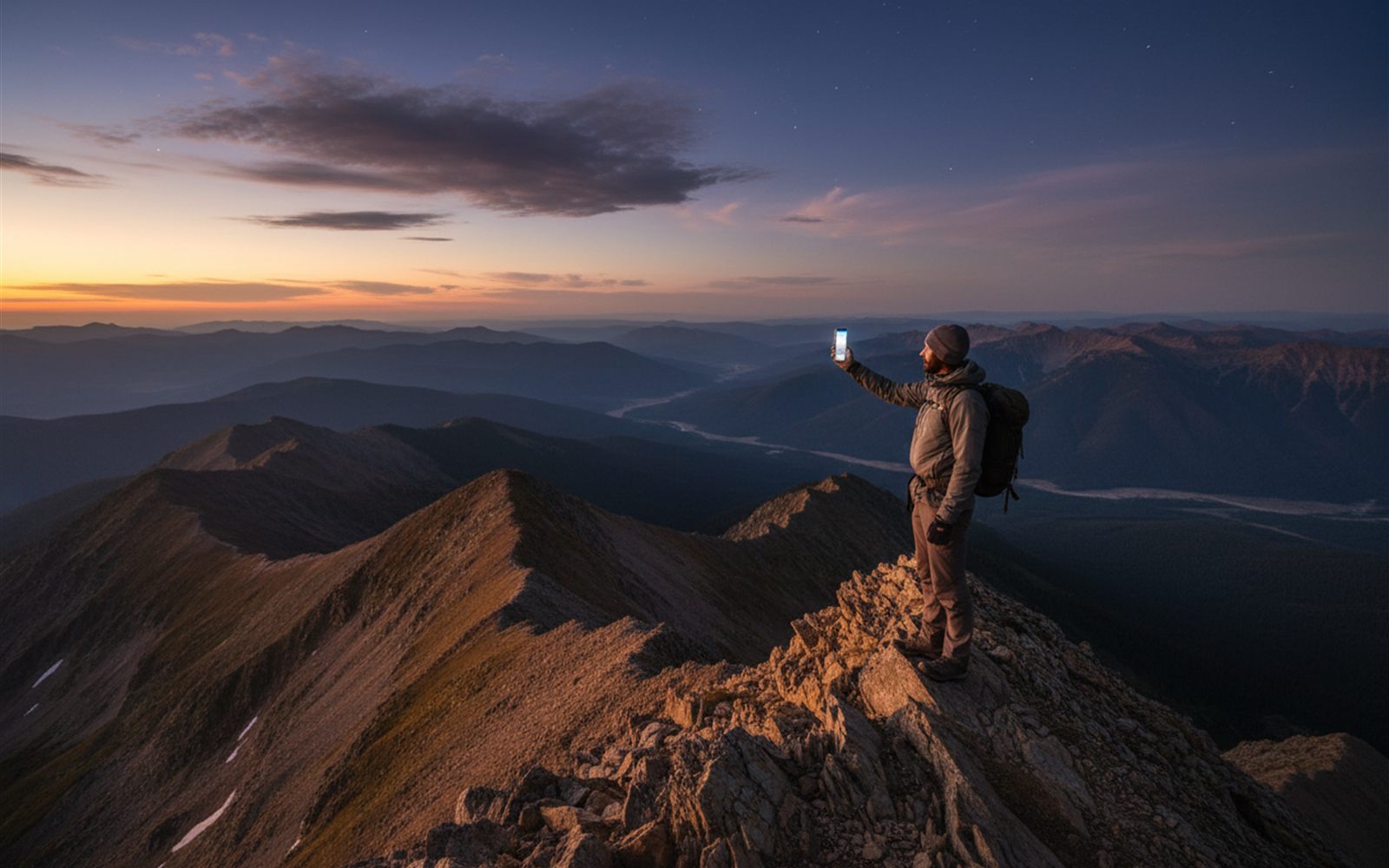
By T Mobile’s count, about 500,000 square miles of the United States get no signal from any carrier. As of this summer, that no longer means you are unreachable. If your phone can see the sky, it can text.
T Satellite, the service T Mobile built with Starlink, launched commercially in July 2025 and has just passed its first birthday. It costs $10 a month, and in a twist, Verizon and AT&T customers can subscribe too, no switching required. T Mobile bundles it free on its top tier plans, and emergency texts to 911 over satellite work free for anyone with a compatible phone. More than 60 phone models work with it, including the iPhone 13 and newer, Samsung Galaxy S21 and newer, and Google Pixel 9 phones.
It has also grown past plain texting. An update last October opened satellite data to apps, so AllTrails maps, AccuWeather forecasts, and WhatsApp messages, voice notes, and even calls now work off grid. SpaceX has launched more than 650 direct to cell satellites to power the service, which covers the continental US, Hawaii, Puerto Rico, and parts of southern Alaska.
Apple runs its own version as well. Every iPhone 14 and newer includes free Emergency SOS via satellite, and iOS 18 added regular Messages via satellite for whenever you wander off the grid. Recent Pixel and Galaxy phones carry satellite safety features of their own, and Verizon and AT&T are building rival services with satellite partner AST SpaceMobile.
Think of it as cell towers in orbit. Each satellite acts like a tower for the few minutes it passes overhead, then hands you to the next one, and your phone hops on by itself the moment ground signal disappears. No antenna, no aiming, no extra app.
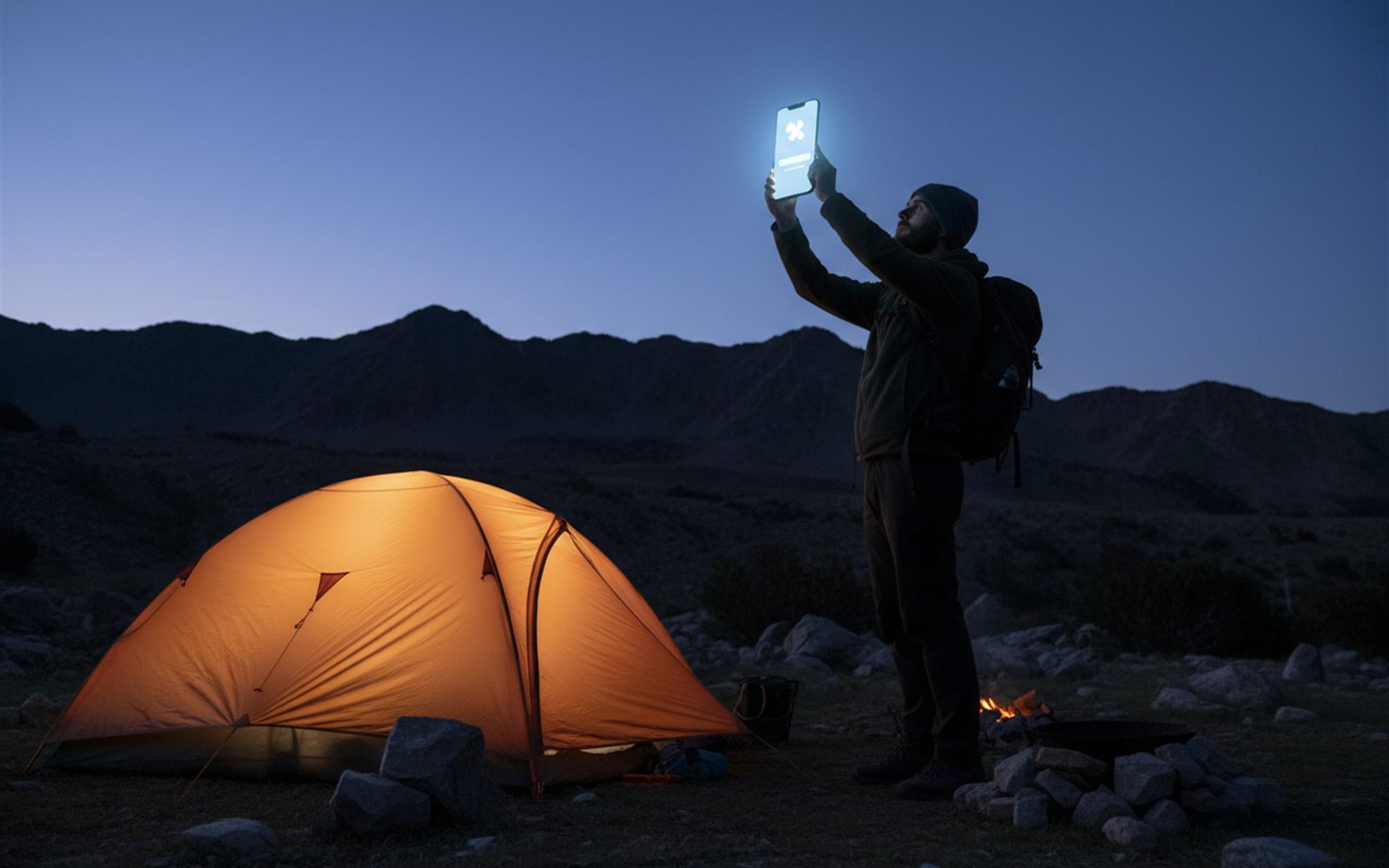
The moment itself is quiet. You are on a trail or a back road, the bars vanish, and a small satellite icon appears where your signal usually lives. On T Satellite, that is the whole event: your phone connects on its own, and texts simply start moving again, just slower. Type, hit send, and the message sits for anywhere from a few seconds to a minute or two before the delivered mark appears, longer under trees or in a canyon.
Apple’s version is more of a guided ritual. The iPhone shows you the sky, tells you which direction to face, and walks you through small turns to keep a passing satellite in view while the progress bar creeps. It feels a little like tuning an antenna with your whole body, and then the swoosh lands and someone forty miles from pavement has texted their spouse about being late for dinner.
Either way, the etiquette changes out there. You write like a telegram: short, factual, one thought per message. And the first time a reply comes back on a ridgeline with no tower in sight, most people report the same reaction. They stare at the phone for a second, then look up at the empty sky.
The safety case stopped being hypothetical years ago. Within weeks of Apple launching Emergency SOS via satellite, Alaska state troopers credited it with helping locate a stranded snowmachine traveler near Nome, The Verge reported, one of the first of many incidents in local news since.
The numbers from the dedicated device world show what is at stake. Garmin’s annual inReach report counted more than 3,000 satellite SOS incidents worldwide in 2025, with hiking and backpacking the most common trigger. The detail worth remembering: about 12 percent of those incidents were resolved by two way texting alone, no helicopter, no ground team, just a coordinator talking someone through navigation or first aid over satellite messages. The text itself is often the rescue.
That is the logic behind T Mobile’s move last November, when it opened satellite Text to 911 to anyone with a compatible phone on any carrier, free, no subscription. The company built the emergency lane first and made it public property.
Who actually gets you covered, and for how much? Here is the field as of this summer.
| Service | Price | The catch |
|---|---|---|
| T Satellite with Starlink | $10 a month, free on top T Mobile plans | the full version: texts, location sharing, and app data on any major carrier |
| Satellite Text to 911 | free | emergencies only, any compatible phone, any carrier |
| Apple Messages via satellite | free | iPhone 14 and newer, texting with some aiming required |
| Verizon and AT&T via AST SpaceMobile | not priced yet | commercial service targeted for 2026 as the satellites launch |
| Garmin inReach | from about $15 a month plus a device | dedicated hardware with a staffed SOS desk, still the deep wilderness standard |
The sorting is simple. If you just want the emergency floor, you may already have it free through your iPhone or the 911 service. If you road trip, hunt, boat, or have a kid driving rural highways, the $10 T Satellite add on is the most complete option today. And if you spend serious time far past the trailhead, the Garmin subscription buys you trained humans on the other end, which no phone service matches yet.
Do not let a real emergency be your first practice run. iPhone owners can rehearse the whole flow tonight: Apple builds a demo mode into the Emergency SOS settings that simulates the satellite connection, arrows and all, without contacting anyone. Android and T Satellite users can do the low tech version: next time you pass through a known dead zone, send a test text and watch how your phone behaves, so the satellite icon is a familiar face instead of a mystery.
Two more minutes of prep pay off later. Set up your phone’s emergency contacts and Medical ID style info now, because satellite emergency flows lean on them. And before a big trip, check your exact model against your carrier’s compatibility list, since features vary phone by phone.
Road trip dead zones stop being blackouts, so running two hours late no longer means being unreachable for two hours. Hikers, hunters, and boaters get a genuine safety line without buying a $400 dedicated satellite messenger. And when a storm knocks out cell towers, satellite texting keeps working, which is exactly when you need it most. Parents of new drivers may appreciate it most of all, because the check in text now goes through from anywhere on the route.
The honest fear among rescue professionals is false confidence. A phone that texts from anywhere can tempt people deeper into terrain than their skills or supplies justify, and a satellite text cannot warm you up or carry you out. Cold drains phone batteries fast, screens crack, and a single gadget with no backup is still a single point of failure. The old rules, telling someone your route, packing layers, turning around early, did not retire when the satellite icon showed up.
There is also the coverage fine print. Satellite texting needs open sky, so the places that feel most dangerous, slot canyons, dense forest, a car buried in a snowbank under an overpass, can be exactly where it struggles. Treat it as a strong extra layer, not a guarantee.
The next two years are mostly about capacity. SpaceX keeps launching direct to cell satellites and says future generations will carry far more bandwidth. AST SpaceMobile has FCC clearance for a constellation of up to 248 satellites and carrier agreements that, counting its international partners, cover networks serving nearly 3 billion subscribers, which is why Verizon and AT&T are comfortable promising their own service in 2026. More apps are adding satellite modes each quarter.
By 2028, the realistic picture is that every major US carrier sells some satellite layer, emergency texting is a standard free feature like 911 itself, and the words no service mostly mean slower service. The sky is quietly turning into backup infrastructure, the same way it is quietly becoming a delivery lane for suburban backyards.
The dead zone, one of the last guarantees of the American road trip, is quietly going extinct.
Meta's new $299 frames and its display glasses turned a nerdy experiment into the gadget of the year.
After a decade of promises, solid state cells are shipping in a real vehicle, with earbuds and cars next in line.
EarFun's Clip 2 puts live translation in 100 languages on your ears without a triple digit price.