
Why Everyone Is Suddenly Wearing AI Smart Glasses
Meta's new $299 frames and its display glasses turned a nerdy experiment into the gadget of the year.
A petunia carrying mushroom genes now glows on American windowsills, and the lab work behind it keeps getting brighter.
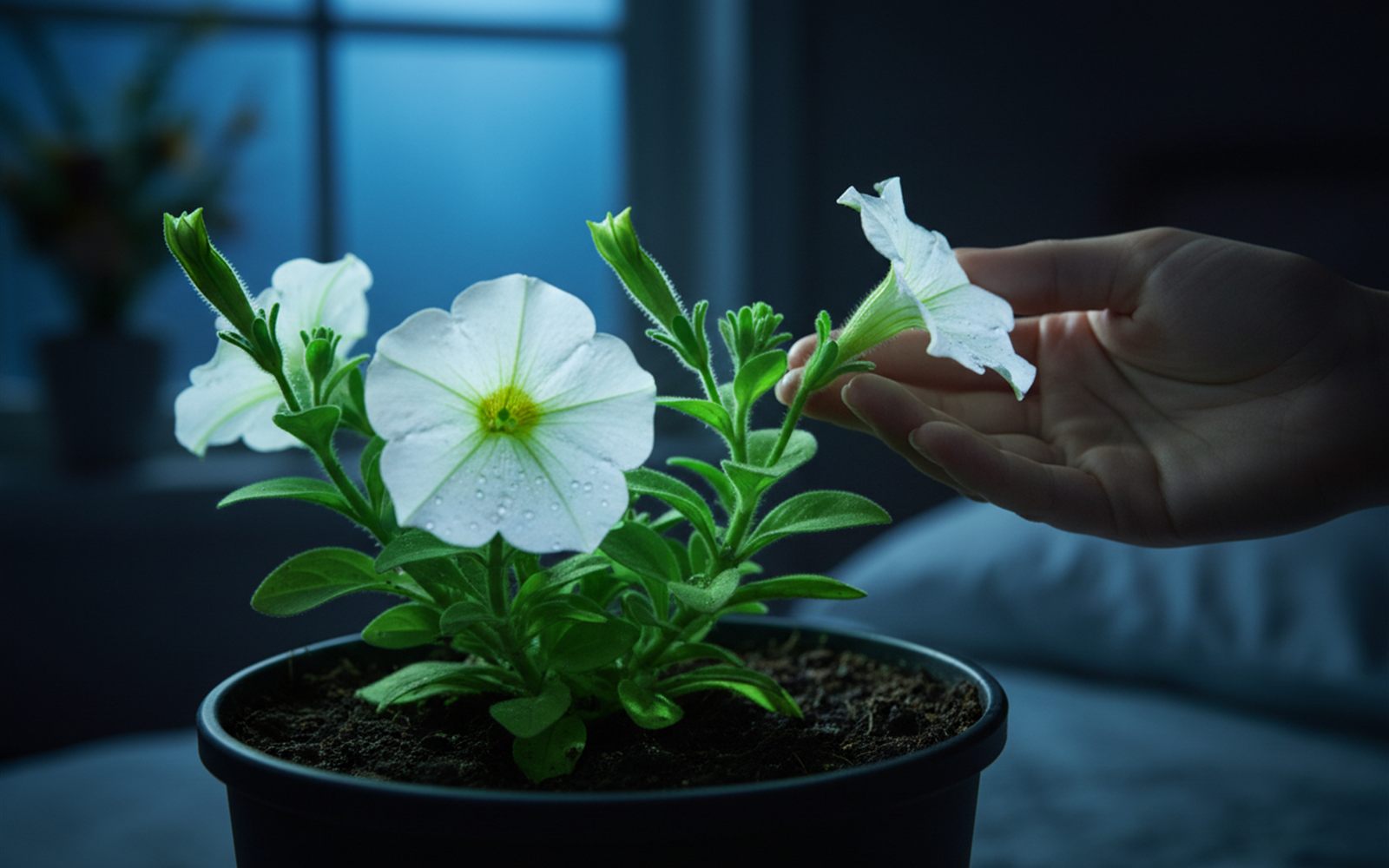
Switch off the lamp, sit still for a minute, and let your eyes adjust. The petunia on the windowsill is still shining, a soft green light rising out of the buds and running down the leaves. Nothing is plugged in. The plant is making the light itself.
A company called Light Bio sells that plant under the name Firefly Petunia. It is the first bioluminescent plant ever cleared for sale to the American public, approved by the US Department of Agriculture in 2023 after the agency decided it posed no more risk than an ordinary petunia.
The first batch was 50,000 plants at $29 each. They sold out. Time magazine put it on its best inventions list, and plant biologist Diego Orzáez, quoted in Scientific American, called it a “groundbreaking event” for the field.
Since then the plant has spread beyond the founders’ own website. Costa Farms grows a mini version, and garden centers around the country have carried it through the spring seasons. Light Bio has backing from the venture firm NFX and from Ginkgo Bioworks, which is a signal that investors see a plant business here rather than a science demonstration.
Set your expectations correctly and this plant is delightful. Set them wrong and it is a $29 disappointment.
The glow shows up the moment you kill the lights. There is no waiting for it to charge like a plastic star on a ceiling. What you see is a soft green light concentrated in the newest flower buds and the young stems, fading as you move down toward older growth.
Owners consistently report the same two things. First, it is fainter than the photographs. Any camera on a normal setting barely captures it, so people shoot long exposures, and a long exposure makes it look dramatically brighter than your eye sees. Second, when the plant is thriving, it is genuinely bright enough to serve as a soft night light on a bedside table.
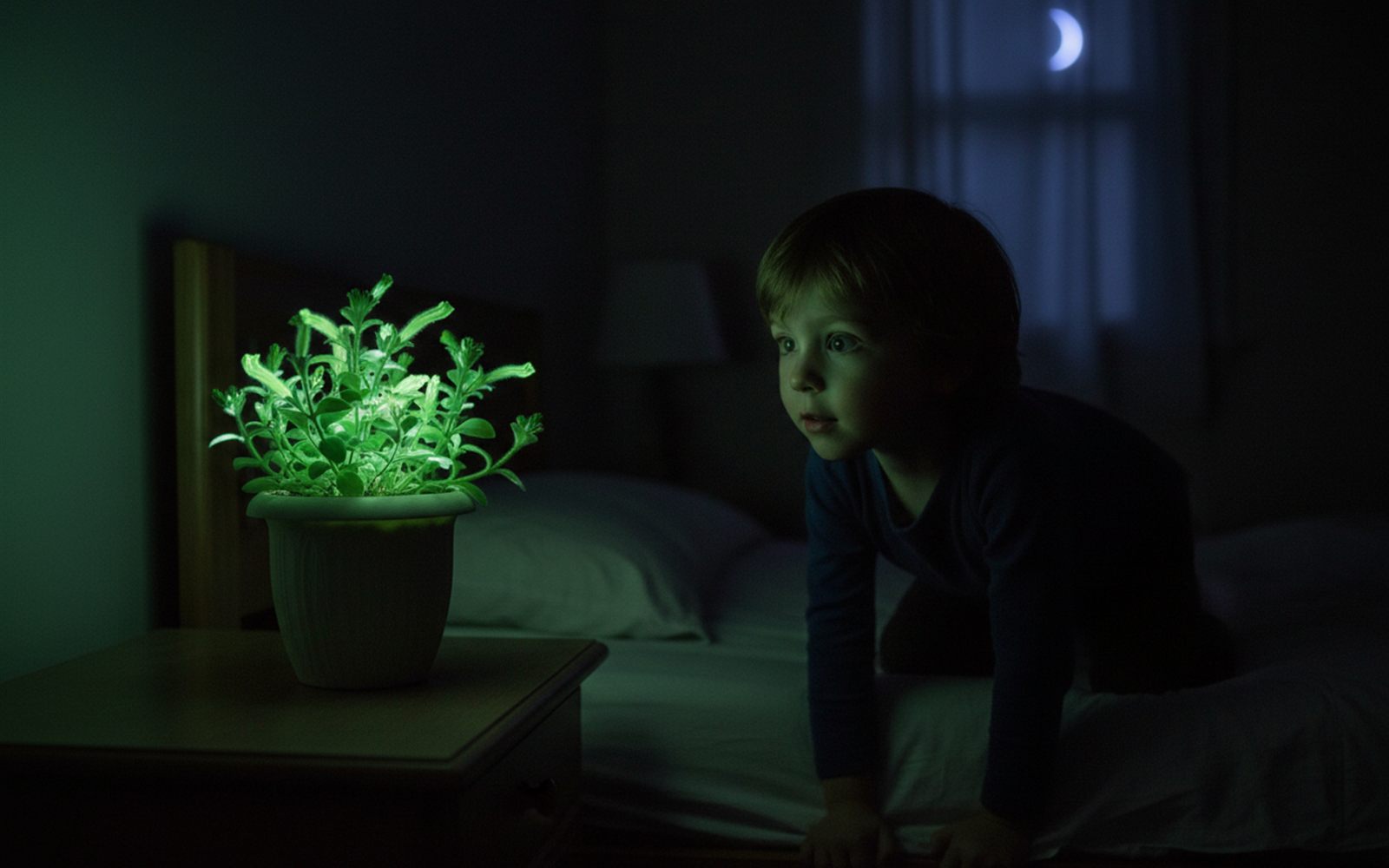
The mechanism behind that variation is the best part of owning one. The glow is a health readout. Light Bio’s own care guidance is that more sunlight during the day means more glow at night, that the newest buds and stems shine most, and that pinching off spent blooms pushes the plant to make more of the young growth that lights up.
So a dim plant is not usually a broken plant. It is a thirsty, hungry, or shaded one. Owners describe it as easier to read than an ordinary petunia, because a normal plant hides its unhappiness for a week and this one dims that night.
Practical care is ordinary. Full sun, frequent water, and regular feeding, since petunias are heavy eaters. If you already fuss over houseplants, none of this is new, and the same soil habits that help everything else on your windowsill apply here too, including the real story on eggshells in the garden.
Researchers borrowed four genes from a glowing mushroom called Neonothopanus nambi and spliced them into the petunia. Those genes build a small chemical loop that turns caffeic acid, a compound petunias already make, into light and then recycles it back again.
Think of it as a glow stick that never runs out, because the plant recharges the reaction every day through photosynthesis. Sunlight goes in during the day. A green glow comes back out at night, brightest on the newest flower buds.
The recycling step is the whole trick. Earlier attempts at glowing plants borrowed bacterial systems that burned through their fuel and faded. This one hands the spent chemical back to the start of the loop.
It is a night light that runs on water instead of electricity. Put one in a hallway or a bedroom and it quietly does its thing from seedling to full bloom, with no cord, no switch, and no bulb to replace.
It is also the easiest science lesson you will ever run. Kids get to see a real genetic change with their own eyes rather than in a textbook diagram.
And it is a preview. The same team has said the long term goal is plants that glow on cue, which could eventually mean garden paths lit by shrubs or house plants that visibly change when they need water.
Here is the honest part. One petunia will not replace your reading lamp. In a genuinely dark room you can see the flowers clearly and watch the glow move as new buds open, but you are not going to finish a paperback by the light of a single pot. At its best, on a healthy well lit plant, coverage of the technology has compared the brightness to moonlight.
The brightness ceiling is moving fast, though. Follow up research published in Nature Methods showed the same fungal pathway can be tuned to make plants glow roughly 100 times brighter than the first versions. At that level, a shelf of them stops being decoration and starts being lighting.
One more caveat: this is a regulated plant sold only in the United States, and it needs the same care as any petunia. Full sun, regular water, and pinch off the spent blooms.
Is a genetically engineered plant safe to have in the house? This is the question the USDA actually answered. Its 2023 review concluded the Firefly Petunia poses no more plant pest risk than any other petunia, which is why it can be sold without special handling. It is not edible, and neither are ordinary petunias.
Will it escape into the wild? Petunias sold as bedding plants are annuals in most of the country and are not aggressive spreaders. The regulatory review covered this ground, and the plant is approved for sale across the United States rather than under a containment permit.
Is it just a gimmick? Partly, and the company is fairly open about that. It is also the first consumer product built on a working bioluminescence pathway in a plant, which is the step that had to happen before anything more useful could. Glowing garden paths and plants that signal drought are the stated goal. A novelty petunia is how you fund them.
Light Bio’s 2026 season has closed and the plants are back in the greenhouse. The site is taking waitlist signups for the spring 2027 return, and past seasons have started around $29 with the plant shipped live and rooted in a protective box.
If you want one for next spring, get on the list now rather than in April, because the last several rounds went quickly.
Two threads to watch, both grounded in work already published.
Brightness is the first. The 100 fold improvement demonstrated in the lab has not reached a plant on a shelf yet, and the moment it does, this stops being a curiosity you show guests and becomes a light source you actually use in a hallway.
Variety is the second. A petunia was chosen because it is fast, cheap and well understood, not because it is the destination. The same pathway has been demonstrated in other plants, and the company’s stated ambition is a range of glowing species rather than one flower.
The night light of the future may turn out to be something you water.
Meta's new $299 frames and its display glasses turned a nerdy experiment into the gadget of the year.
After a decade of promises, solid state cells are shipping in a real vehicle, with earbuds and cars next in line.
EarFun's Clip 2 puts live translation in 100 languages on your ears without a triple digit price.