Why Everyone Is Suddenly Wearing AI Smart Glasses
Meta's new $299 frames and its display glasses turned a nerdy experiment into the gadget of the year.
Waymo now gives 500,000 paid rides a week, Tesla and Zoox are chasing, and fares rival Uber.
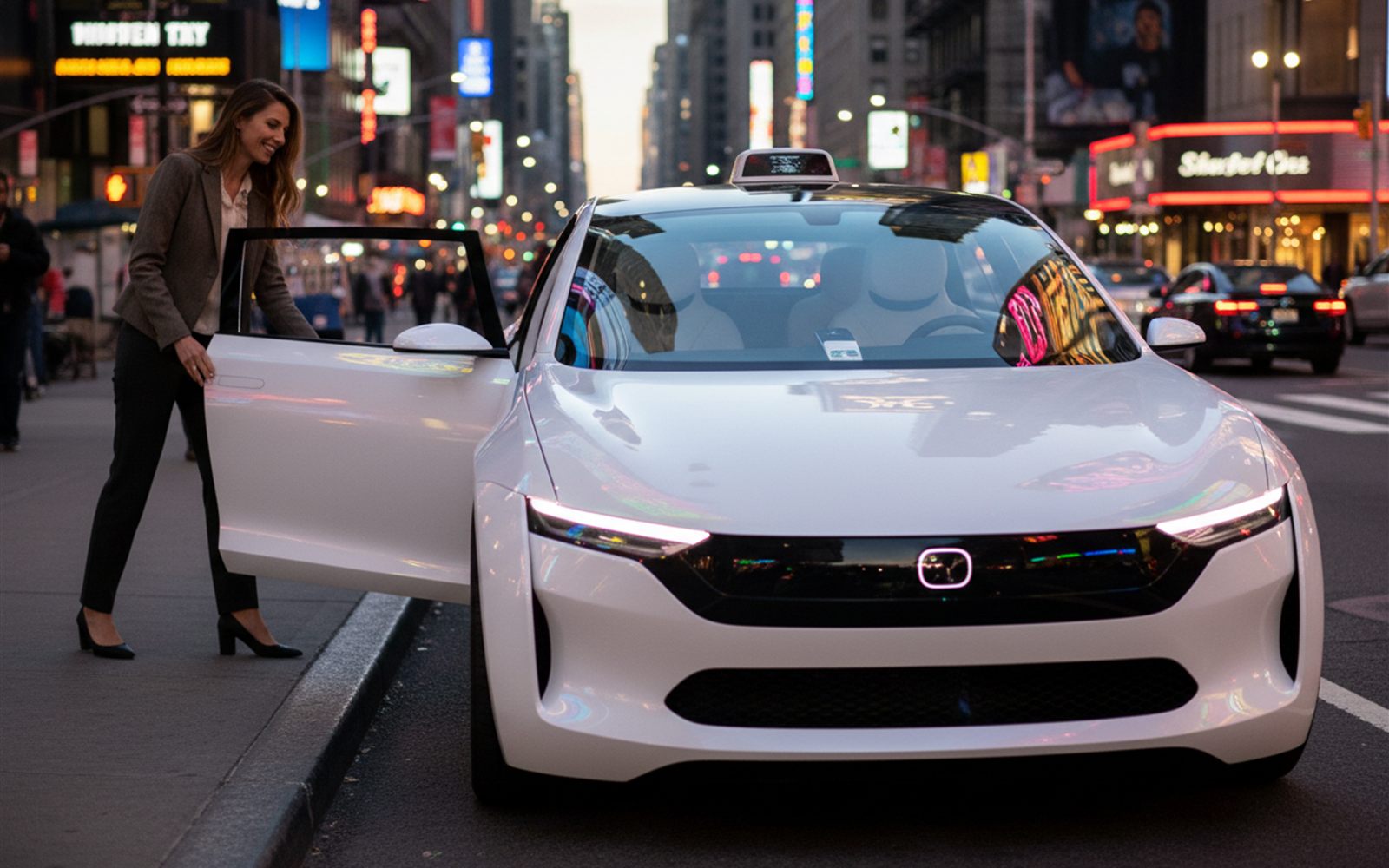
A car with an empty driver’s seat glides to the curb, your initials glow on its roof display, and the doors unlock just for you. By this spring, Americans were taking that ride about 500,000 times every week, and that was just one company’s total.
Waymo, owned by Google’s parent Alphabet, reached 500,000 paid rides per week by March, TechCrunch reported, across Phoenix, San Francisco, Los Angeles, Austin, Atlanta, Miami, and more. In May it grew its service maps another 27 percent to more than 1,400 square miles, and it is already carrying select early riders in San Diego, Las Vegas, Tampa, and Denver. Houston, San Antonio, Orlando, Detroit, Nashville, and Washington DC are on its announced expansion list, with London its first stop abroad. In Austin and Atlanta you can even hail a Waymo through the regular Uber app, which is how plenty of riders end up in one by accident and come out converts.
Tesla’s robotaxis now run driverless in Austin, Dallas, Houston, Miami, Orlando, and Tampa, plus a supervised service in the San Francisco Bay Area, and in June the company applied to field up to 5,000 robotaxis in Las Vegas. Amazon’s Zoox, a boxy pod with no steering wheel at all, has carried riders on the Las Vegas Strip since September and is expanding to San Francisco, with Austin and Miami next on its list.
Minute zero feels like any rideshare: you drop a pin, get a fare quote, and watch a little car icon crawl toward you. The difference arrives at the curb. A white SUV with a spinning dome settles into a legal parking spot, sometimes half a block away because it refuses to double park, and your initials glow on its roof. You unlock the doors with a tap in the app.
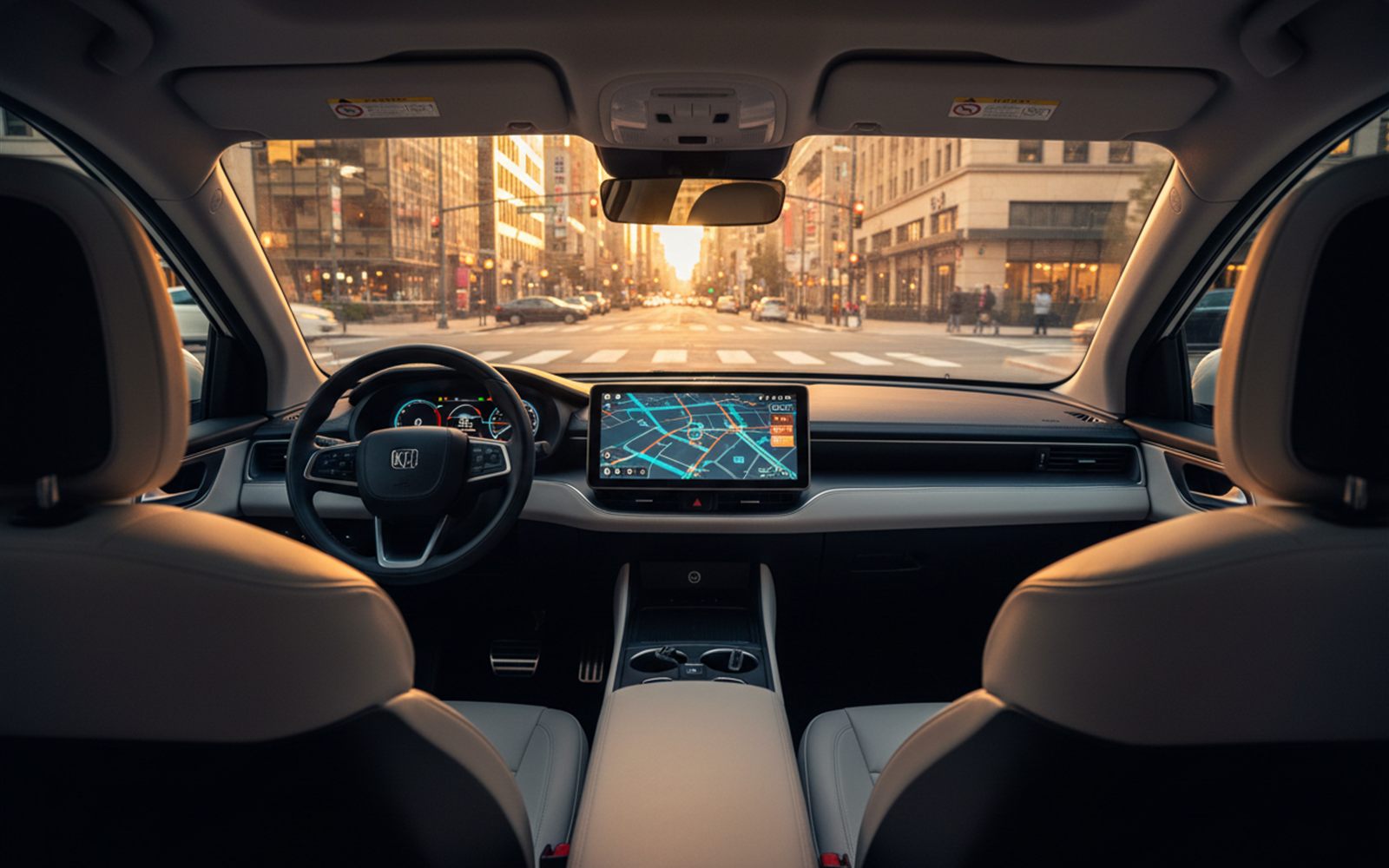
Inside, a calm voice welcomes you by name while soft music plays and a screen between the front seats shows your route. Nothing moves until you press the start button. Then the steering wheel turns on its own, the car checks its mirrors like a nervous student driver, and it pulls out. Nearly every first ride account, from travel writers to tech reviewers, describes the same arc: about three minutes of filming the empty wheel, then the strange discovery that it is boring, in the best way.
The screens are the entertainment. They render the world the car sees, every pedestrian, cyclist, and cone as little ghostly shapes, which is oddly reassuring at a chaotic intersection. You can stream your own Spotify or YouTube Music, pick an iHeartRadio station, and set the temperature from your seat. As of July, Waymo is rolling out a new in car experience it calls Ojai, built on Google’s Gemini AI, so riders can ask the car questions about the trip in plain English and change settings by voice, the company announced on its blog.
Two buttons cover the what ifs. Pull over, on the screen and in the app, makes the car find a safe spot and stop. Support connects you to a live human within seconds, around the clock. At the destination, the car parks legally, you step out, and it drives off to its next stranger. There is no tip line at the end, because there is nobody to tip.
A pricing analysis by RideWise puts the average Waymo fare at about $19.69 this year, or roughly $1.36 to $1.43 per mile. A typical two or three mile hop lands between $12 and $19 depending on the city. That averages about 13 percent more than a comparable Uber, but the gap keeps narrowing, and no one is waiting for a tip.
The average hides a wide spread. RideWise’s comparison across 17 markets finds the same trip can price very differently depending on where you ride.
| City | What riders see |
|---|---|
| San Francisco | the priciest market by a wide margin, with per mile rates at the top of Waymo’s range |
| Phoenix | the bargain, with fares RideWise pegs roughly 75 percent below Bay Area levels |
| Los Angeles | close to Uber on most trips, with the gap swinging at rush hour |
| Austin and Atlanta | hailed through the Uber app at standard UberX prices, so there is no premium at all |
Three habits keep the fare low. In Austin and Atlanta, hail through the Uber app, where a Waymo shows up priced like a regular UberX. Everywhere else, remember that Waymo holds prices steadier than surging rivals, so the rainy Friday rush is often exactly when it becomes the bargain. And save the robot for longer runs, where the missing tip does its best work.
Two quirks tilt the math further. Waymo does not spike prices at peak hours the way human driven platforms do, so on a rainy Friday night a robotaxi can quietly become the cheap option. And because there is no tip, RideWise calculates that for riders who normally add 15 percent, Waymo turns cheaper than Uber past roughly 8 miles in San Francisco and 10 miles in Phoenix. Short hops favor Uber. Long hauls increasingly favor the robot.
Every ride is the same calm, careful, by the book drive, with no one else’s playlist and no small talk unless you talk to the car. Late nights get simpler for parents, solo travelers, and anyone whose group needs a sober ride home. And for people who cannot drive, a real door to door option is finally showing up at scale.
Here is the strange part: the rides are multiplying while most Americans still say no thanks. AAA’s 2026 automated vehicle survey found 61 percent of US drivers afraid to ride in a fully self driving car, with only 14 percent saying they would trust one, and that fear number has hovered in the same band for five straight years. Awareness is not the problem, since 74 percent know robotaxis exist. More than half simply say they would not get in.
The gap runs along age lines. AAA found about 76 percent of drivers 65 and older afraid to ride, versus 37 percent of Gen Z, which tracks with who you actually see climbing out of Waymos downtown.
What the worried point to is real: crashes make national news, federal safety officials have an open review of Tesla’s camera based system, and handing your body to software feels different from handing it to a stranger with a license. What the converts point to is also real: Waymo publishes safety data across tens of millions of driverless miles showing far fewer injury crashes than comparable human driving over the same streets, numbers researchers continue to pick over. Both facts sit uncomfortably together, and the resolution seems to happen one first ride at a time. Ask around: almost everyone who has taken one describes minute one as nervous and minute ten as normal.
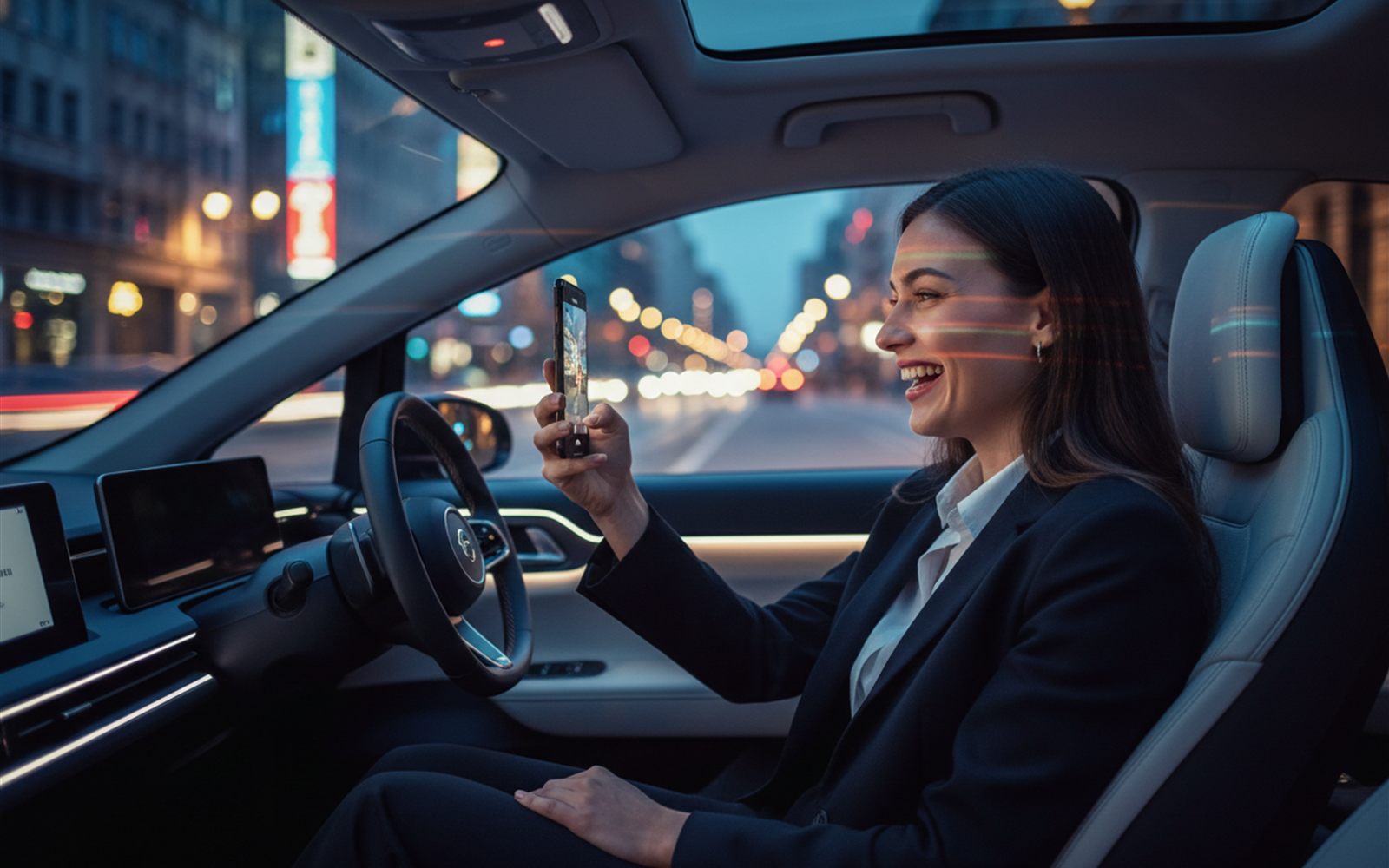
Robotaxis operate only inside mapped zones, airport pickup varies by city, and severe weather can pause service. Fares still run a bit above Uber at busy hours. New cities usually start with waitlists before everyone can ride. And the curb discipline that makes the cars safe also makes them literal: expect the occasional dropoff around the corner from where you meant, because the car will not stop where stopping is illegal.
Waymo says it is aiming for 1 million weekly rides by the end of 2026, Tesla is pushing into Nevada, and Zoox keeps adding cities. If you live in a big Sun Belt metro, the empty driver’s seat has probably already arrived, and most other large cities are on somebody’s map. Like drone delivery, this is autonomy arriving the quiet way: not a grand announcement, just a service that shows up in your app one day priced like the ones you already use.
The milestone is not that a computer can drive you home. It is that the ride now costs about as much as a large pizza.
Meta's new $299 frames and its display glasses turned a nerdy experiment into the gadget of the year.
After a decade of promises, solid state cells are shipping in a real vehicle, with earbuds and cars next in line.
EarFun's Clip 2 puts live translation in 100 languages on your ears without a triple digit price.