
Why Everyone Is Suddenly Wearing AI Smart Glasses
Meta's new $299 frames and its display glasses turned a nerdy experiment into the gadget of the year.
Power beamed through the air is finally leaving the lab, and your smallest gadgets will get it first.
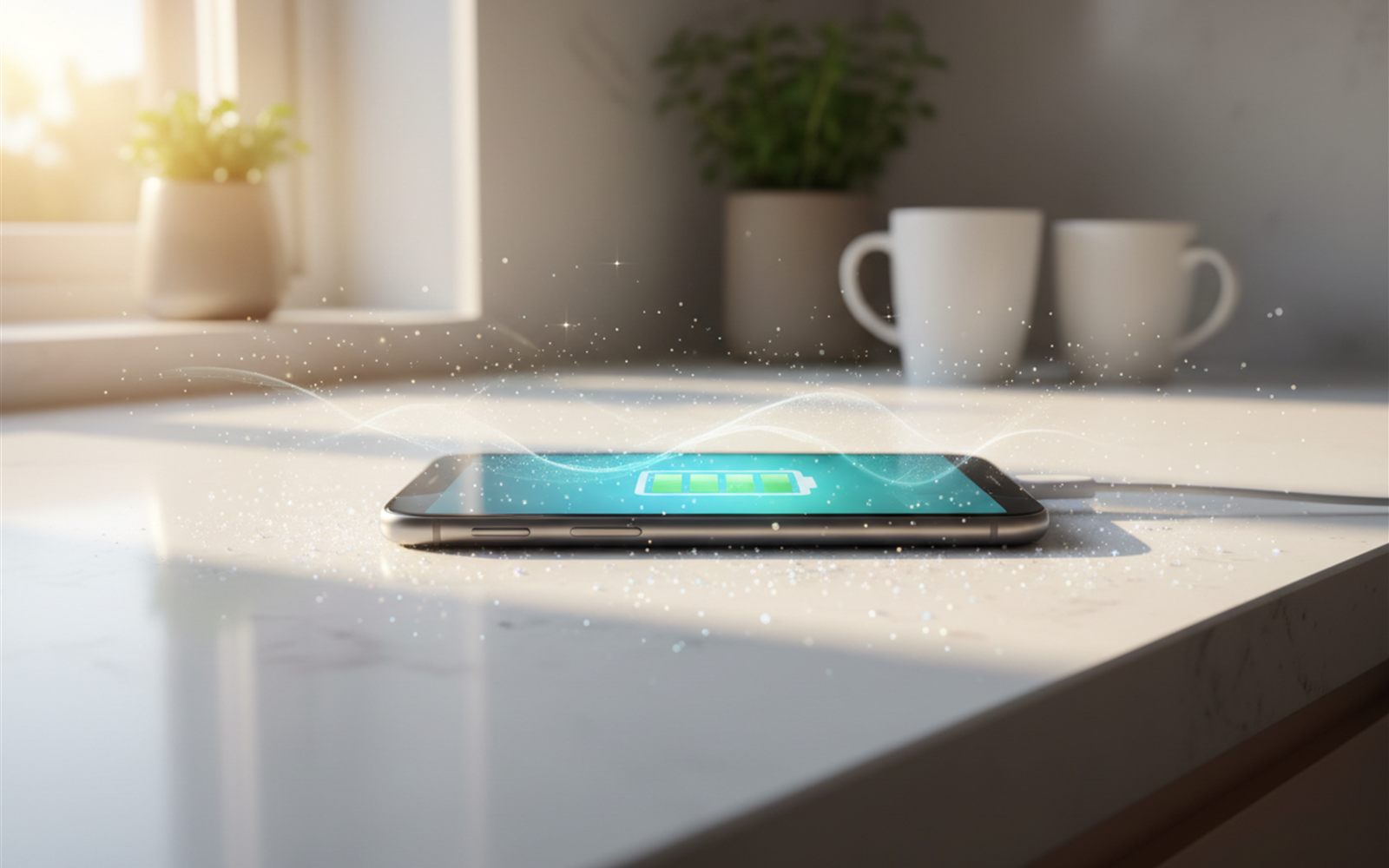
Somewhere in your house right now, a phone is dying three feet from a charger nobody plugged in. For a decade, engineers have promised that power should simply find your devices the way WiFi finds your laptop. In 2026, that promise finally has real hardware behind it.
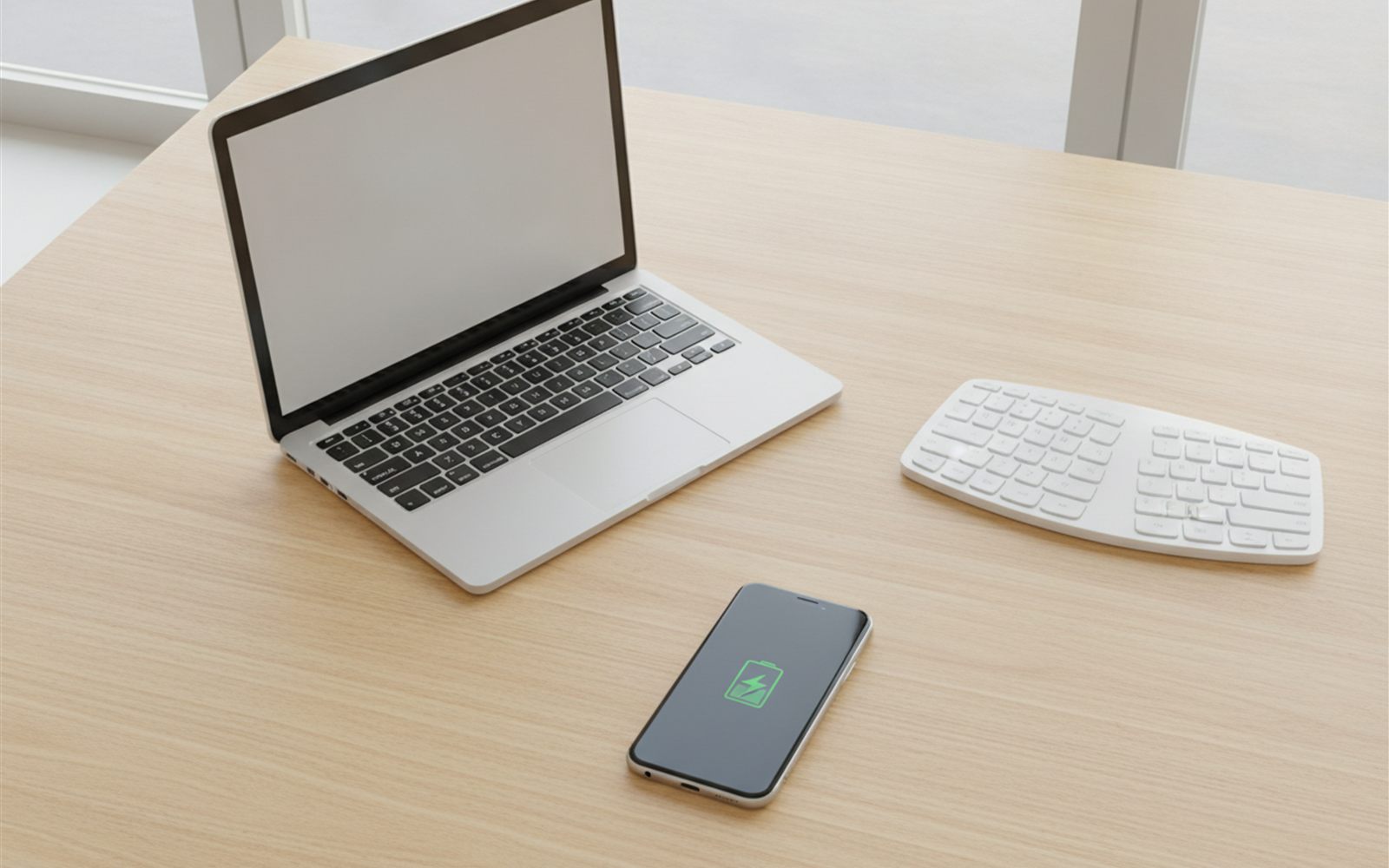
At CES 2026 in Las Vegas, a company called Etherdyne Technologies showed a desk that powers everything sitting on it. A laptop drew up to 50 watts, a phone charged, and a keyboard and mouse ran with no cables and no charging pads anywhere. The system uses low frequency magnetic resonance, and it took the company eight years and 43 granted patents to get there.
Etherdyne is not alone. Ossia, a Washington company, holds FCC approval for its Cota system, which sends power to devices up to 30 feet away with no line of sight required. Walmart has tested the technology in its enormous distribution centers to keep battery powered devices topped up without anyone touching a plug. Powercast, out of Pittsburgh, sells transmitters that trickle charge earbuds, game controllers, and fitness bands from a few feet away.
A transmitter turns wall power into radio waves or a shaped magnetic field. A small antenna inside the device catches that energy and converts it back into electricity. Think of a speaker and a microphone, except the thing crossing the room is power instead of sound. Researchers are pushing the idea further still, building receivers that sip energy from the WiFi and Bluetooth signals already bouncing around your home. Live Science reports such harvesters can already run tiny sensors with no battery at all.
The CES demo is worth picturing, because the strangeness is the point. Reporters who visited Etherdyne’s booth saw an ordinary looking desk with a laptop, phone, keyboard, and mouse scattered across it the way anyone leaves them, no pads, no cradles, no alignment. Slide the laptop to the other corner and it keeps drawing power. Set the phone down face up, face down, on top of a notebook, and it charges anyway, because the whole surface is the charger.
The warehouse version is less photogenic and more telling. In Walmart’s distribution center tests, the win was not speed but absence: handheld scanners and sensors that simply never appear on anyone’s to charge list. That is what this technology feels like when it works. Nothing happens, forever, and nothing happening was the whole assignment.
First, the annoying stuff stops dying. Remotes, door sensors, trackers, and earbuds can stay permanently topped up just by living in the right room.
Second, your desk or kitchen counter becomes the charger. Whatever lands there charges, in any position, with no pad alignment ritual.
Third, as homes fill with dozens of small gadgets, over the air power means fewer battery swaps and no smoke detector chirping at 3 am.
Wireless power in 2026 is a ladder with three rungs, and only the bottom one is crowded.
| The rung | Real products | Price today |
|---|---|---|
| Contact fast charging | Qi2 25W pads from Anker and Belkin | About $20 to $60 |
| Near field trickle | Powercast PowerSpot transmitter | Under $100 |
| Room scale beaming | Ossia Cota transmitters, sold mostly to businesses | About $200 to $300 |
The money says the ladder gets climbed. Research firm Future Market Insights values the wireless charging market at about $12.8 billion in 2026 and projects $47.2 billion by 2036, growth driven partly by the Qi2 standard putting magnetic charging in millions of phones and accessories. Every Qi2 pad sold today builds the habit that distance charging will inherit tomorrow. The gadget shelf is already mid upgrade on another front too, as power banks quietly switch chemistries.
The first question everyone asks: is it safe to sit in a room where power flies through the air? The honest answer is that this is among the most regulated corners of consumer tech. The Federal Communications Commission caps how much radio energy devices may put into human tissue, a measure called SAR, at 1.6 watts per kilogram, a limit the agency describes as carrying a considerable safety margin. Over the air chargers must be certified under those exposure rules before they can be sold, which is a big reason today’s systems deliver watts rather than the power of a wall outlet. Ossia says its Cota system is built to stay under the limits by constantly finding safe paths from transmitter to device.
The second worry is waste. Beaming energy across a room loses more of it than a copper wire does, and efficiency falls as distance grows, a physics tax engineers can shrink but never erase. That is why the sensible near future is targeted: trickle power for the dozens of tiny things you forget, wires and pads for the few big things you drain daily.
Physics taxes distance, hard. Today’s cross room systems deliver small amounts of power, enough for sensors, wearables, and accessories, but nowhere near enough to fast charge a phone you are actively using. Safety rules also cap how much energy can fly through a room. That is exactly why Ossia itself says the consumer rollout starts with small devices and builds up from there.
Pieces of this future are already on shelves. The new Qi2 25W chargers from brands like Anker and Belkin can fill a phone from empty to half in about 30 minutes, though they still require contact. True distance charging is shipping into warehouses and offices first, where the payoff is immediate. Ossia has previewed consumer adapters, including a magnetic phone charger and a USB receiver, and Etherdyne is pitching its powered desk zones to device makers now. Phones with receivers built in are the last domino, not the first. By 2028, the realistic picture is a desk or nightstand zone that quietly tops up your small stuff, while the phone still gets its fast fill from a pad.
First it will charge your remote, then your earbuds, and one day the phone in your pocket, without you ever thinking about it.
Meta's new $299 frames and its display glasses turned a nerdy experiment into the gadget of the year.
After a decade of promises, solid state cells are shipping in a real vehicle, with earbuds and cars next in line.
EarFun's Clip 2 puts live translation in 100 languages on your ears without a triple digit price.