We Checked the Dishwasher Tablet Oven Door Trick Everyone Is Filming
The viral scrub really can clear years of baked on grime, if you follow one temperature rule.
Flat freezing is the rare kitchen trick with real science behind it, and it changes how leftovers reheat.
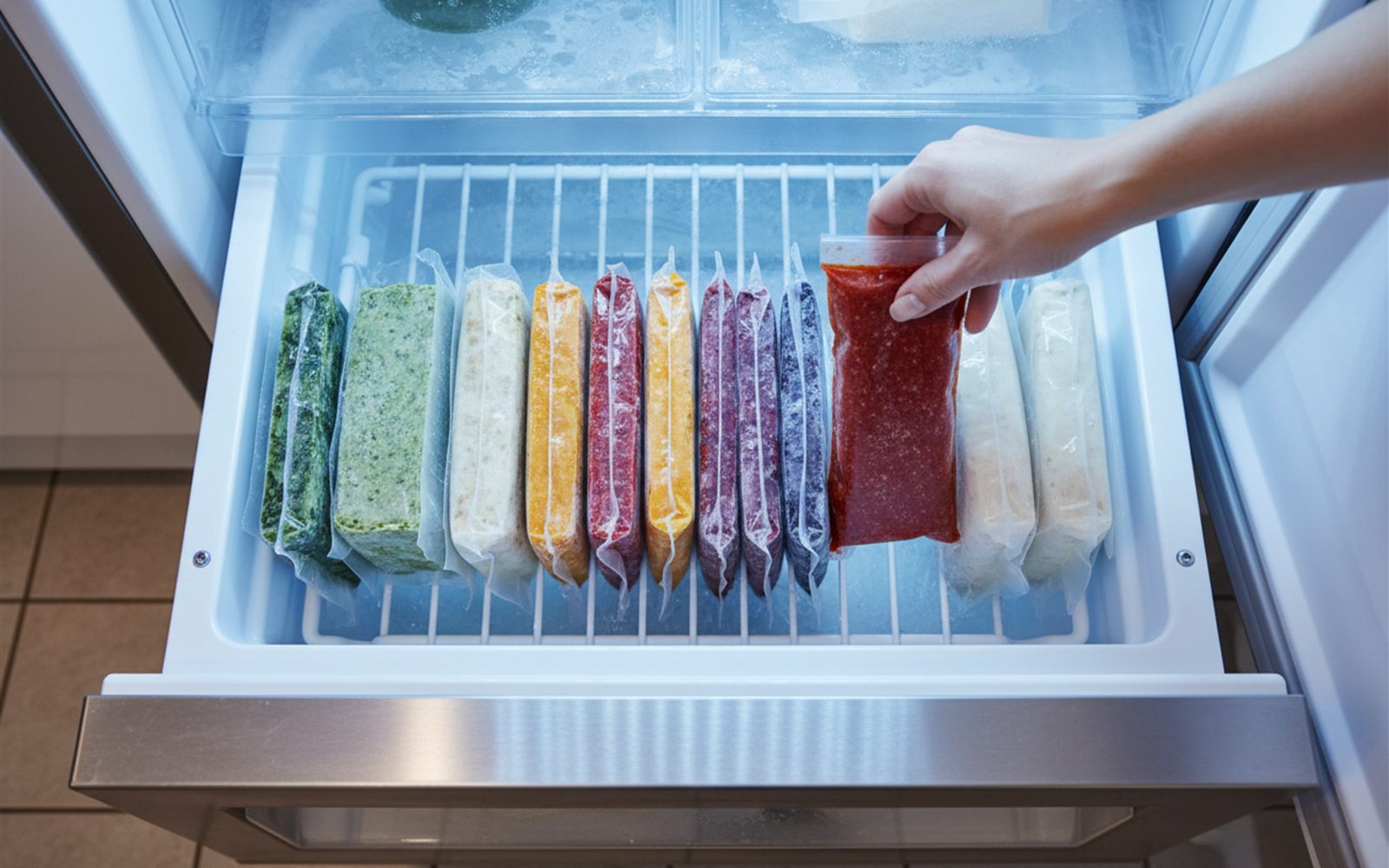
Every corner of the food internet promises the same thing: freeze your leftovers the right way and next week’s dinner will taste like it was cooked tonight. The move getting all the attention is flat freezing, and after digging through university freezing guides and a pile of home cook reports, we can tell you this one actually delivers.
Meal preppers made the flat bag famous on Pinterest and TikTok, but the advice is much older. University extension offices, the home food safety experts attached to schools like the University of Missouri and the University of Nebraska, have recommended freezing food thin and flat in their published guides for years. The viral version just added better lighting.
The freezer is not what ruins leftovers. Slow freezing and trapped air do the damage.
When food freezes slowly, large ice crystals form inside it and tear through the food’s cell structure. Thaw it and all that moisture leaks out, which is why slowly frozen chili turns watery and rice goes mushy. A thin, flat bag freezes through in a fraction of the time a deep container needs, so the crystals stay small and the texture survives. Small crystals, small damage. That single sentence is the entire trick, and it is the same reason commercial kitchens flash freeze: they are racing the crystals.
Air is the other villain. Freezer burn is just food drying out and oxidizing wherever air touches it. A frost free freezer makes it worse by design, because its defrost cycles slowly pull moisture out of anything left uncovered, which is how a forgotten bag grows that gray, papery crust. Pressing the air out of a flat bag before sealing removes most of that risk.
One more thing worth knowing: the USDA says food kept at 0 degrees Fahrenheit stays safe indefinitely. What fades is quality, and extension guides put the sweet spot for cooked leftovers at 2 to 3 months. Flat packs also thaw far faster and stack like books.
Works. This is one of the rare kitchen tricks where the science, the university guides, and the home cook consensus all point the same direction. The catch is that it only protects quality going in. Nothing revives a bag that spent eight months buried under the ice cube tray.
If the crystals are the enemy, the foods that survive freezing best are the ones with the least delicate structure to tear. That is exactly how the rankings shake out across extension guides and home cook reports.
| Food | Freezer grade | What to expect |
|---|---|---|
| Soups, stews, and chili | Excellent | Many cooks swear they taste better after a week in the bag |
| Shredded and braised meats | Excellent | Freeze in their own juices and they reheat like day one |
| Cooked rice and grains | Very good | Flat packs thaw evenly, no mush |
| Bread | Very good | Slice first, toast straight from frozen |
| Casseroles and pasta bakes | Good | Slightly softer, still dinner worthy |
| Mashed potatoes | Divisive | Extra butter and cream help them survive |
| Fried food | Poor | The crisp never comes back |
| Cream sauces | Poor | They tend to break and turn grainy |
Fast freezing is only half the job, and this is where good bags go bad. The USDA recognizes exactly three safe ways to thaw: in the refrigerator, in cold water, or in the microwave. The kitchen counter is not on the list, because the outside of the food climbs into the bacteria friendly zone above 40 degrees while the middle is still thawing.
Flat packs make the safe ways painless. A thin bag thaws in the refrigerator overnight instead of over two days, and sealed in cold water it can be dinner ready in well under an hour, with the USDA’s one rule being to swap the water every 30 minutes. Microwave thawing works too, as long as you cook the food immediately after. Bonus fact from the same guidance: anything thawed in the refrigerator can be safely refrozen, so a change of dinner plans costs you nothing.
This is the part that turns a kitchen trick into a budget line. The EPA’s 2025 report on household food waste puts the cost at $728 per person per year, about $2,900 for a family of four, and the USDA estimates 30 to 40 percent of the American food supply never gets eaten. A meaningful slice of that is leftovers that got frozen badly, turned to freezer burned mystery bricks, and slid into the trash without guilt.
Flat freezing attacks that quietly. A box of freezer bags costs a few dollars, the labeled packs actually get eaten because they thaw in minutes and look like food instead of archaeology, and every pack that becomes dinner is a takeout order that never happens.
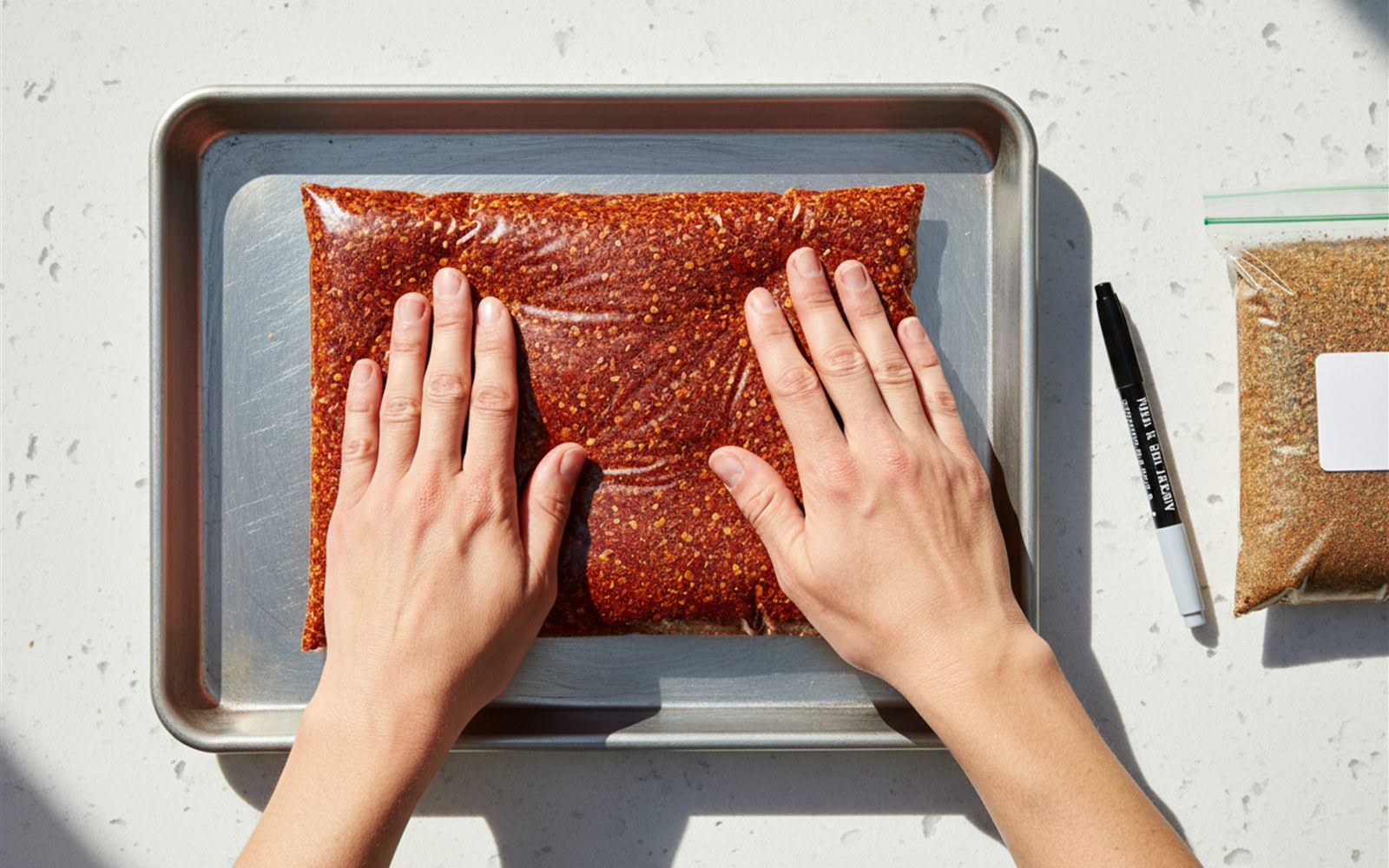
Before: a frost crusted brick of mystery chili that thaws into watery soup.
After: a thin labeled pack that thaws in minutes and tastes like Sunday’s batch.
Home cooks on food forums and Reddit keep landing on the same notes. Soups, stews, chili, cooked rice, and shredded meats freeze flat beautifully, and the space savings win people over almost as much as the taste. The honest split: nobody has saved fried food or cream sauces, which go soggy or break no matter how carefully they were frozen, and potatoes divide the room.
Ice has more talents than dinner:
Freeze it thin, freeze it fast, and the freezer stops being the place where leftovers go to die.
The viral scrub really can clear years of baked on grime, if you follow one temperature rule.
The viral trick promises free iron and pest control, but soil scientists say your plants never get the memo.
A pen spring and some heat shrink tubing keep cheap chargers alive for years, and the fix takes minutes.