We Checked the Dishwasher Tablet Oven Door Trick Everyone Is Filming
The viral scrub really can clear years of baked on grime, if you follow one temperature rule.
A pen spring and some heat shrink tubing keep cheap chargers alive for years, and the fix takes minutes.
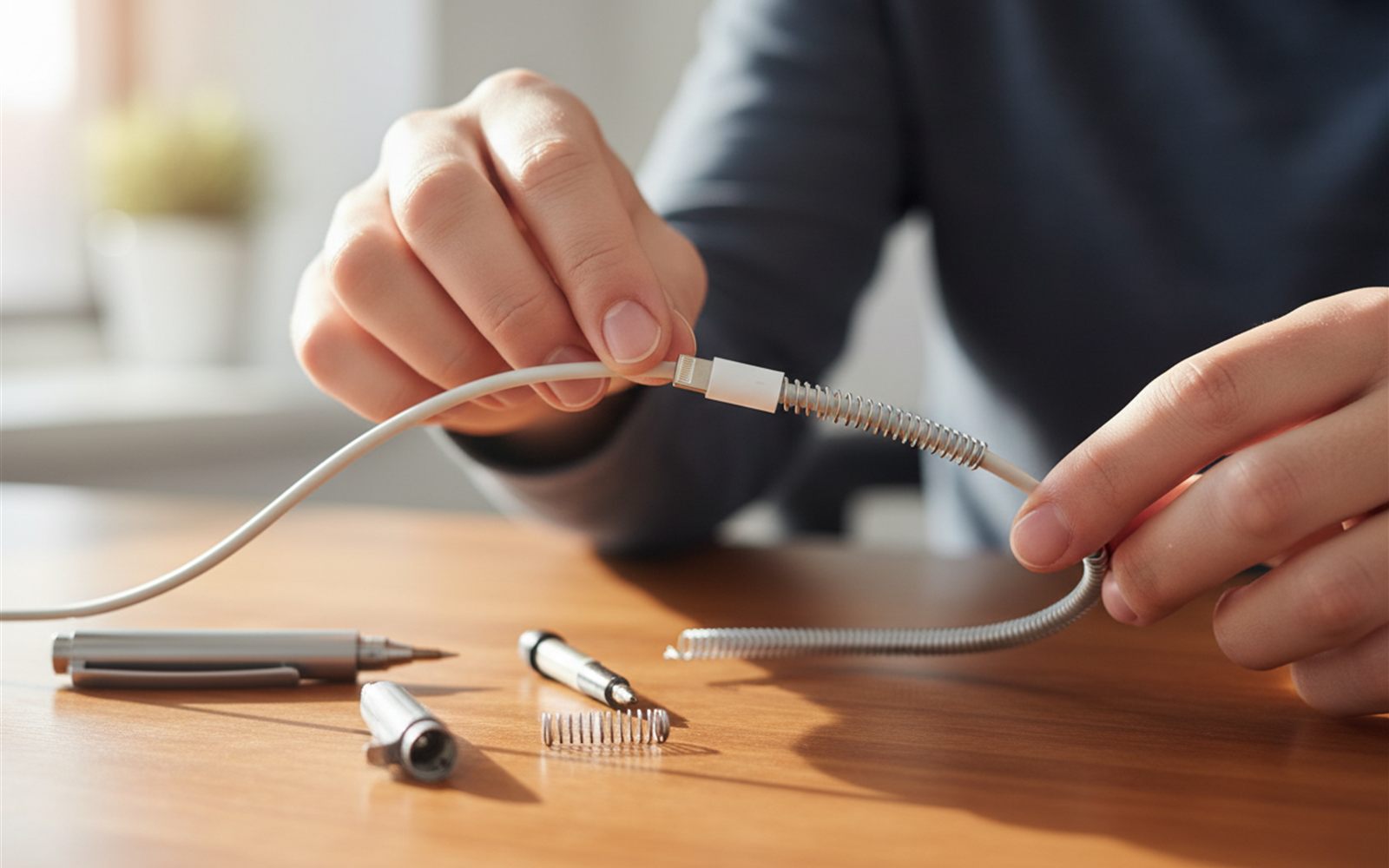
The claim sounds like a dorm room legend: the spring from a dead click pen, wrapped around your charger, stops the cable from ever fraying. We went through the repair guides and years of user reports, and the dorm room wins this round.
Electronics hobbyists have passed this one around for more than a decade, and it eventually graduated into official repair culture. The repair site iFixit hosts a guide for reinforcing frayed charging cords, and electronics supplier Adafruit has published the same idea using heat shrink tubing, which is the cleaner cousin of the pen spring.
Cables almost never fail along their length. They fail at the neck, the short stretch of cord right behind the plug, and the reason is a mismatch. The plug is rigid. The cable is soft. Every bend you make has to happen somewhere, and it all piles up at the exact point where stiff meets flexible, the same way a garden hose always kinks at the spigot.
Inside the jacket, the damage is metal fatigue. The copper conductors are bundles of hair thin strands, and each sharp fold work hardens a few of them until they snap, the same way a paperclip breaks after enough back and forth. Strands fail one by one, which is why a dying cable flickers and charges slowly before it dies completely. Engineers call the cure strain relief: anything that spreads the bend across a longer section of cable instead of letting it fold at a single crease.
A pen spring does exactly that. Coiled around the neck, it turns a sharp fold into a wide, gentle curve, so no single point takes the abuse. The spring takes the bend so the wire never does. Heat shrink tubing does the same job by stiffening the last inch of the cable gradually, and the adhesive lined kind grips the cord so it never slides out of position.
Works, and it works best as prevention. On a healthy cable, or one just starting to soften at the neck, a spring or a sleeve of heat shrink can add years. Once you can see copper or braided shielding through the jacket, the window has closed. A cable with exposed conductors can overheat and charge unreliably, so replace it. And skip plain electrical tape: it adds no support and turns to gum within months.
| Method | Verdict | Best for |
|---|---|---|
| Adhesive lined heat shrink | Best overall, looks nearly factory made | Any cable you plan to keep |
| Pen spring | Free and genuinely effective | The cable by your bed, tonight |
| Spiral cable wrap | Good along the length | Desk edges and cat households |
| Moldable glue like Sugru | Solid custom collar, cures overnight | Odd shaped plugs and laptop bricks |
| Snap on cable savers | Fine, small and easy to lose | People who want zero DIY |
| Electrical tape | Skip it | Nothing, it sags into goo |
The pattern across all of them is the same mechanism: support the transition zone. Anything that stiffens the neck gradually works, and anything that just wraps the wound without adding structure does not.
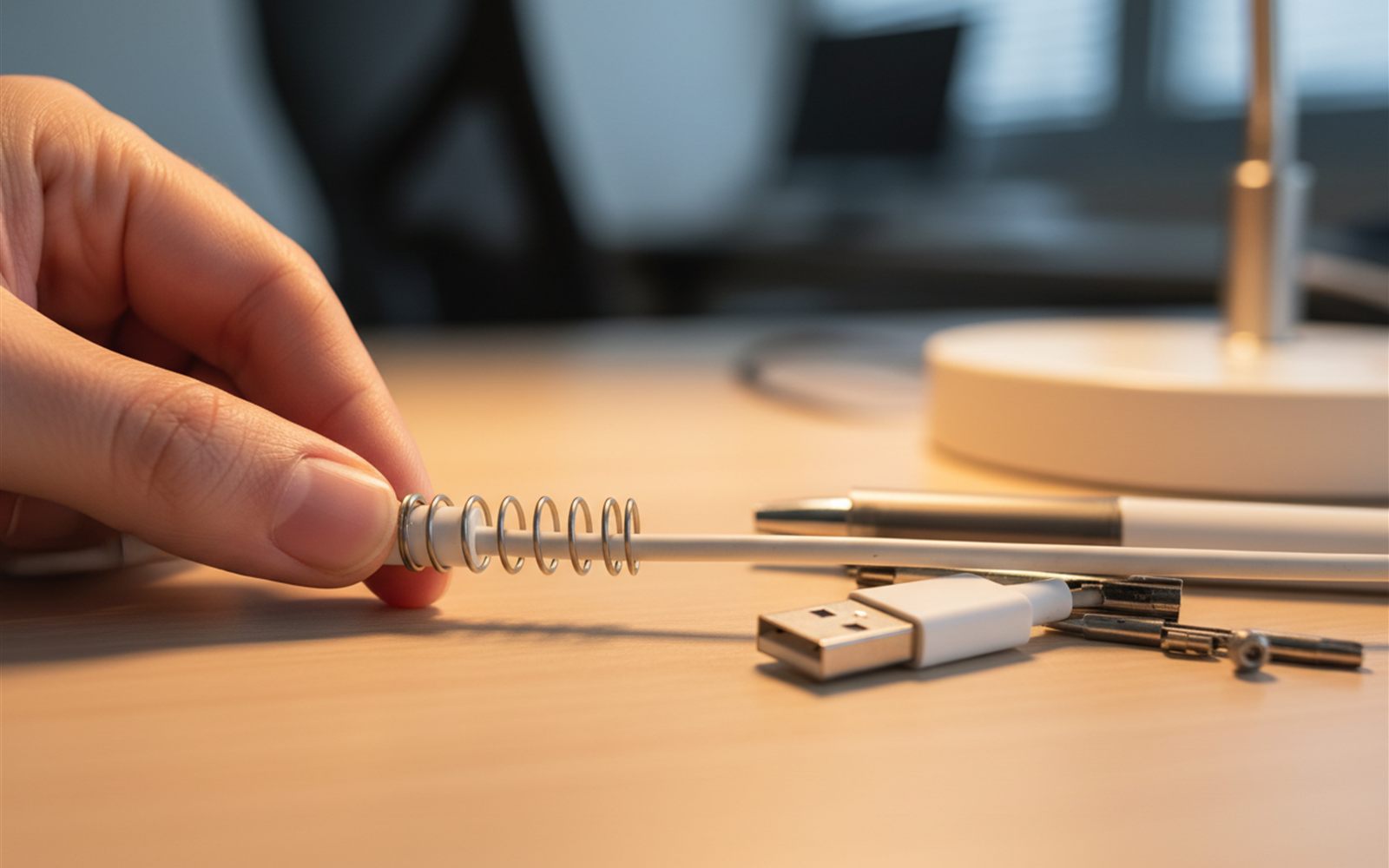
There is a point where prevention should just be built in, and cable makers now publish the numbers. Anker rates its standard nylon cables at around 12,000 bends in lab testing, its braided lines at up to 35,000 bends, and its top Prime cable at over 300,000. For scale, a cable that gets folded twenty times a day sees about 7,300 bends a year. A braided nylon jacket is essentially strain relief along the entire cable, doing full time what the pen spring does at the neck.
The price gap has mostly closed, too. Anker sells 240 watt braided USB C cables for around $13, which is one impulse checkout cable at the gas station. The honest math: protect the decent cables you already own for free, and when one finally dies, replace it with braided instead of another bare plastic twin. Buying the same fragile cable twice is the only real losing move.
Before: a cable that folds at a right angle every night and shows pale stress marks at the plug.
After: the same cable bending in one smooth arc, with the wear spread out where it can do no harm.
Across repair forums and the comment sections of the iFixit and Instructables writeups, the pattern is consistent: people who added a spring or heat shrink before the fraying started report cables outlasting every unprotected one in the house. The adhesive lined tubing earns the best marks for looking almost factory made. The honest gripes are small: a bare spring can feel scratchy in a pocket, and no wrap resurrects a cable that already flickers.
Two more rescues for the tech drawer:
Two minutes of strain relief beats buying the same cable twice.
The viral scrub really can clear years of baked on grime, if you follow one temperature rule.
The viral trick promises free iron and pest control, but soil scientists say your plants never get the memo.
The next time a screw refuses to budge, reach for this first.