We Checked the Dishwasher Tablet Oven Door Trick Everyone Is Filming
The viral scrub really can clear years of baked on grime, if you follow one temperature rule.
The viral baking soda and peroxide paste really brightens canvas shoes, but one wrong move turns them yellow.
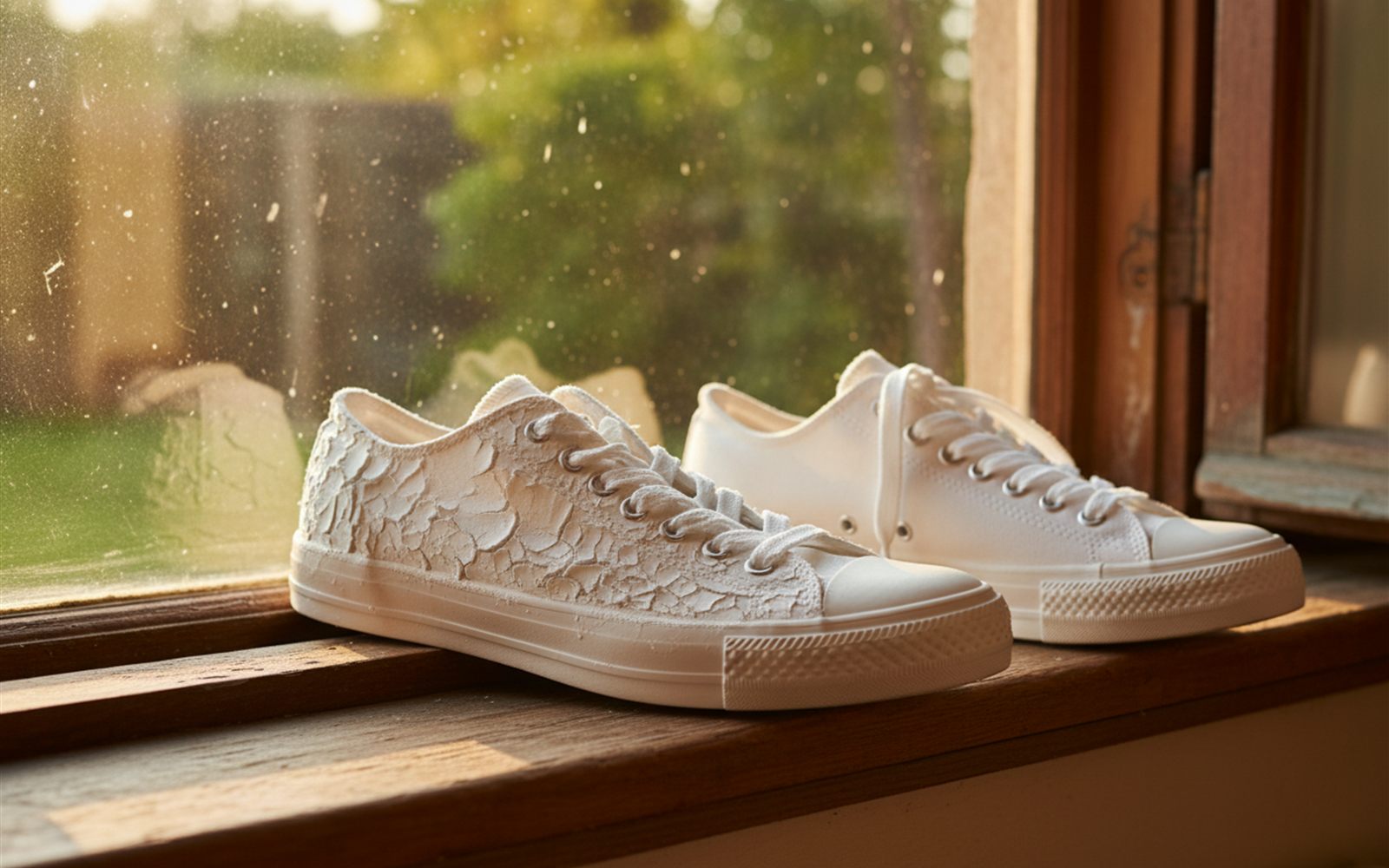
Every summer the same before and after rolls through your feed: grubby white sneakers, a homemade paste, an afternoon in the sun, and shoes that look fresh out of the box. We traced the recipe through cleaning experts and a few thousand comments to sort out when it works and when it quietly wrecks the shoes.
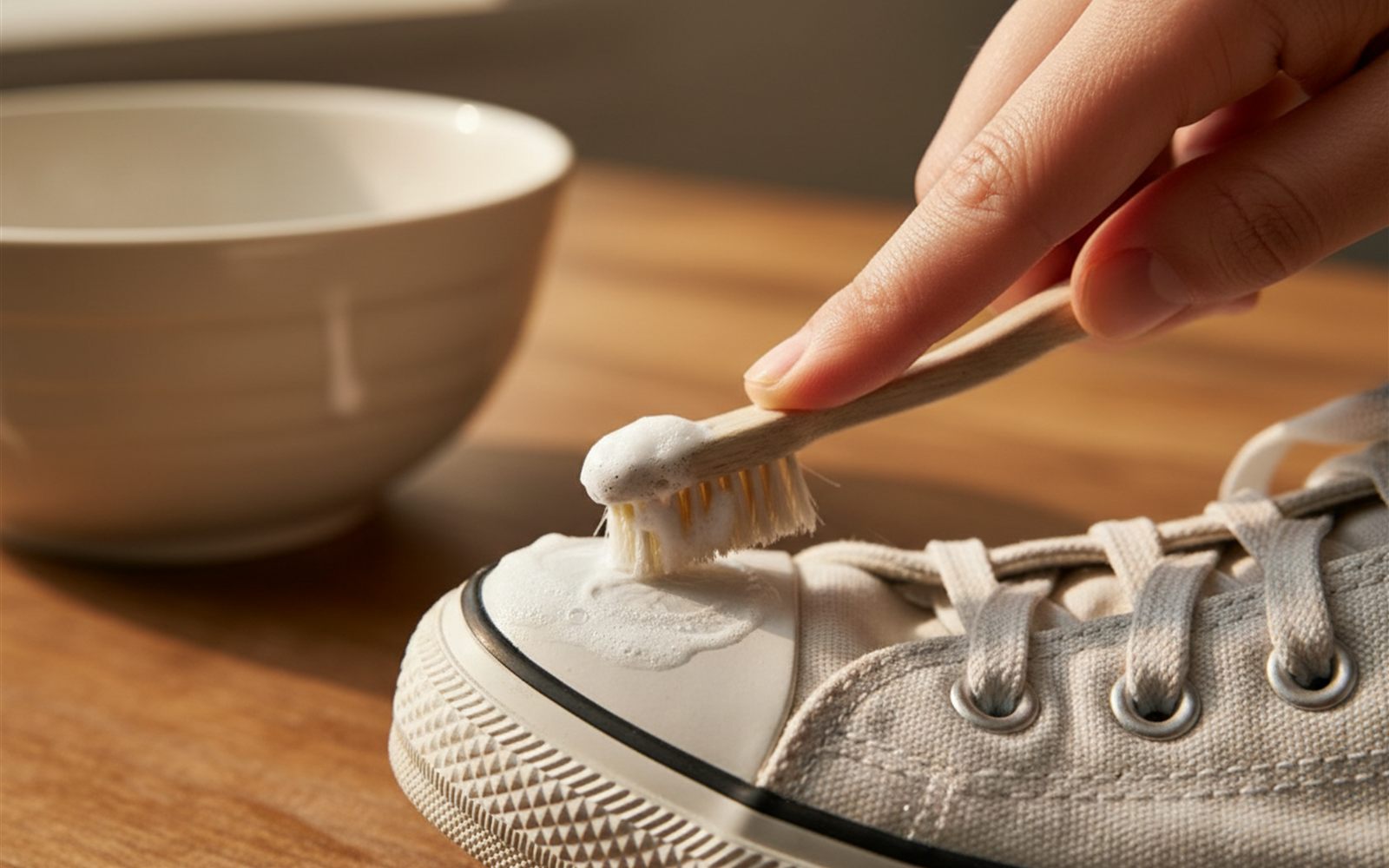
The paste is old laundry room chemistry that went viral. Baking soda maker Arm and Hammer publishes its own version, Nike’s shoe care guide leans on gentler takes of the same idea, and TikTok supplied the sunshine step that made the results dramatic enough to share.
Each ingredient has a job, and it helps to know what a stain actually is. Grime looks dark because its molecules are long chains that absorb light. Hydrogen peroxide is an oxygen bleach: its extra oxygen atom snaps those chains into short, colorless fragments. The dirt does not get hidden. It stops being able to look like dirt. This is the same chemistry family as the oxygen powders sold for laundry, just in a three percent bottle that costs about a dollar.
Baking soda handles the physical half. It is a mild alkaline abrasive, so its soft crystals scrub away surface grime without scratching, and the alkalinity helps lift body oils out of the fabric while it deodorizes. The peroxide snaps the stain apart, and the soda scrubs the pieces away. That is the whole mechanism, and it is worth remembering, because it explains every rule that follows.
The sun is not decoration either. Cleaning writers at House Digest note that UV light activates hydrogen peroxide, speeding up the reaction that breaks down yellowed compounds. That is why the shoes come out visibly whiter after a couple of hours outside instead of a rinse in the sink.
Chlorine bleach works differently, and that is the problem. On sneakers it can react with the materials and the minerals in your water and leave whites with a stubborn yellow cast, and it is rough on glue and stitching. Laundry equipment maker Speed Queen warns flatly that bleach on white synthetics yellows instead of whitening. That tint is far harder to fix than ordinary dirt.
Works with caveats. On white canvas and rubber soles, the paste genuinely brightens, and the sun step adds a visible boost. The caveats: keep it off leather, which the soak can dry out and stiffen (wipe leather with mild soap instead), go gently on knit mesh, and do not leave shoes baking outside all day, because long sun exposure can yellow them too. Chlorine bleach stays under the sink.
The paste is not one size fits all. Here is the honest map.
| Material | Paste verdict | The better play |
|---|---|---|
| White canvas | Ideal | Full treatment, sun step and all |
| Rubber soles and trim | Ideal | Same paste, an old toothbrush, wipes clean |
| Knit and mesh | Gentle only | Thin the paste with water and use a soft brush, no hard scrubbing |
| Leather and faux leather | Skip the paste soak | Wipe with mild soap and water, then condition |
| Suede and nubuck | Never | Dry brushing and a suede eraser only, water makes it worse |
One more rule that applies to every row: stay surface level. Modern sneakers are held together with glue, and any method that soaks the shoe through, paste included, weakens the bond between upper and midsole. Clean the outside, not the inside.
If sunlight brightens canvas, why do shoes forgotten outside all afternoon come back yellow? Because the dose is the difference between medicine and damage, and that is true of almost everything people throw at white shoes.
The washing machine gamble. Sneaker care specialists at Outsole explain that hot water and aggressive tumbling dissolve the glue holding midsoles on and warp the shoe’s shape, which is why machine washed pairs so often come out clean and slightly ruined. If you must, use a cold gentle cycle inside a pillowcase and air dry, and never machine wash leather or suede.
Chlorine bleach. Covered above: yellow cast, weakened glue, brittle stitching. The two ingredient paste exists so you never need it.
Heat drying. Radiators, dryers, and heat vents soften shoe adhesives the same way hot water does. Air drying indoors is slower and safer.
The all day sun bake. Two to three hours activates the peroxide. Eight hours starts yellowing the rubber. Set a timer.
Out of peroxide? The recipe degrades gracefully. Arm and Hammer’s own cleaning guides pair baking soda with a squirt of dish soap or laundry detergent instead, which trades the brightening power for a gentler everyday clean that still lifts grime. It is the right version for shoes that are dirty rather than truly yellowed.
For the rubber, a melamine foam eraser is the cheat code cleaning writers keep coming back to. It works by micro abrasion, essentially ultra fine sanding, which makes it brilliant on scuffed midsoles and toe guards and too aggressive for repeated use on fabric.
The mistakes are small and avoidable. Whitening toothpaste sounds clever until a blue gel tints the canvas, so stick to plain white if you try it. Skipping the final rinse leaves chalky soda residue that dries stiff and gray. And leaving the paste on for six extra hours does not add whitening, it just books the shoes more time in the yellowing sun.
This is where the pantry recipe gets almost unfair. A box of baking soda costs about a dollar, a brown bottle of three percent peroxide about the same, and one cleaning uses a few spoonfuls of each. Call it pennies per pair, with enough left in the box for a whole summer.
The store bought alternatives are not close. Professional sneaker laundries like Shoozas list standard cleanings at around $40 a pair, and premium hand detailing services such as Revive Kicks charge $100 and up for restoration work. Even replacing the shoes outright makes the point: a new pair of canvas Chucks runs about $65 at Converse. Three professional cleanings a year is $120. The paste does the same seasonal reset for the cost of the toothbrush you were about to throw away.
The pro services earn their fee on genuinely valuable pairs, suede, leather, and collector shoes where a mistake is expensive. For everyday canvas, the chemistry in your cabinet is the same chemistry, minus the invoice.
Before: gray toe caps, dingy canvas, and laces the color of weak tea.
After: shoes bright enough that someone asks if they are new.
Comment sections and cleaning forums lean clearly positive for canvas classics like Converse and Vans, with plenty of users calling the paste better than shoe cleaners they paid real money for. The dissent is honest: some say plain soap and a brush gets most of the way there, and a smaller group warns that shoes left out in strong sun too long picked up a yellow tinge at the rubber. Nobody has rescued leather or suede with it, and the smart ones never tried.
The same box of baking soda has more tricks in it:
The paste costs pennies, the sun works free, and the shoes read brand new from across the room.
The viral scrub really can clear years of baked on grime, if you follow one temperature rule.
The viral trick promises free iron and pest control, but soil scientists say your plants never get the memo.
A pen spring and some heat shrink tubing keep cheap chargers alive for years, and the fix takes minutes.