We Checked the Dishwasher Tablet Oven Door Trick Everyone Is Filming
The viral scrub really can clear years of baked on grime, if you follow one temperature rule.
A box of baking soda really can reset how your bed smells, if you give it enough hours.
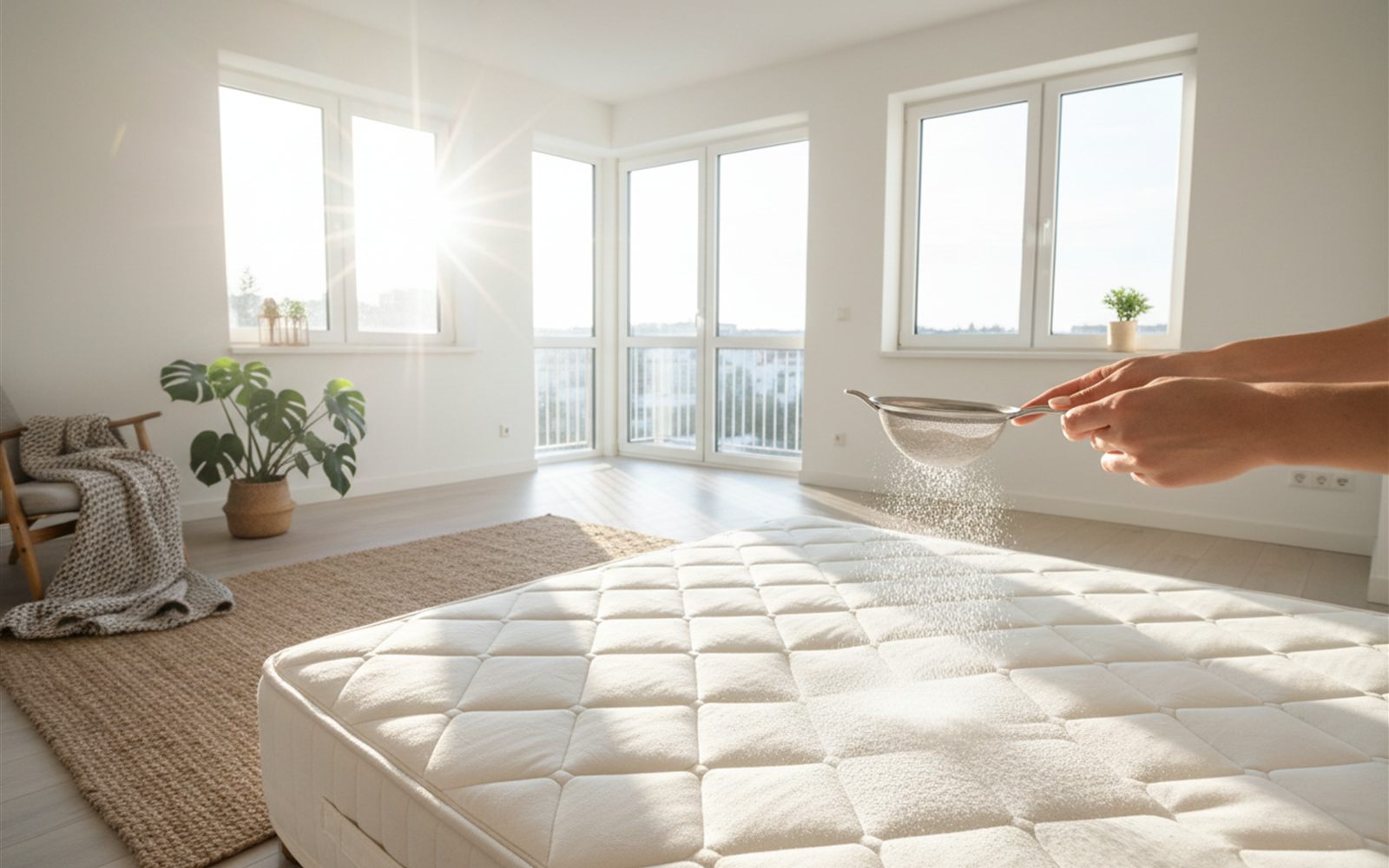
Your mattress works nights for a decade and never once gets washed, and eventually it announces that fact every time you change the sheets. The internet’s favorite fix costs about a dollar: a snowfall of baking soda, left overnight. We checked whether it actually clears the smell and where the trick hits its ceiling.
Baking soda has been the fridge and carpet deodorizer of record since your grandmother’s kitchen, so pointing it at mattresses was inevitable. Mattress brands like Purple and Amerisleep publish the method in their own care guides, and home writers keep testing it in public, including one at Homedit who left a full layer sitting for 24 hours to see what changed.
Start with why the bed smells at all, because the answer is stranger than you would guess: fresh sweat is nearly odorless. The smell arrives later, when the bacteria living on your skin, mainly species like Staphylococcus and Corynebacterium, break down the proteins and fatty acids in sweat and body oils, releasing the sour compounds your nose reads as old bed. The mattress cleaning company Mattress Miracle estimates an adult releases somewhere between 200 and 600 milliliters of sweat on a warm night, and a share of that moisture works past the sheets year after year. Damp fabric plus skin bacteria plus time is the entire recipe.
That is exactly the pair of problems baking soda happens to solve. Sodium bicarbonate neutralizes acids on contact, and most of those bacterial byproducts are mildly acidic, so the powder converts them into molecules your nose ignores. At the same time, it absorbs moisture, pulling out the trapped humidity that keeps the musty smell in business. The powder eats the acid, and the night gives it time.
The catch is that none of this is instant. A quick 30 minute sprinkle barely gets started. The overnight part is the active ingredient.
Works with caveats. For everyday mustiness, sweat smell, and that vague old bed staleness, an overnight treatment genuinely resets the surface, and firsthand tests like the Homedit experiment back it up. What it cannot do: lift stains, reach odors soaked deep into foam, or fix real accidents. Urine and pet messes need an enzyme cleaner that breaks down the source, and anything involving mold is a replacement conversation, not a powder one.
If baking soda neutralizes odors, why does it fail on pet accidents? Because urine dries into uric acid crystals, and those crystals do not dissolve in water or surrender to a surface powder. They sit in the fabric releasing odor every time humidity rises, which is why a bed that seemed fixed smells again on a rainy week.
Enzyme cleaners are the counterattack. Their enzymes digest the uric acid and proteins, breaking them down into simple, odorless compounds that evaporate or wipe away. Two rules from the people who make them: give the cleaner hours of dwell time, not minutes, and never mix it with baking soda or vinegar, since both shift the pH and switch the enzymes off. Powder first is the common mistake that ruins it. Enzyme first, let it fully dry, then use baking soda as the finishing touch.
Mold, and a mattress that smells no matter what you do, are the other ceiling. Mattress makers like Purple and Casper put a mattress’s working life at 7 to 10 years, and no powder extends it.
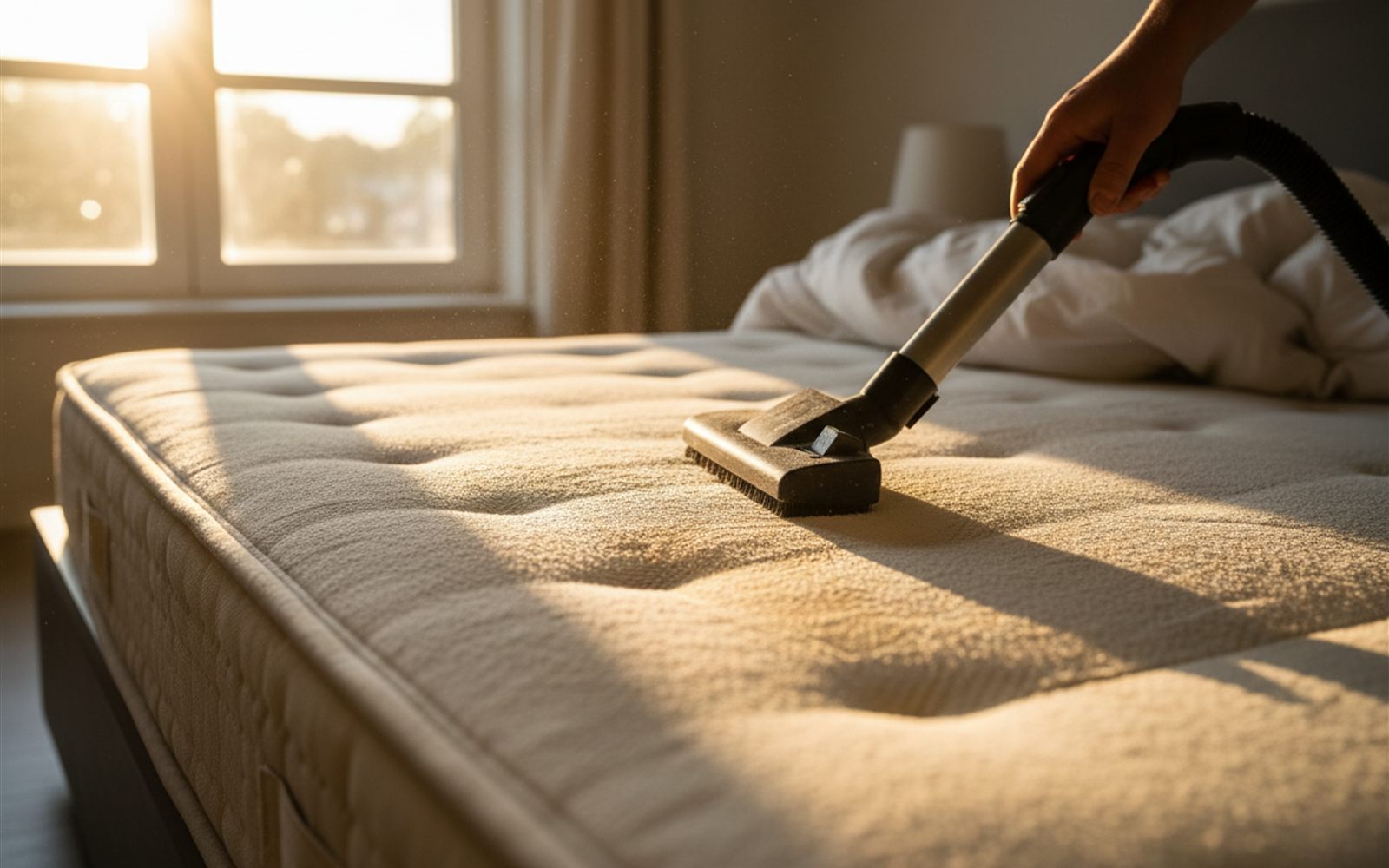
The overnight powder works best as the centerpiece of a seasonal reset. The whole routine takes ten minutes of effort and one lazy day.
The powder itself is famously cheap: about a dollar a box, twice a year. A washable protector adds a modest one time cost and blocks the sweat and spills that cause the problem. Compare that with the alternatives, a professional upholstery cleaning visit, or the several hundred dollars a new mattress commands, and this becomes one of the best returns in home care. The only expensive move is ignoring the smell until the 7 to 10 year clock runs out early.
Before: a faint locker room note that greets you at sheet changing time.
After: a mattress that smells like nothing at all, which is exactly the goal.
Cleaning forums and renter threads agree on the pattern: it handles general funk, and the people who left the powder overnight report far better results than the ones who gave it half an hour. The split shows up on the tougher jobs. Users who tried to erase pet accidents with baking soda alone came away disappointed until an enzyme spray did the heavy lifting first, with the powder saved for the finishing touch.
The same dollar box keeps working elsewhere:
A dollar box and one patient night buy your bed a clean slate, at least on the surface.
The viral scrub really can clear years of baked on grime, if you follow one temperature rule.
The viral trick promises free iron and pest control, but soil scientists say your plants never get the memo.
A pen spring and some heat shrink tubing keep cheap chargers alive for years, and the fix takes minutes.