We Checked the Dishwasher Tablet Oven Door Trick Everyone Is Filming
The viral scrub really can clear years of baked on grime, if you follow one temperature rule.
We compared shower steam, the ice cube trick, and wrinkle spray to find what really smooths a shirt.
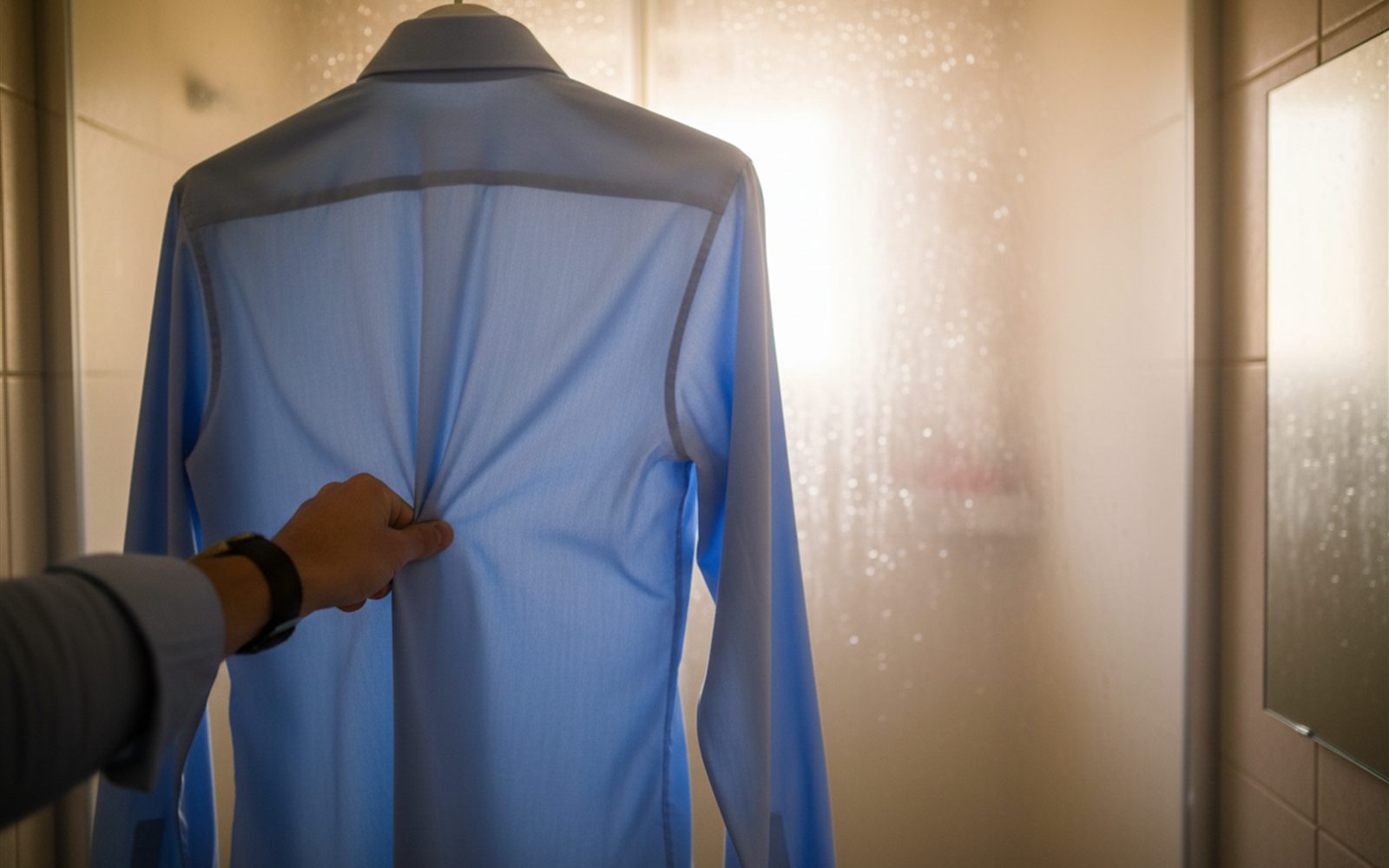
It is 7:40 in the morning, the shirt you need is a crumpled mess, and the iron is buried somewhere behind the winter coats. The internet has three favorite fixes for this exact emergency: shower steam, ice cubes in the dryer, and wrinkle release spray. We checked the fabric science and the side by side tests to find out which ones actually earn their reputation.
All three tricks come from travelers who refused to pack an iron. Flight crews have been hanging shirts in steamy hotel bathrooms for decades, and Downy eventually bottled the idea as a wrinkle releaser spray that became a suitcase staple. The ice cube version spread later, as a way to fake a steamer with a dryer.
Cotton and linen fibers are held in shape by weak chemical bonds that lock in whatever position the fabric dried in. Add warmth and moisture and those bonds loosen, letting the fibers relax and straighten. Gravity or a firm tug does the rest, which is why a hanging, slightly damp shirt smooths itself out. Wrinkle sprays are mostly water with a little fabric softener, so they wet the fibers, lubricate them, and let the creases fall away as the shirt dries.
That is the whole secret in one line: a wrinkle is a bad memory, and warmth plus moisture is the eraser. Every method below is just a different way of delivering those two things.
Works with caveats. When Apartment Therapy tested the popular no iron methods side by side, wrinkle release spray came out the strongest performer, and a homemade version (water with a teaspoon of fabric softener) came surprisingly close to the store bought bottle. Shower steam works too, but it wants 15 to 20 minutes in a small closed bathroom and does its best work on thin fabrics. The ice cube trick was the letdown of the bunch: a few cubes in a hot dryer softened wrinkles but left nothing looking pressed. None of these will give you the sharp creases of a real iron, but for everyday smooth, spray and steam get you most of the way there.
| Rank | Method | Best at | The honest verdict |
|---|---|---|---|
| 1 | Wrinkle release spray | Everyday cotton blends and knits, one garment at a time | The strongest performer in Apartment Therapy’s test, and the homemade version nearly ties it |
| 2 | Handheld steamer | Hanging garments, delicate fabrics, anything with structure | The upgrade pick. Conair’s handheld line runs about $20 to $40, and steam beats spray on stubborn creases |
| 3 | Shower steam | Thin fabrics and travel emergencies | Free and reliable, just slow, and it wants a small closed bathroom |
| 4 | Damp towel in the dryer | A whole outfit at once | The better version of the ice trick, since a wrung out hand towel makes far more steam than three cubes |
| 5 | Ice cubes in the dryer | Absolute emergencies | The letdown. Softens wrinkles, presses nothing |
The method should match the fiber, because fibers hold their bad memories differently.
If wrinkles, not stains, are why shirts ride to the cleaners, the math gets loud. The 2026 price guides at MoneyPantry and The Laundry Bag put a dress shirt at $4 to $7 per visit. A bottle of wrinkle release spray runs about $7 to $11 in retail listings and handles dozens of shirts, and the homemade fabric softener version costs pennies a bottle. A $30 handheld steamer breaks even around shirt number six, then smooths shirts free for years. The dry cleaner still earns its keep for stains, tailoring level pressing, and fabrics you do not want to gamble on. For everyday smooth, the spray bottle is the cheapest employee you will ever hire.
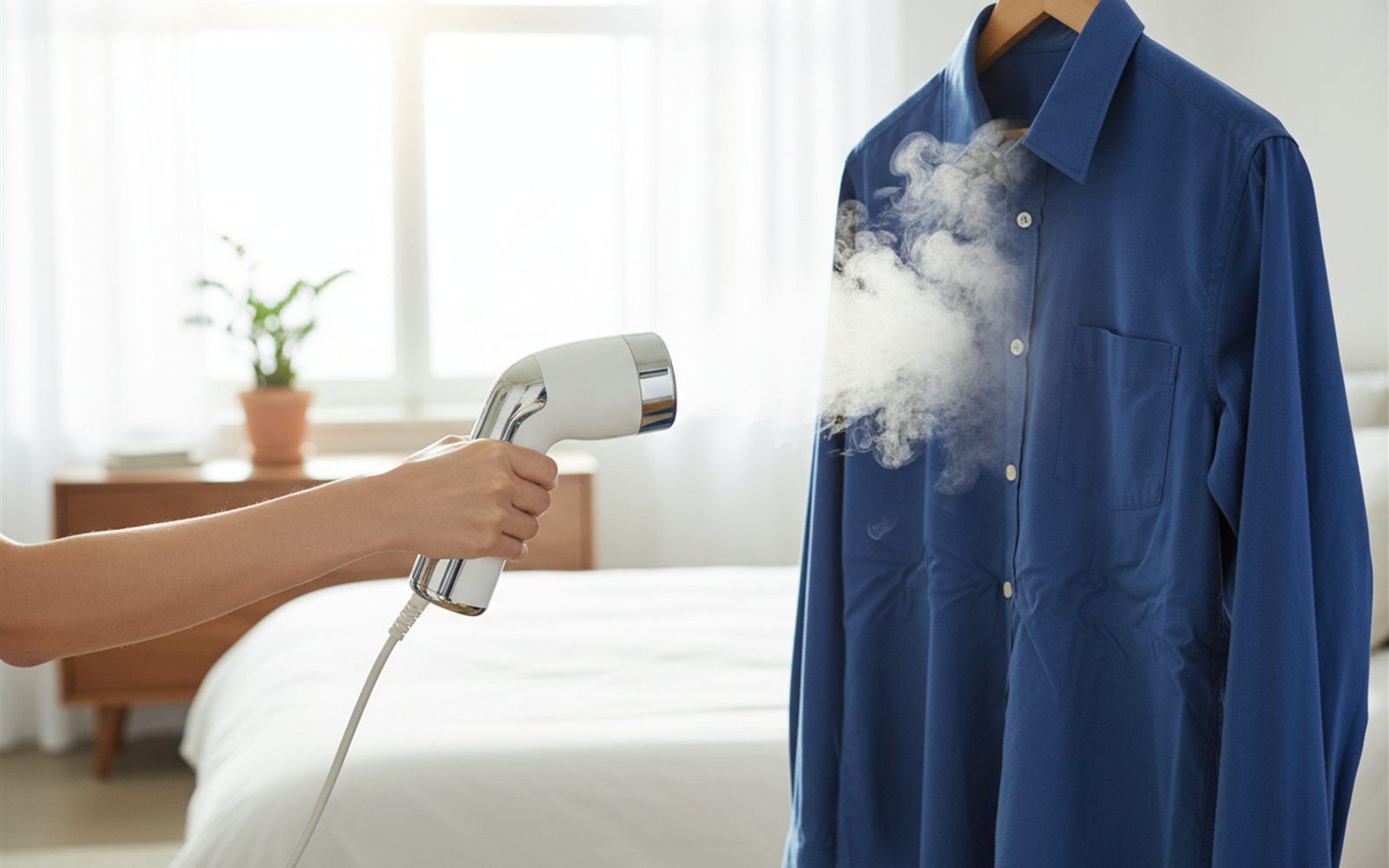
Before: a shirt with fold lines so sharp it announces it spent the week in a suitcase.
After: fifteen minutes later, the same shirt hangs smooth enough that nobody asks questions.
Across cleaning forums and comment sections the pattern is steady. The spray collects the most repeat praise, especially on cotton blends and knits, though some people dislike the scent and say heavy cotton needs a second pass. Steam fans call it reliable but slow, and the most common gripe about the ice cube trick is that it barely dents a full load. On one point nearly everyone agrees: the firm tug matters as much as the moisture.
Warmth, moisture, and a good tug do the whole job. The iron was mostly there for the creases.
The viral scrub really can clear years of baked on grime, if you follow one temperature rule.
The viral trick promises free iron and pest control, but soil scientists say your plants never get the memo.
A pen spring and some heat shrink tubing keep cheap chargers alive for years, and the fix takes minutes.